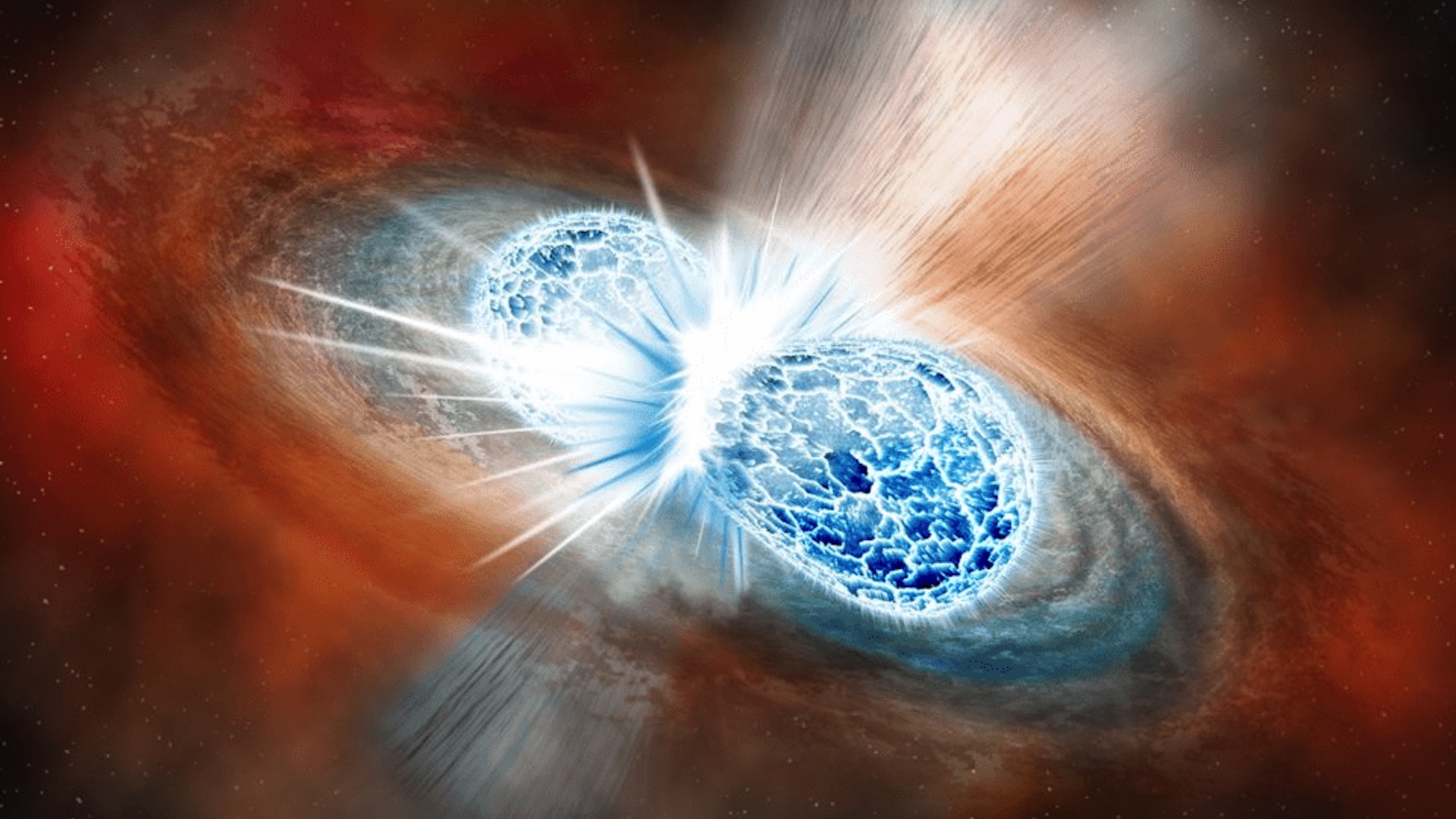
Scientists Are Closer Than Ever to Solving Black Holes

Definition of Black Holes Black holes are extraordinary cosmic entities characterized by gravitational fields so intense that nothing, not even light, can escape their grasp. These regions in space represent some of the most mysterious and captivating phenomena in astrophysics, often described as cosmic voids or singularities where conventional laws of physics break down. Event […]

Read More →

Galactic Nuclei Outshine Quasars

Definition of Galactic Nuclei and Quasars Galactic nuclei are the central regions of galaxies, often hosting some of the universe’s most intriguing and energetic phenomena. These cores can contain supermassive black holes and densely packed stars, making them focal points for astrophysical research. Quasars, short for “quasi-stellar objects,” are a specific type of active galactic […]

Read More →

Is the Sun a Dark Matter Trap?

Understanding the Sun’s Role in Cosmic Phenomena The Sun, far beyond being a mere glowing sphere in the sky, stands as a pivotal entity within the vast cosmic network of gravitational forces, light emission, and matter interactions. Its radiant presence prompts a fascinating question: could the Sun also function as a trap for dark matter? […]

Read More →

Discovering Darkness: The Ongoing Search for Dark Matter

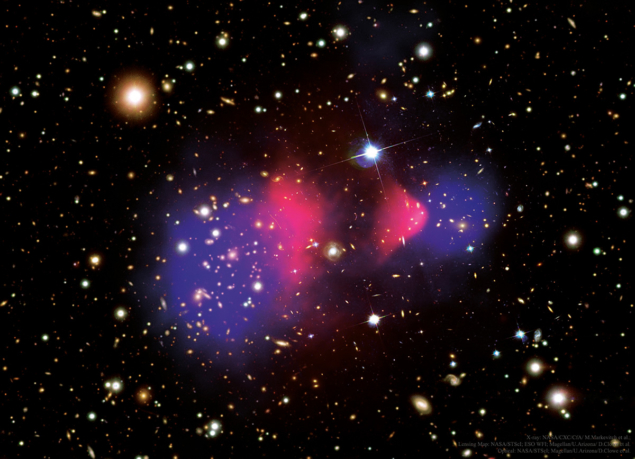
Definition of Dark Matter Dark matter is a mysterious form of matter that is believed to make up about 27% of the universe’s total mass-energy content. Unlike ordinary matter, it does not emit, absorb, or reflect light, making it invisible to traditional astronomical instruments. Despite its elusive nature, dark matter exerts a significant gravitational influence […]

Read More →

A Galaxy Survey Fails to Add Up

Understanding Galaxy Surveys Galaxy surveys are comprehensive scientific endeavors designed to systematically catalog and analyze the vast array of galaxies scattered throughout the universe. These surveys aim to map the large-scale structure of the cosmos, revealing the distribution, composition, and dynamic behavior of galaxies. By collecting extensive observational data, researchers strive to deepen our understanding […]

Read More →

Do Satellite Galaxies Whisper of Modified Gravity?

Definition of Satellite Galaxies Satellite galaxies are smaller galactic systems gravitationally bound to and orbiting around much larger host galaxies. These diminutive companions play a crucial role in astrophysical research, offering insights into the gravitational interactions and evolutionary processes within galactic systems. Their relatively low mass and unique orbital characteristics make them key subjects in […]

Read More →

The First Sighting of Dark Matter

Definition of Dark Matter Dark matter refers to a form of matter that does not emit, absorb, or reflect light, making it invisible to current electromagnetic observational methods. Despite its invisibility, it exerts a significant gravitational influence on visible matter, radiation, and the large-scale structure of the universe. Invisible Mass: Dark matter cannot be detected […]

Read More →

Dark Matter and the Birth of Strange Stars

Understanding Dark Matter Dark matter is a mysterious and invisible form of matter that makes up about 27% of the total mass-energy content of the universe. Unlike ordinary matter, which includes stars, planets, and galaxies, dark matter does not emit, absorb, or reflect light, making it undetectable through direct observation. Its existence is inferred primarily […]

Read More →

When Divergent Quasars Fall in Line: Order in the Cosmic Chaos

Definition of Quasars Quasars are extraordinarily bright astronomical objects powered by supermassive black holes located at the centers of distant galaxies. These luminous sources emit vast amounts of energy, primarily from the accretion disks formed by matter spiraling into the black holes. Due to their intense brightness, quasars are visible across immense cosmic distances, making […]

Read More →

A Galaxy Simulation Breaks New Ground

Definition of Galaxy Simulations Galaxy simulations are advanced computational models designed to replicate the formation, evolution, and interactions of galaxies within the universe. These simulations integrate complex physical processes to create detailed visual and theoretical representations of galactic structures and dynamics, offering profound insights into cosmology and astrophysics. Purpose: To understand the mechanisms driving galaxy […]

Read More →