A New Hope for Element 114 from Dubna

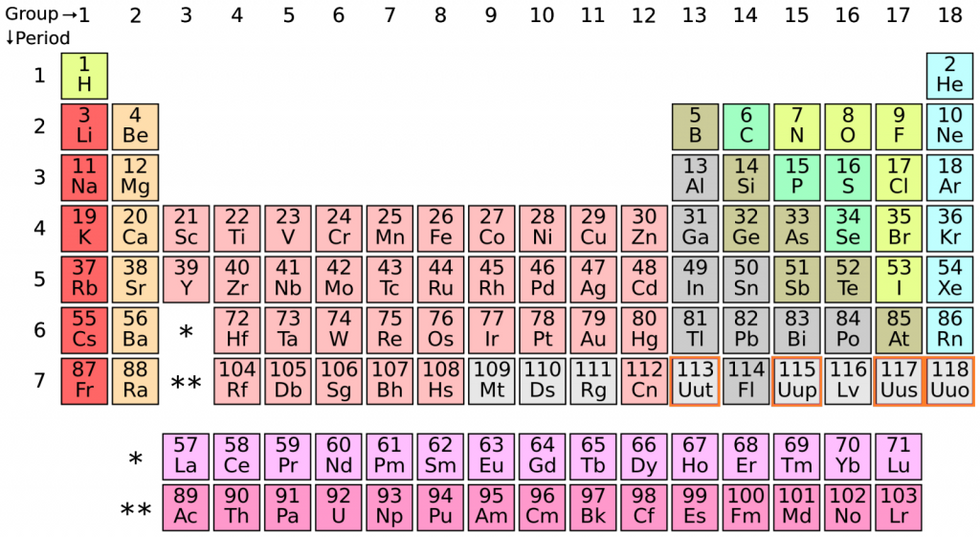
Definition and Discovery of Flerovium Flerovium (Fl), designated as element 114 on the periodic table, is a superheavy synthetic element that has captivated scientists due to its elusive nature and unique properties. First synthesized in 1998 at the Joint Institute for Nuclear Research (JINR) in Dubna, Russia, flerovium was produced by fusing isotopes of curium […]


Read More →

Controlling the Speed of Light with Fibres

Understanding Light and Its Speed Light is an electromagnetic wave traditionally understood to travel at a constant speed in a vacuum, approximately 299,792,458 meters per second, symbolized as c. This speed is a fundamental constant in physics, underpinning many scientific principles. However, when light passes through different materials, such as those found in optical fibers, […]

Read More →

Forecasting the Next Katrina: Cyclone Model Predicts Super Storms

Definition of Cyclone Forecasting Cyclone forecasting refers to the scientific process of predicting the path, intensity, and potential impacts of tropical cyclones using advanced meteorological techniques and computational models. These forecasts are essential for preparing vulnerable coastal regions against the destructive forces of hurricanes and similar storms. Tropical Cyclones: Intense circular storms originating over warm […]

Read More →

Cylinders of Silence: Cloaking Devices Go 2D

Understanding Cloaking Devices Cloaking devices have fascinated scientists, engineers, and the public for decades, blending the boundaries between science fiction and cutting-edge physics. These devices, grounded in advanced material science and wave manipulation, aim to render objects invisible by controlling how light and sound waves interact with them. The concept has evolved from mere fantasy […]

Read More →

Elementary Curiosity: The Quest for the Unknown

Definition of Curiosity Curiosity is an inherent human attribute characterized by a deep-seated desire to acquire knowledge and understand the unknown. It transcends simple inquisitiveness, representing a persistent urge to explore new ideas, environments, and concepts. This trait is fundamental to intellectual growth and innovation, driving individuals and societies toward discovery and advancement. Intrinsic Nature: […]

Read More →

The Curious Case of Element 118: Here Then Gone

Definition of Oganesson Oganesson (Og), designated as element 118, is a synthetic superheavy element positioned at the far end of the periodic table. It is notable for its extreme atomic number and mass, representing one of the heaviest elements ever created by scientists. Unlike naturally occurring elements, oganesson is produced artificially in laboratory settings through […]

Read More →

DAΦNE Accelerates Again: A Particle Boost in Italy’s Collider

Overview of the DAΦNE Collider Situated at the National Laboratories of Frascati in Italy, the DAΦNE (Double Accumulator for the Physics of Nonlinear Effects) collider is a landmark scientific instrument that has recently undergone substantial enhancements. These improvements have significantly boosted its particle acceleration efficiency, marking a major milestone in experimental particle physics. DAΦNE exemplifies […]

Read More →

Dubna Discoveries: Elements 113 and 115 Join the Table

Definition of Superheavy Elements Superheavy elements are chemical elements with atomic numbers greater than 104, characterized by their extremely large nuclei and short-lived existence. These elements extend the periodic table beyond naturally occurring substances and are typically synthesized in laboratory settings through nuclear reactions involving the collision of lighter nuclei. Element 113 (Nihonium): A superheavy […]

Read More →

Back from the Lab: Element 118 Discovered at Berkeley

Definition of Oganesson Oganesson (Og), designated as element 118, is a synthetic superheavy element positioned at the bottom of the periodic table within the noble gases group. Despite its classification, oganesson exhibits predicted properties that markedly differ from typical noble gases, which are generally chemically inert. This element is notable for its extremely short-lived existence […]

Read More →

One Electron One Signal: Cyclotron Radiation Measured in Real Time

Definition of Cyclotron Radiation Cyclotron radiation refers to the electromagnetic waves emitted by charged particles, such as electrons, when they undergo acceleration in a magnetic field. This phenomenon arises from the interaction between classical electrodynamics and quantum mechanics, where the motion of charged particles in magnetic environments leads to the release of energy in the […]

Read More →