Where to Submit Your Physics Research Paper

Definition Publishing a physics research paper involves selecting an appropriate academic platform to present original scientific findings to the global research community. This process is essential for transforming detailed investigations into recognized contributions that advance knowledge and stimulate scholarly discussion. The choice of publication venue significantly influences the visibility, credibility, and interdisciplinary reach of the […]


Read More →

Is the Sun a Dark Matter Trap?

Understanding the Sun’s Role in Cosmic Phenomena The Sun, far beyond being a mere glowing sphere in the sky, stands as a pivotal entity within the vast cosmic network of gravitational forces, light emission, and matter interactions. Its radiant presence prompts a fascinating question: could the Sun also function as a trap for dark matter? […]

Read More →

Can Sound Ever Reach the Speed of Light?

Definition of Sound and Light Waves Waves are disturbances that transfer energy through space or a medium, and among them, sound and light waves are particularly significant due to their contrasting characteristics. Sound waves are mechanical vibrations that require a physical medium-such as air, water, or solids-to propagate. In contrast, light waves are electromagnetic in […]

Read More →

Can We Bottle the Cosmos? Studying Dark Energy in the Lab

Understanding Dark Energy Dark energy is a mysterious and dominant force that permeates the universe, driving its accelerated expansion. Accounting for roughly 68% of the total cosmic content, dark energy remains one of the most profound enigmas in modern astrophysics. Its elusive nature challenges scientists to develop innovative methods to study and comprehend its properties, […]

Read More →

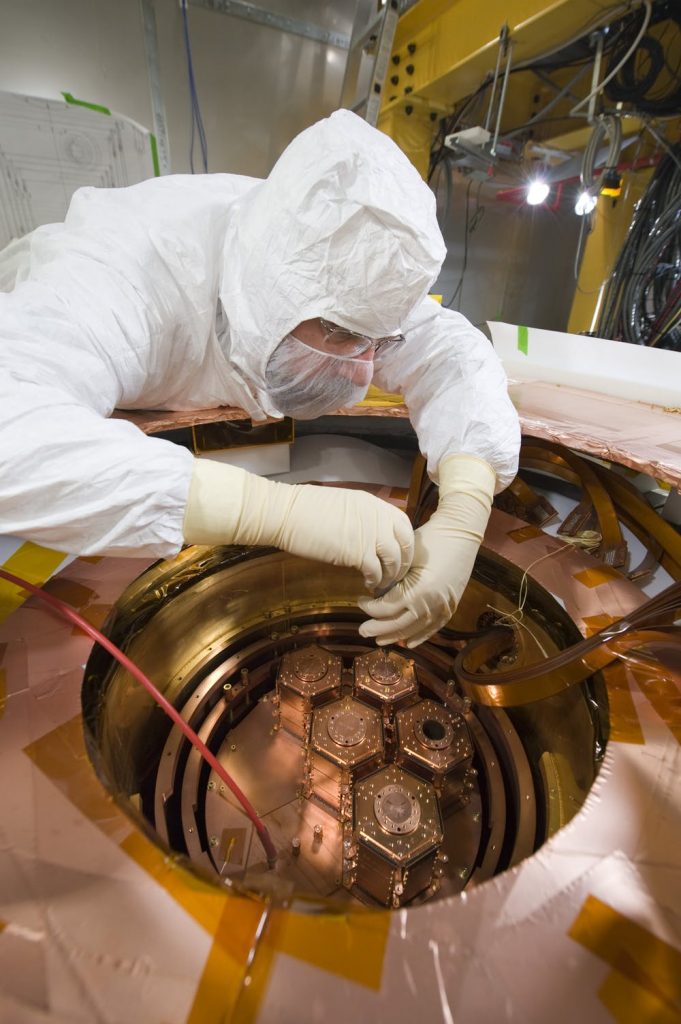
Dark Matter Deadline: Will Fermi Uncover It Within a Year?

Definition of Dark Matter Dark matter is a mysterious and invisible form of matter that constitutes approximately 27% of the total mass-energy content of the universe. Unlike ordinary matter, which includes stars, planets, and interstellar gas, dark matter does not emit, absorb, or reflect light, making it undetectable through direct electromagnetic observations. Its existence is […]

Read More →

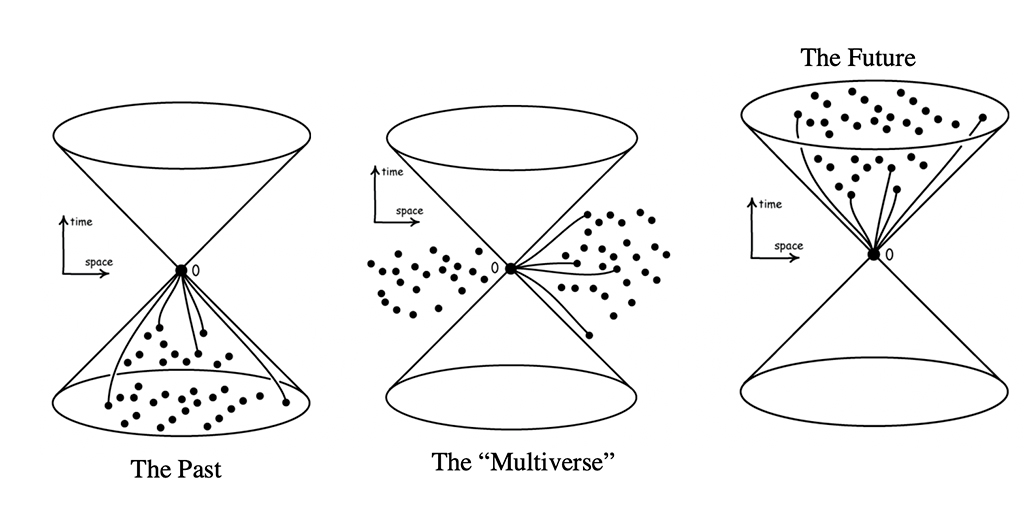
Multiverse Unlocked: Peering Beyond Our Universe

Definition of the Multiverse The multiverse concept refers to the theoretical existence of an infinite collection of universes, each with its own distinct realities, physical laws, and historical developments. Rather than viewing our universe as the sole cosmic entity, the multiverse hypothesis suggests that countless other universes coexist, potentially differing in fundamental constants and structures. […]

Read More →

Planck’s Law Under Fire: A Hidden Flaw Exposed?

Definition of Planck’s Law Planck’s Law is a fundamental principle in quantum mechanics that characterizes the spectral distribution of electromagnetic radiation emitted by an idealized black body in thermal equilibrium at a specific temperature. This law provides a precise mathematical description of how the intensity of radiation varies with wavelength and temperature, forming a cornerstone […]

Read More →

Electromagnets Double Up—A Two-for-One Force Revolution

Definition of Electromagnets Electromagnets are devices that generate magnetic fields through the flow of electric current, representing a significant advancement in the study and application of magnetism. Unlike permanent magnets, their magnetic properties can be controlled dynamically by adjusting the electric current, making them versatile tools in both scientific and industrial contexts. Electric Current and […]

Read More →

Eccentric Pulsar Could Be in a Threesome—A Stellar Menage à Trois?

Definition of Eccentric Pulsars in Multi-Star Systems Eccentric pulsars are neutron stars characterized by irregular, non-circular orbits, often found within complex gravitational environments. When such a pulsar is gravitationally linked to two other stellar bodies, forming a three-body system, it creates a unique astrophysical configuration sometimes informally described as a “stellar mĂ©nage Ă  trois.” This […]

Read More →

Can Schrödinger’s Bacterium Exist in Superposition?

Understanding Schrödinger’s Bacterium: A Quantum-Biological Intersection The concept of Schrödinger’s bacterium emerges from the fusion of quantum mechanics and microbiology, challenging traditional views of life at the microscopic scale. Rooted in the famous Schrödinger’s cat thought experiment, this idea explores whether a bacterium, like a quantum particle, can exist in multiple states simultaneously until observed. […]

Read More →