Are “Dark Photons” the Key to Solving the Mystery?

Definition of Dark Photons Dark photons are hypothetical particles proposed as counterparts to the well-known photon, the quantum of electromagnetic radiation responsible for light. Unlike ordinary photons, dark photons are theorized to belong to a hidden or “dark” sector of the universe, interacting weakly with both dark matter and, to a lesser extent, normal matter. […]

Read More →

The Relentless Hunt for Dark Matter Is Heating Up

Understanding Dark Matter Dark matter represents one of the most intriguing and elusive components of the universe. Although it cannot be observed directly through conventional means, its presence is inferred from its significant gravitational effects on visible matter, radiation, and the large-scale structure of the cosmos. This mysterious substance constitutes a substantial portion of the […]

Read More →

Is There a Particle Faster Than Light? Scientists Respond

Definition of Faster-Than-Light Particles Faster-than-light (FTL) particles refer to hypothetical or experimentally suggested entities that travel at speeds exceeding the speed of light in a vacuum, approximately 299,792 kilometers per second. According to Einstein’s special relativity, this speed represents an absolute cosmic speed limit, beyond which no matter or information can travel. The concept of […]

Read More →

How Particle Colliders Are Hunting Invisible Matter

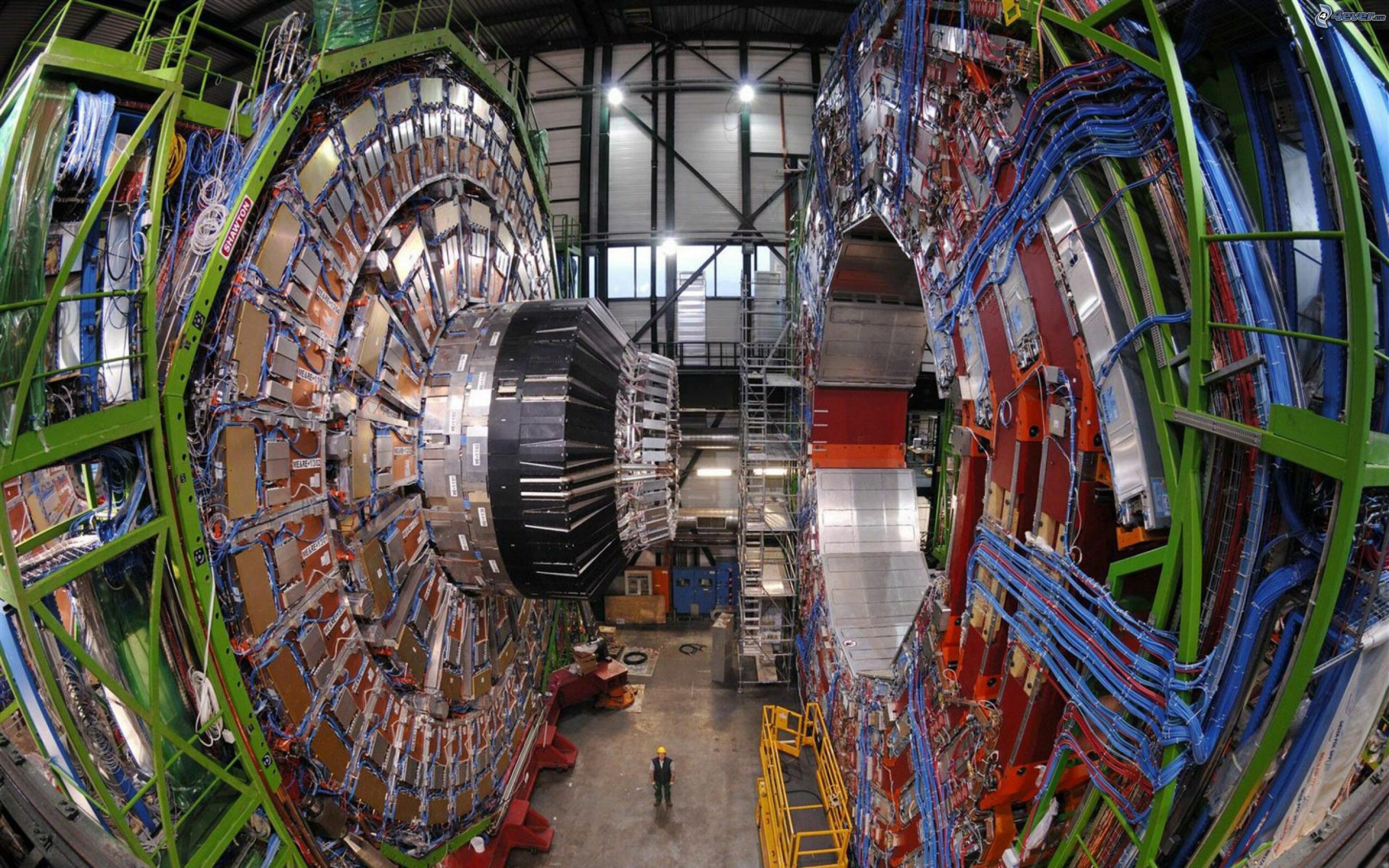
Understanding Invisible Matter in Particle Physics Particle colliders represent the forefront of contemporary physics research, enabling scientists to investigate the universe’s most fundamental building blocks with extraordinary accuracy. A central focus of these experiments is the pursuit of invisible matter-particles that evade direct observation yet exert significant influence on the structure and evolution of the […]

Read More →

The Race to Discover Axions—The Next Big Particle?

Definition of Axions Axions are hypothetical elementary particles proposed to address unresolved issues within particle physics and cosmology. Initially introduced to solve a specific symmetry problem in the Standard Model, axions have since gained prominence as potential candidates for dark matter, the mysterious substance that constitutes the majority of the universe’s mass but remains invisible […]

Read More →

Evidence Mounts for Axion-like Particles: A Particle Physicist’s Dream

Definition of Axion-Like Particles (ALPs) Axion-like particles (ALPs) are hypothetical elementary particles that extend the concept of the axion, originally proposed to solve specific problems in particle physics. These particles are characterized by their extremely low mass and weak interactions with ordinary matter, making them prime candidates in the search for dark matter. ALPs are […]

Read More →

Symmetry Broken: Matter-Antimatter Transitions Explored

Understanding Matter and Antimatter The universe is composed of two fundamental entities: matter and its elusive counterpart, antimatter. Matter forms the tangible substance of everything we observe, from planets to living beings, while antimatter remains largely theoretical, detected primarily in high-energy physics experiments. The stark imbalance between these two forms has puzzled scientists, prompting deep […]

Read More →

Does Dark Matter Come in Two Flavors?

Definition of Dark Matter and Its Flavors Dark matter is a mysterious form of matter that constitutes roughly 27% of the Universe’s total mass-energy composition. Unlike ordinary matter, it does not emit, absorb, or reflect light, making it invisible to current electromagnetic detection methods. Its existence is inferred primarily through gravitational effects on visible matter, […]

Read More →

Particle Theorists Take the Spotlight with Dirac Medal

Overview of Particle Theory and the Dirac Medal The realm of theoretical physics is filled with paradoxes and mysteries that often generate more questions than definitive answers. Among the leading figures in this domain are particle theorists, who have recently been honored with the prestigious Dirac Medal. This award not only acknowledges their remarkable theoretical […]

Read More →