
Short Answer
Definition of Gravity and Dark Matter
Gravity is the fundamental force that attracts objects with mass toward one another, acting as the invisible thread that binds matter across the universe. It governs the motion of planets, stars, and galaxies, shaping the cosmic landscape. Dark matter, on the other hand, is a mysterious form of matter that does not emit, absorb, or reflect light, rendering it invisible to conventional detection methods. Despite its elusive nature, dark matter constitutes about 27% of the universe’s total mass-energy content and plays a crucial role in cosmic structure formation.
- Gravity:
A natural phenomenon by which all things with mass or energy are drawn toward one another. - Dark Matter:
An unseen form of matter that interacts primarily through gravity, influencing the universe’s structure without emitting electromagnetic radiation.
How Gravity and Dark Matter Interact
Dark matter possesses mass, and therefore, it generates gravitational forces just like ordinary matter. This gravitational pull is essential in holding galaxies together, as the visible matter alone cannot account for the observed rotational speeds of stars within galaxies. Gravity acts as the medium through which dark matter exerts its influence, creating an invisible framework that supports the formation and stability of cosmic structures.
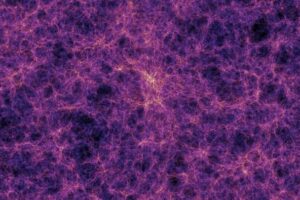
Conversely, gravity also governs the behavior of dark matter. Dark matter particles respond to gravitational fields, clustering and flowing to form vast cosmic webs that span billions of light-years. This dynamic interaction between gravity and dark matter is fundamental to the evolution of the universe, guiding the assembly of galaxies and galaxy clusters.

Theoretical Perspectives on Dark Matter and Gravity
While the standard model treats dark matter as a gravitationally interacting substance composed of unknown particles such as Weakly Interacting Massive Particles (WIMPs), axions, or primordial black holes, alternative theories challenge this view. Modified gravity theories, like Modified Newtonian Dynamics (MOND), propose adjustments to the laws of gravity to explain galactic rotation curves without invoking dark matter. These hypotheses suggest a complex relationship between gravity and dark matter, potentially indicating new physics beyond classical understanding.
Gravity in the Context of General Relativity
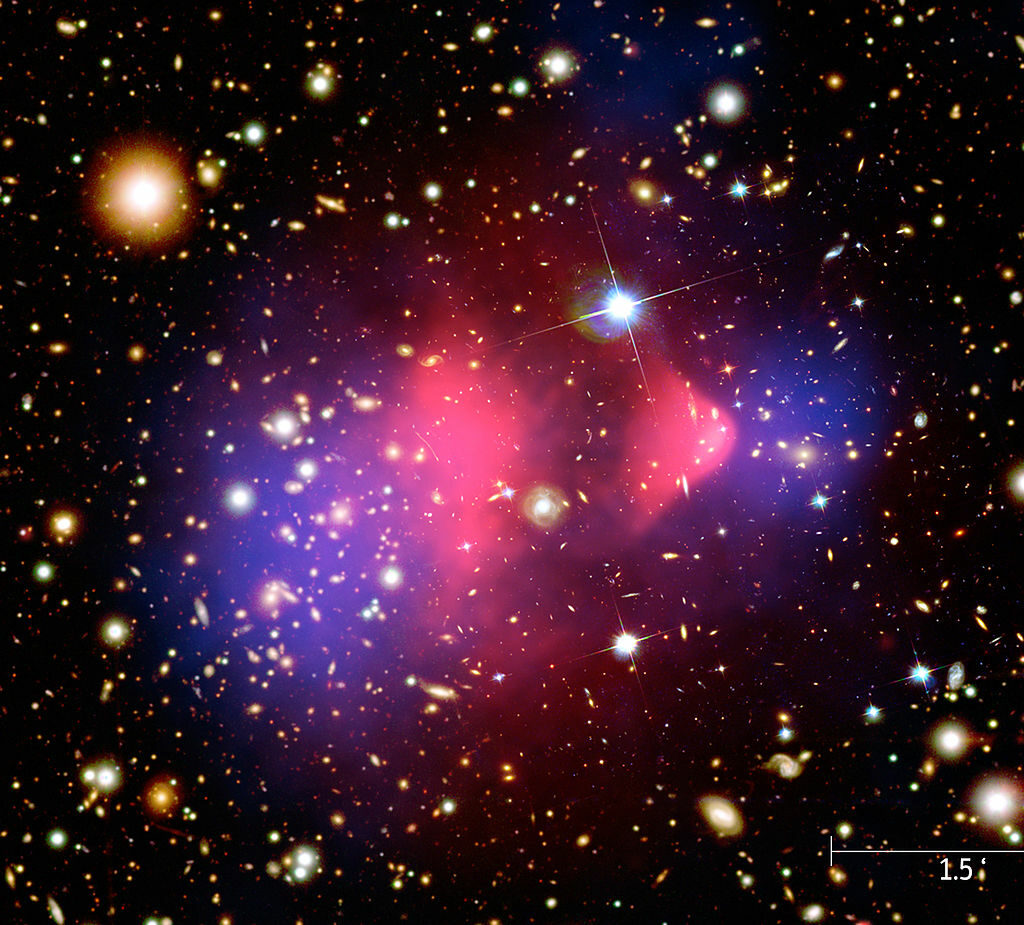
Einstein’s theory of General Relativity redefines gravity not as a force but as the curvature of spacetime caused by mass and energy. Dark matter contributes to this curvature, bending the path of light and producing phenomena such as gravitational lensing, where the light from distant galaxies is distorted or magnified. These gravitational effects provide indirect evidence of dark matter’s presence and its role in shaping the universe’s large-scale structure.
Real-World Examples of Gravity and Dark Matter Interplay
Observations of galaxy rotation curves reveal that stars orbit at speeds inconsistent with the gravitational pull from visible matter alone, implying the presence of dark matter halos. Gravitational lensing events, where light from distant objects is bent around massive clusters, further demonstrate dark matter’s gravitational influence. Additionally, the cosmic web-a vast network of filaments composed of dark matter and galaxies-illustrates how gravity shepherds dark matter into structures that underpin the visible universe.
Common Misconceptions About Gravity and Dark Matter
Dark matter does not exert gravity.
Dark matter has mass and therefore generates gravitational forces that influence cosmic structures.
Gravity only affects visible matter.
Gravity acts on all mass, including dark matter, guiding its distribution and clustering.
Dark matter can be detected by light.
Dark matter neither emits nor absorbs light, making it detectable only through its gravitational effects.
Significance of the Gravity-Dark Matter Relationship
The interplay between gravity and dark matter is fundamental to understanding the universe’s architecture and evolution. Dark matter’s gravitational influence forms the scaffolding upon which galaxies and clusters assemble, while gravity dictates the motion and distribution of dark matter itself. This partnership shapes cosmic history, from the formation of the first galaxies to the large-scale structure observed today, making it a central focus in astrophysics and cosmology.
Ongoing Research and Future Directions
Scientists continue to investigate the nature of dark matter and its gravitational interactions through particle physics experiments, such as those conducted at the Large Hadron Collider, and underground detectors designed to capture rare dark matter interactions. Space-based observatories and gravitational wave detectors provide additional insights into the cosmic dance between gravity and dark matter. These efforts aim to unravel the mysteries of this invisible yet influential cosmic duo, potentially revealing new physics and deepening our understanding of the universe.


Leave a Reply