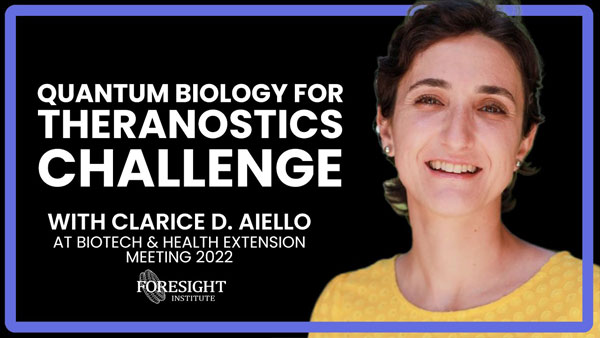
Creating Schrödinger’s Virus: Quantum Biology Steps Forward

Definition of Schrödinger’s Virus The concept of Schrödinger’s virus emerges from the intersection of quantum mechanics and biology, proposing a hypothetical viral entity that exists in a superposition of states. Inspired by Schrödinger’s famous thought experiment involving a cat simultaneously alive and dead until observed, this idea explores whether a virus could similarly embody dual […]
Read More →

When Electron Pairs Start Acting Like Bosons – A Quantum Quirk

Definition of Electron Pair Bosonic Behavior In quantum mechanics, particles exhibit dual characteristics, behaving both as waves and particles. Electrons, which are fermions, normally follow the Pauli exclusion principle, preventing any two electrons from occupying the same quantum state simultaneously. However, under specific conditions, pairs of electrons can collectively behave like bosons, particles that can […]

Read More →

Entanglement Goes Mechanical: Vibrations Meet Quantum Weirdness

Understanding Quantum Entanglement Quantum entanglement is a fundamental phenomenon in quantum mechanics where two or more particles become interconnected such that the state of one instantly influences the state of another, regardless of the distance between them. This non-classical correlation defies traditional notions of separability and locality, challenging our classical understanding of the physical world. […]

Read More →

Fractional Charge: A Mind-Bending Discovery

Definition of Fractional Charge Fractional charge refers to the phenomenon where particles exhibit electric charges that are fractions of the elementary charge, rather than whole integer multiples. Traditionally, electric charge is understood as quantized in units of the elementary charge, such as those carried by electrons and protons. However, fractional charge challenges this notion by […]

Read More →

Do Atoms Know They’re Being Watched? The Double-Slit Paradox Deepens

Definition of the Double-Slit Experiment The double-slit experiment is a fundamental demonstration in quantum mechanics that reveals the dual nature of particles such as electrons and photons. It involves directing individual particles toward a barrier containing two narrow openings (slits) and observing the resulting pattern on a detection screen behind the barrier. This experiment highlights […]

Read More →

How is quantum mechanics relevant for nuclear physics?

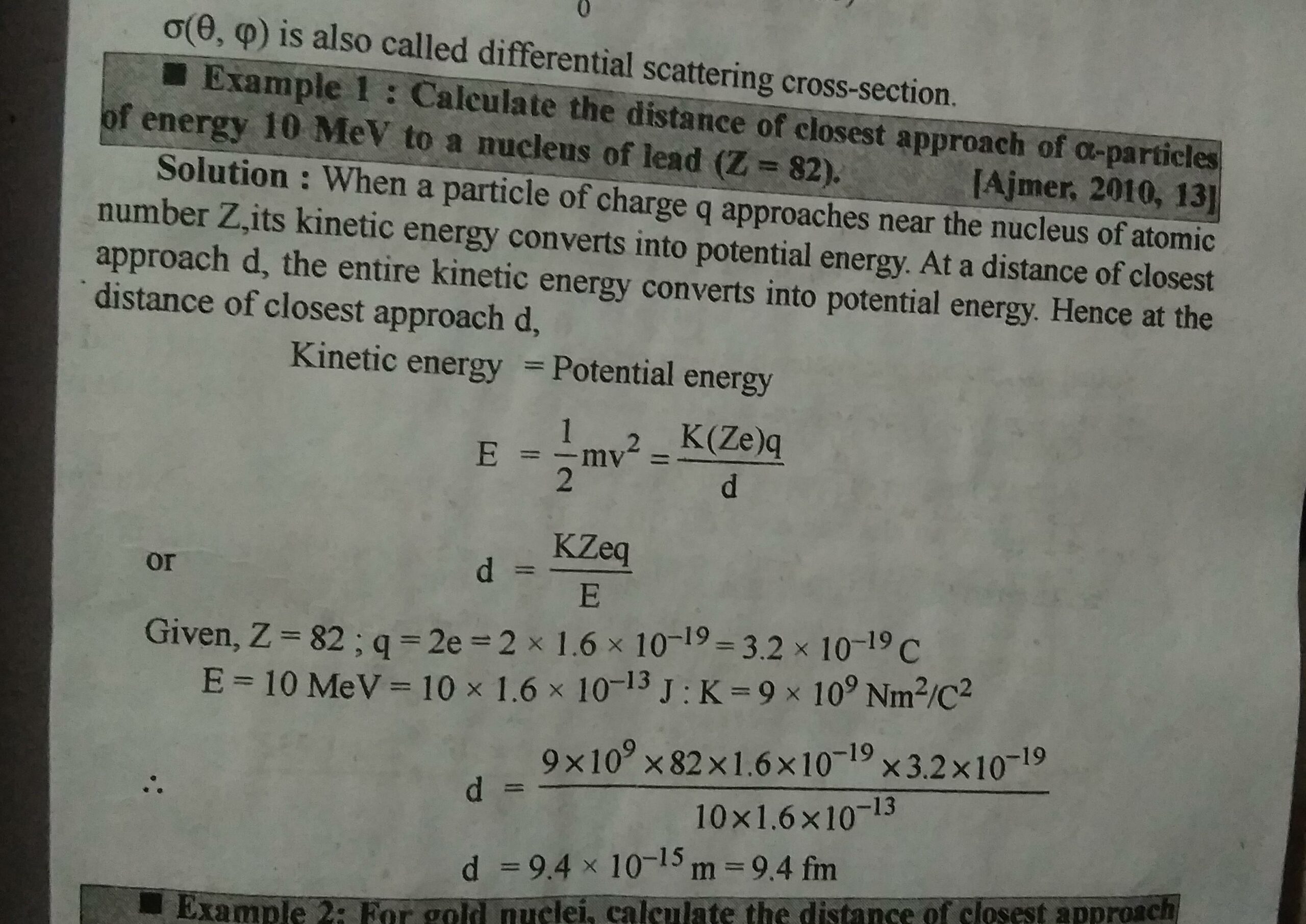
Definition of Quantum Mechanics and Nuclear Physics Quantum mechanics is a fundamental branch of physics that explains the behavior and interactions of particles at the smallest scales, such as atoms and subatomic particles. Nuclear physics, on the other hand, focuses specifically on the properties, structure, and reactions of atomic nuclei. The intersection of these two […]

Read More →

Are relativistic effects relevant in quantum computing?

Understanding the Intersection of Relativity and Quantum Computing The question of whether relativistic effects play a role in quantum computing might initially seem speculative, blending two vast and distinct areas of physics. However, the convergence of quantum mechanics and relativity offers a fertile ground for both theoretical exploration and practical advancements in quantum information science. […]

Read More →

What is it like to be a quantum mechanics physicist?

Definition of a Quantum Mechanics Physicist A quantum mechanics physicist is a specialist who explores the fundamental principles governing the behavior of matter and energy at the smallest scales. This field bridges classical physics and modern scientific theories, focusing on phenomena that often defy everyday intuition. These scientists engage deeply with abstract mathematical frameworks and […]

Read More →

How does quantum computing work? – Quantum Physics?

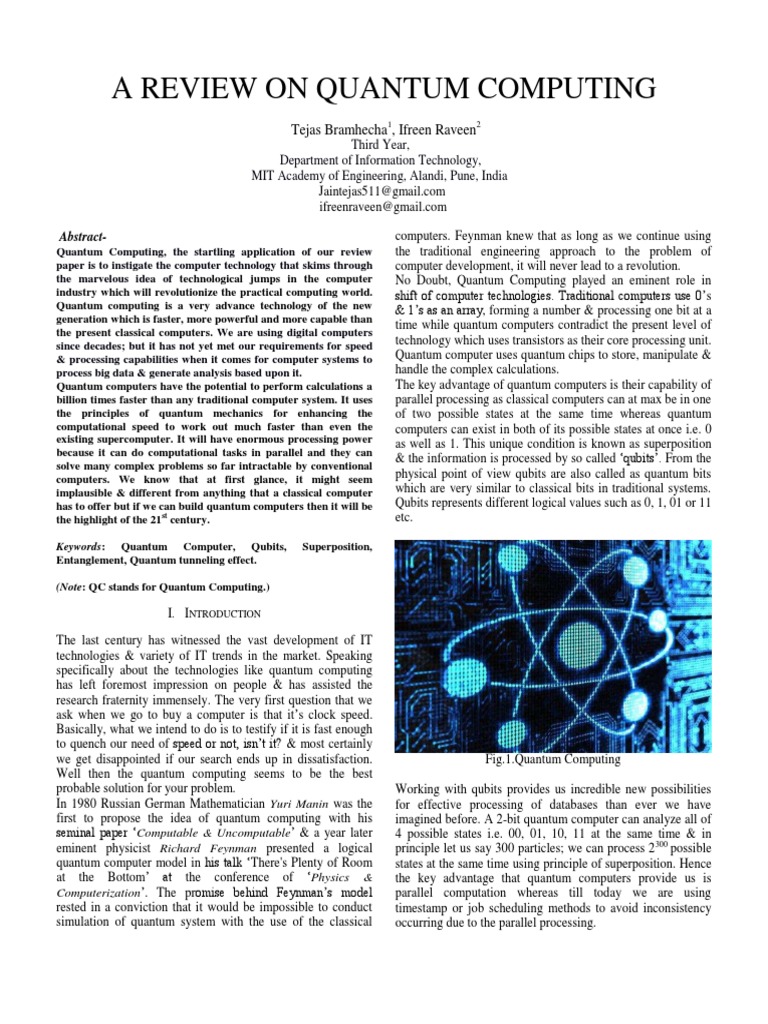
Definition of Quantum Computing Quantum computing represents a cutting-edge field that merges principles from computer science and quantum physics to create a fundamentally new approach to processing information. Unlike traditional computing, which relies on binary bits, quantum computing utilizes the unique behaviors of quantum particles to perform calculations that are beyond the reach of classical […]

Read More →