
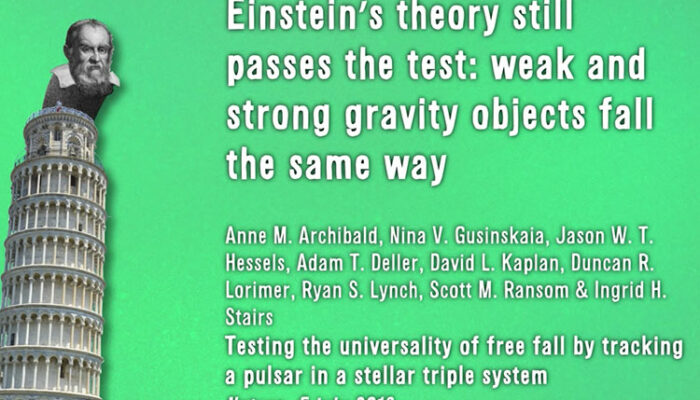
Short Answer
Understanding Gravity: A Fundamental Interaction
Gravity is often envisioned as the invisible force that governs the motion of celestial bodies and everyday objects alike. It is responsible for the fall of an apple, the Earth’s orbit around the Sun, and the majestic spirals of galaxies scattered across the cosmos. Traditionally, gravity was described by Isaac Newton as a force acting instantaneously at a distance, pulling masses toward one another. However, this classical view only scratches the surface of gravity’s true nature.
Einstein’s Revolutionary Perspective on Gravity
In the early 20th century, Albert Einstein introduced a paradigm-shifting concept through his general theory of relativity. Rather than treating gravity as a conventional force, Einstein proposed that gravity arises from the curvature of spacetime itself. This geometric interpretation replaced the idea of a mysterious force pulling objects with the notion that massive bodies distort the fabric of spacetime, guiding the paths of objects moving nearby.
Spacetime Curvature Explained
Imagine spacetime as a flexible, stretchable rubber sheet. When a massive object like a star or planet rests on this sheet, it creates a depression or curve. Objects moving close to this curvature do not experience a direct pull; instead, they follow the curved trajectories shaped by the warped geometry. This movement along curved paths, called geodesics, is what we perceive as gravitational attraction.

Did Einstein Deny Gravity as a Force?
The question of whether Einstein explicitly stated that gravity is not a force is nuanced. While he redefined gravity as a geometric property rather than a force transmitted through space, he did not entirely dismiss the concept of gravitational force in practical terms. In everyday experiences and classical physics, gravity can still be effectively treated as a force, especially when relativistic effects are negligible.
Force vs. Geometry: A Subtle Distinction
Einstein’s insight was that the force-like effects we observe-such as objects falling or planets orbiting-are manifestations of the underlying curvature of spacetime. Thus, gravity’s “force” is a convenient approximation rather than a fundamental interaction mediated by particles or fields, unlike electromagnetism.
Gravity in Action: Real-World Illustrations
A compelling example of Einstein’s concept is the experience of astronauts orbiting Earth. To an observer, astronauts appear weightless, floating freely in space. Newtonian physics explains this as a continuous free fall around Earth, with gravity still acting as a force. In Einstein’s framework, these astronauts follow geodesics in curved spacetime, experiencing no force because they are in free fall. This illustrates how gravity is not an external pull but the geometry guiding their motion.
Gravity and Modern Physics
Einstein’s geometric interpretation of gravity has opened new avenues in physics, including the study of gravitational waves-ripples in spacetime generated by massive cosmic events like black hole mergers. Unlike forces mediated by particles, gravity emerges as a dynamic curvature that influences both matter and light, shaping the universe’s large-scale structure.
Common Misconceptions About Gravity
Gravity is always a force pulling objects.
In general relativity, gravity is the effect of curved spacetime guiding objects along geodesics, not a force in the traditional sense.
Einstein completely rejected the concept of gravitational force.
Einstein reinterpreted gravity’s nature but acknowledged that treating it as a force remains useful in many practical contexts.
The Significance of Einstein’s View on Gravity
Einstein’s redefinition of gravity as a geometric property rather than a force revolutionized our understanding of the universe. It highlights the dynamic relationship between mass, energy, and the fabric of spacetime, providing a more accurate description of gravitational phenomena at cosmic scales. This perspective not only enriches theoretical physics but also enhances technologies like GPS, which require relativistic corrections to function precisely.
Ongoing Challenges and Future Directions
Despite the success of general relativity, the quest to fully comprehend gravity continues, especially at the quantum level. Integrating gravity with quantum mechanics remains one of the most profound challenges in modern physics. Einstein’s geometric framework beautifully describes gravity on large scales, but the microscopic realm demands new theories that may further transform our understanding of this fundamental interaction.
Conclusion: Gravity as the Universe’s Geometric Symphony
In summary, gravity transcends the classical notion of a force pulling objects through space. Einstein’s genius revealed it as the curvature of spacetime itself-a cosmic dance choreographed by mass and energy. This elegant interpretation invites us to appreciate the evolving nature of scientific knowledge, where old ideas are refined and expanded, revealing a universe more wondrous and intricate than previously imagined.


Leave a Reply