
Short Answer
Definition of Astrophysics
Astrophysics is the branch of science dedicated to understanding the physical nature and underlying mechanisms of celestial bodies and the universe at large. It extends human inquiry beyond Earth, investigating the forces and phenomena that govern stars, galaxies, and the vast cosmic voids between them.
- Scope:
It encompasses the study of matter, energy, and their interactions on a cosmic scale. - Distinction from Astronomy:
While astronomy focuses on cataloging and describing celestial objects, astrophysics seeks to explain the processes and laws that drive their behavior.
Core Principles and Methodologies
Astrophysics operates at the intersection of observation and theoretical modeling. Unlike traditional physics experiments conducted in controlled laboratories, astrophysicists use the universe itself as their experimental arena. They gather data through telescopes, satellites, and detectors that capture electromagnetic signals across the spectrum-from radio waves to gamma rays.
These observations are complemented by computer simulations that recreate cosmic conditions, enabling scientists to test hypotheses about the behavior of matter and energy under extreme environments.
Fundamental Concepts in Astrophysics
The field integrates diverse physical theories to explain cosmic phenomena:
- Quantum Mechanics:
Governs the behavior of matter under extreme densities, such as in neutron stars. - General Relativity:
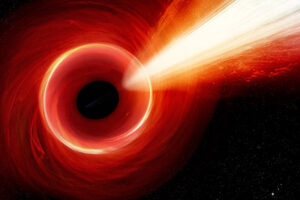
Describes how gravity influences the curvature of spacetime, especially near massive objects like black holes. - Nuclear Fusion:
The process powering stars, where lighter elements combine to form heavier ones, releasing energy.
Stellar Evolution: The Life Cycle of Stars
One of astrophysics’ central themes is understanding how stars form, evolve, and ultimately perish. Stars act as cosmic forges, synthesizing heavier elements from primordial hydrogen and helium through nuclear fusion. Their life cycles influence the chemical composition of the universe and the formation of planetary systems.
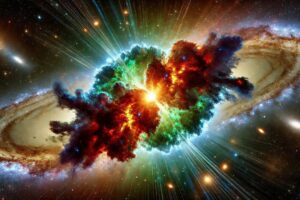
The dramatic death of massive stars in supernova explosions disperses these elements into space, enriching the interstellar medium and seeding future generations of stars and planets.
Galactic Dynamics and Dark Matter
Galaxies, vast assemblies of billions of stars, gas, and dark matter, are bound by gravity but exhibit puzzling behaviors. Observations reveal that stars orbit at velocities suggesting the presence of far more mass than what is visible. This unseen mass, known as dark matter, remains one of astrophysics’ greatest mysteries.
Research aims to detect and understand dark matter’s properties and its role in shaping the large-scale structure of the cosmos.
Cosmology: The Study of the Universe as a Whole
Cosmology, a specialized branch within astrophysics, investigates the origin, evolution, and ultimate fate of the universe. It addresses profound questions such as the cause of the Big Bang and the nature of cosmic expansion.
Key evidence comes from the cosmic microwave background radiation, a relic glow from the early universe that provides insights into its infancy and large-scale geometry.
Technological Innovations Driving Astrophysical Discoveries
Advances in technology have revolutionized astrophysics, enabling unprecedented exploration of the cosmos. Instruments like the Hubble Space Telescope and the James Webb Space Telescope capture light emitted billions of years ago, revealing galaxies formed shortly after the universe’s birth.
Additionally, gravitational wave observatories detect ripples in spacetime caused by cataclysmic events such as black hole mergers, opening new avenues for understanding cosmic phenomena.
Challenges and the Multidisciplinary Nature of Astrophysics
Astrophysics faces unique challenges due to the immense scale and complexity of its subject matter. Replicating cosmic conditions on Earth is impossible, so researchers rely on precise remote measurements and robust theoretical models that can reconcile seemingly contradictory data.
The discipline draws upon chemistry, plasma physics, quantum theory, and relativity, while also intersecting with philosophical questions about existence and the universe’s meaning.
Common Misconceptions About Astrophysics
Astrophysics is just astronomy with a fancy name.
Astronomy primarily catalogs celestial objects, whereas astrophysics seeks to understand the physical laws and processes behind those objects.
Astrophysics only studies stars.
While stars are a major focus, astrophysics also investigates galaxies, black holes, dark matter, cosmic radiation, and the universe’s overall structure.
Significance of Astrophysics
Astrophysics is vital for expanding our comprehension of the universe and our place within it. By deciphering the laws that govern cosmic phenomena, it enriches scientific knowledge and inspires technological innovation. Moreover, it satisfies a fundamental human curiosity about the origins and workings of the cosmos, bridging science with philosophical inquiry.
Summary: The Essence of Astrophysics
In essence, astrophysics is a profound intellectual journey that embraces the unknown. It employs scientific tools and theories to decode the universe’s mysteries, from the tiniest particles of light to the vastest galactic structures. This relentless pursuit continually reshapes our understanding of reality and humanity’s role in the cosmic tapestry.
FAQ
What is the difference between astrophysics and astronomy?
Astrophysics seeks to explain the physical laws and processes behind celestial objects, while astronomy primarily catalogs and describes these objects.
What are the core principles of astrophysics?
Core principles include quantum mechanics, general relativity, and nuclear fusion, which help explain cosmic phenomena.


Leave a Reply