
Short Answer
Understanding the Universe: An Overview
The night sky, dotted with shimmering stars and enigmatic black holes, has fascinated humanity for millennia. Gazing upward evokes a profound sense of awe, hinting at the majestic and mysterious expanse beyond our atmosphere. Beneath this familiar spectacle lies a universe filled with extraordinary phenomena that challenge everyday logic and invite us to explore the depths of astrophysics. The following sections present fifteen astonishing facts about the cosmos that will transform how you perceive the vastness surrounding us.
Cosmic Expansion and Dark Energy
Contrary to the notion of a static universe, space itself is continuously stretching, causing galaxies to drift apart at remarkable speeds. Intriguingly, this expansion can exceed the speed of light over immense distances without breaching Einstein’s theory of relativity. This accelerated growth is propelled by dark energy, an enigmatic force that constitutes roughly 68% of the universe’s total energy content. Despite its dominance, dark energy remains one of the most profound mysteries in contemporary physics.
Black Holes: Beyond the Darkness
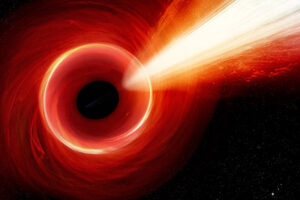
Black holes are often perceived as mere voids, but they are actually regions of intense gravitational pull with boundaries known as event horizons, beyond which no information escapes. Quantum theory reveals that black holes emit a faint radiation, termed Hawking radiation, causing them to gradually lose mass over unimaginably long periods. This phenomenon implies that black holes are not completely black but emit subtle particle emissions into space.
Neutron Stars: The Densest Objects
Neutron stars, the compact remnants left after supernova explosions, pack a mass comparable to our Sun into a sphere only about 20 kilometers in diameter. A small amount of neutron star matter, such as a teaspoon, would weigh approximately a billion tons on Earth. Their extreme density generates powerful gravitational and magnetic fields that distort spacetime and dramatically affect nearby matter.
Time Dilation: The Warping of Time
Time dilation is not just theoretical; it is an observable effect occurring in strong gravitational fields or at speeds nearing that of light. For instance, satellite clocks must be regularly adjusted because time passes slightly faster in orbit than on Earth’s surface. This phenomenon illustrates the intricate connection between gravity, velocity, and the flow of time.
Dark Matter: The Invisible Majority
Ordinary matter-comprising stars, planets, and galaxies-makes up only about 5% of the universe’s total mass-energy. The remainder is largely dark matter, an unseen substance detectable solely through its gravitational influence. Despite extensive investigation, the true nature of dark matter remains elusive, posing significant challenges to particle physics and cosmology.
The Cosmic Microwave Background: A Glimpse into the Early Universe
The cosmic microwave background (CMB) radiation is the faint, nearly uniform microwave glow left over from the Big Bang. It provides a direct window into the universe’s state when it was less than 400,000 years old, encoding vital information about its origin, structure, and evolution.
Gravitational Waves: Ripples in the Fabric of Spacetime
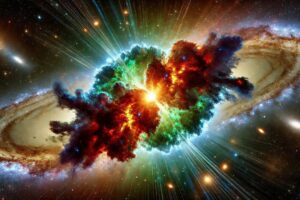
Gravitational waves are distortions in spacetime generated by massive cosmic events such as the collision of black holes or neutron stars. Traveling at the speed of light, these waves were first detected by advanced instruments, opening a revolutionary method for observing phenomena previously hidden from view.
The Multiverse Hypothesis
Though still speculative, the multiverse theory suggests that our observable universe is just one of countless others, each potentially governed by different physical laws or constants. This concept challenges the idea of a singular cosmos and invites both scientific and philosophical reconsideration of reality.
Quantum Entanglement: Instant Connections Across Space
Quantum entanglement describes a phenomenon where particles separated by vast distances remain interconnected, influencing each other instantaneously in ways that defy classical cause-and-effect. Referred to by Einstein as “spooky action at a distance,” this effect has significant implications for quantum information science and our understanding of reality’s foundations.
Stellar Nucleosynthesis: Stars as Element Factories
Stars are not just sources of light; they forge nearly all elements heavier than hydrogen and helium through nuclear fusion within their cores. When massive stars explode as supernovae, they disperse these elements into space, enriching the interstellar medium with the essential building blocks for planets and life.
The Limits of the Observable Universe
While the universe itself may be infinite, the portion we can observe is limited by the finite speed of light and the universe’s age. This cosmic horizon means that some regions remain forever beyond our observational reach, cloaking parts of the cosmos in perpetual mystery.
Ancient Galaxies: Challenging Cosmic Timelines
Recent discoveries have identified galaxies that formed just a few hundred million years after the Big Bang, earlier than previously thought possible. These ancient galaxies suggest that cosmic structures emerged rapidly, prompting revisions to existing models of galaxy formation and evolution.
Rogue Planets: Wanderers of Interstellar Space
Not all planets orbit stars; some drift alone through the galaxy, unattached to any solar system. These rogue planets broaden our understanding of planetary formation and survival under extreme cosmic conditions, roaming the dark expanses between stars.
Possible Endings of the Universe
Cosmologists propose several scenarios for the ultimate fate of the universe, including:
- The Big Freeze:
Continuous expansion leads to a cold, dark, and dilute cosmos. - The Big Crunch:
A reversal of expansion causes the universe to collapse back on itself. - The Big Rip:
Accelerated expansion tears apart galaxies, stars, and eventually matter itself.
Each hypothesis offers profound insights into the long-term destiny of all cosmic structures.
Starlight as a Window to the Past
Observing stars is essentially looking back in time. Light from the closest star takes over four years to reach Earth, while photons from distant galaxies may have traveled billions of years. Thus, the night sky serves as a vast archive, with each beam of light carrying messages from epochs long gone.
Significance of Astrophysical Discoveries
The universe’s grandeur is woven from phenomena that challenge human understanding and spark curiosity. Every observation invites exploration not only of celestial bodies but also of the fundamental forces and matter shaping existence. These fifteen astrophysical insights highlight the universe’s complexity and mystery, inspiring both scientists and dreamers to deepen their quest for knowledge about the cosmos that surrounds us.
FAQ
What is dark energy?
Dark energy is an enigmatic force that constitutes about 68% of the universe’s energy content and is responsible for the accelerated expansion of the universe.
What are black holes?
Black holes are regions of space with gravitational pulls so strong that nothing, not even light, can escape from them.
What is quantum entanglement?
Quantum entanglement is a phenomenon where particles become interconnected, such that the state of one instantly influences the state of another, regardless of distance.
What is the cosmic microwave background?
The cosmic microwave background (CMB) radiation is the afterglow of the Big Bang, providing valuable information about the early universe.



Leave a Reply