
Short Answer
Understanding Galaxies and Dark Matter
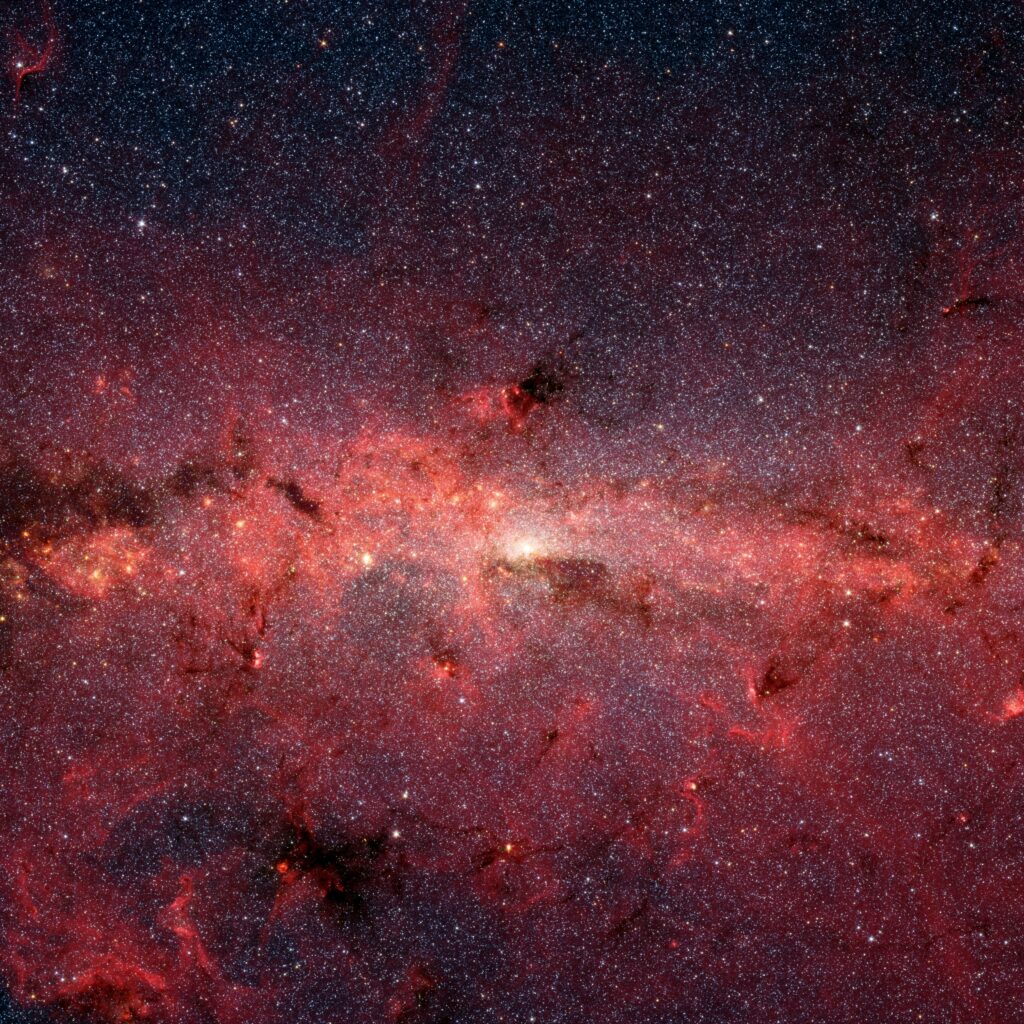
When we observe the vast expanse of the universe, galaxies appear as radiant islands scattered across the cosmic sea, each containing billions of stars. However, beneath this brilliant display lies an unseen force-dark matter-that fundamentally shapes the structure and behavior of these galactic systems. Galaxies, with their diverse shapes ranging from spirals to ellipticals, act as natural indicators, revealing the presence and influence of this mysterious, invisible mass through their movements and gravitational effects.
Definition of Dark Matter in Galactic Context
Dark matter is a form of matter that does not emit, absorb, or reflect light, making it undetectable by conventional telescopes. Despite its invisibility, it exerts gravitational forces that affect the motion of stars and galaxies. It is believed to constitute the majority of matter in the universe, playing a crucial role in the formation and stability of cosmic structures.
- Invisible Mass:
Dark matter cannot be observed directly but is inferred from gravitational effects on visible matter. - Galactic Halo:
Surrounding galaxies, dark matter forms an extensive halo that influences stellar dynamics.
Galactic Rotation Curves: Evidence of Dark Matter
One of the most compelling pieces of evidence for dark matter arises from studying the rotation curves of galaxies. These curves plot the orbital speeds of stars and gas at various distances from the galactic center. According to classical physics, the velocity of stars should decrease as one moves farther from the center, where visible mass diminishes. Contrary to this expectation, observations show that stars in the outer regions maintain unexpectedly high speeds, suggesting the presence of additional unseen mass.

Mechanism Behind Galactic Rotation Anomalies
The discrepancy in rotational velocities indicates that galaxies are embedded within massive halos of dark matter. This halo’s gravitational pull prevents stars on the outskirts from flying away despite their rapid motion, maintaining the galaxy’s structural integrity. The phenomenon is analogous to dancers on the edge of a spinning carousel moving faster than those near the center without being flung off, defying simple Newtonian predictions based solely on visible matter.
Gravitational Lensing: Mapping the Invisible
Gravitational lensing offers another powerful method to detect dark matter. When light from distant celestial objects, such as quasars or background galaxies, passes near a massive galaxy, it bends due to the galaxy’s gravitational field. This bending distorts and magnifies the light, allowing astronomers to infer the total mass of the lensing galaxy, including both visible and dark matter components. The mass calculated through lensing consistently exceeds that of luminous matter alone, reinforcing the existence of dark matter as the underlying framework of galactic systems.
Dark Matter in Galaxy Clusters
Galaxies often exist in large groups called clusters, bound together by gravity. The collective mass of these clusters, inferred from the velocities of member galaxies and the temperature of hot intracluster gas observed in X-rays, far surpasses the mass of visible stars. This excess mass is attributed to dark matter, which dominates the gravitational potential of clusters and sustains the hot plasma within them. Thus, galaxy clusters serve as large-scale laboratories demonstrating dark matter’s critical role in cosmic structure.
Role of Dark Matter in Cosmic Structure Formation
Dark matter is fundamental to the universe’s large-scale architecture. It acts as the gravitational scaffold upon which ordinary matter accumulates to form stars, galaxies, and clusters. Without dark matter’s gravitational influence, the intricate cosmic web-composed of filaments, nodes, and vast voids-would not have developed. Galaxies can be viewed as luminous beads strung along the invisible threads of dark matter, highlighting its essential role in shaping the cosmos.
Dwarf Galaxies: Natural Laboratories for Dark Matter Studies
Dwarf galaxies, small and often dominated by dark matter, provide unique environments to study dark matter’s properties. Their dynamics and density distributions sometimes challenge simple dark matter models, prompting refinements and new hypotheses about dark matter’s nature and interactions. Each dwarf galaxy offers subtle clues, enriching our understanding of this elusive substance.
Dark Matter in Galactic Collisions
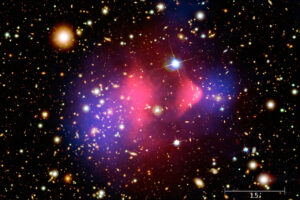
Colliding galaxies, such as the famous Bullet Cluster, reveal intriguing behaviors of dark matter distinct from ordinary matter. During these cosmic collisions, visible matter and dark matter separate due to their different interaction properties. Observations of such events provide critical evidence distinguishing dark matter’s gravitational effects from those of baryonic matter, offering insights into its fundamental characteristics.
Why Galaxies Are Key to Unveiling Dark Matter
Although dark matter remains undetectable through direct means, galaxies serve as indirect beacons of its presence. Their rotational dynamics, gravitational lensing signatures, cluster interactions, and evolutionary patterns collectively narrate the story of dark matter’s pervasive influence. Galaxies act as cosmic signposts, guiding astronomers in the quest to understand the universe’s dominant yet invisible component.
Summary: The Cosmic Dance of Galaxies and Dark Matter
In summary, galaxies are not merely collections of stars but are dynamic systems shaped and sustained by dark matter. From their unexpected rotational speeds to their role in gravitational lensing and cluster formation, galaxies reveal the hidden mass that governs much of the universe’s structure. This invisible matter, though elusive, orchestrates the grand cosmic ballet, making galaxies luminous actors directed by the unseen hand of dark matter-a profound mystery that continues to inspire scientific exploration.


Leave a Reply