
Short Answer
Understanding Dark Matter: A Fundamental Cosmic Mystery
Dark matter stands as one of the most perplexing and elusive concepts in astrophysics, captivating both scientists and the public with its enigmatic nature. Unlike ordinary matter, which we can observe through electromagnetic radiation such as light and radio waves, dark matter remains invisible and undetectable by conventional instruments. Despite this invisibility, it exerts a significant gravitational influence on galaxies and the large-scale structure of the universe, shaping the cosmic landscape in profound ways.
Definition and Characteristics of Dark Matter
Dark matter refers to a form of matter that does not emit, absorb, or reflect light, making it undetectable through direct electromagnetic observation. Its existence is inferred primarily through its gravitational effects on visible matter, radiation, and the universe’s overall structure.
- Invisible Mass:
Dark matter constitutes a substantial portion of the universe’s total mass, yet it cannot be seen or measured directly. - Gravitational Influence:
It affects the motion of stars within galaxies, the rotation curves of galaxies, and the bending of light from distant objects, known as gravitational lensing. - Weak Interaction:
Unlike ordinary matter, dark matter interacts very weakly, if at all, with electromagnetic forces, which is why it remains undetectable by traditional telescopes.
How Dark Matter Was Discovered
The concept of dark matter emerged from observations that could not be explained by visible matter alone. Astronomers noticed discrepancies in the rotational speeds of galaxies and the gravitational lensing of light from distant celestial bodies. These phenomena suggested the presence of an unseen mass providing additional gravitational pull.
- Galaxy Rotation Curves:
Stars in galaxies orbit at speeds that imply more mass than what is visible. - Gravitational Lensing:
Light from distant galaxies bends more than expected, indicating extra mass along the line of sight. - Cosmic Structure Formation:
The large-scale distribution of galaxies and galaxy clusters requires dark matter to explain their formation and stability.
Theoretical Implications and Scientific Challenges
Dark matter challenges existing scientific paradigms by suggesting the presence of matter beyond the Standard Model of particle physics. Its elusive nature has prompted extensive research efforts, including experiments in underground laboratories and particle accelerators, aiming to detect dark matter particles directly.
- New Physics:
The inability to detect dark matter through electromagnetic interactions implies the need for new theories or particles. - Particle Candidates:
Hypothetical particles such as WIMPs (Weakly Interacting Massive Particles) and axions are leading candidates for dark matter constituents. - Experimental Efforts:
Despite numerous attempts, direct detection remains elusive, deepening the mystery and encouraging alternative theories.
Alternative Theories: Modified Gravity
Some scientists propose that the phenomena attributed to dark matter might instead arise from modifications to our understanding of gravity. These theories suggest that the laws governing gravitational interactions may differ on cosmic scales, potentially eliminating the need for dark matter.
- Modified Newtonian Dynamics (MOND):
Proposes changes to Newton’s laws at very low accelerations to explain galaxy rotation curves without dark matter. - Tensor-Vector-Scalar Gravity (TeVeS):
A relativistic theory extending MOND to be consistent with general relativity. - Debate and Uncertainty:
These theories remain controversial and have not yet replaced dark matter as the dominant explanation.
Public Perception and Misconceptions
Dark matter often suffers from misunderstandings fueled by popular culture and the complexity of astrophysical language. It is sometimes portrayed as a mysterious or malevolent force, which oversimplifies and distorts the scientific reality.
- Misconception: Dark matter is a form of “dark energy” or a cosmic villain.
Correction: Dark matter and dark energy are distinct phenomena; dark matter exerts gravitational pull, while dark energy drives cosmic expansion. - Misconception: Dark matter can be directly observed.
Correction: Dark matter is detected only through its gravitational effects, not by direct observation.
Comparison with Black Holes
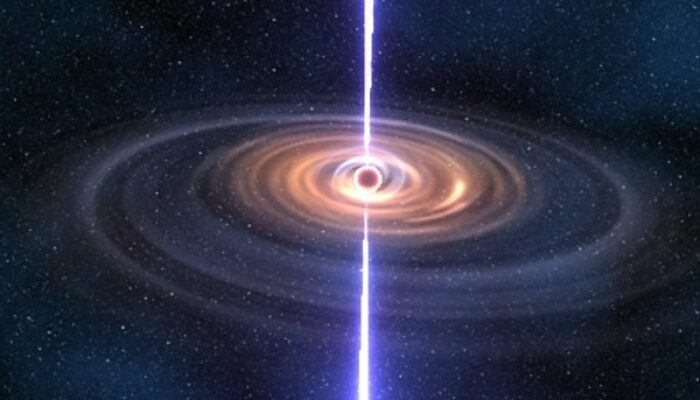
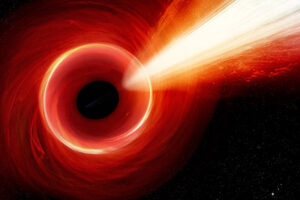
While black holes are also often misunderstood, they differ from dark matter in that their presence can be inferred through observable phenomena such as accretion disks and gravitational waves. Black holes represent regions of extreme spacetime curvature, whereas dark matter forms a diffuse, invisible scaffold influencing cosmic structure.
Dark Matter’s Role in Cosmic Evolution
Dark matter is integral to understanding the universe’s past, present, and future. It interacts with dark energy, the mysterious force accelerating cosmic expansion, and together they shape the ultimate fate of the cosmos.
Philosophical Reflections on Dark Matter
The enigma of dark matter extends beyond physics into the philosophy of science, raising questions about the nature of knowledge, observation, and scientific modeling. It challenges us to consider how unseen phenomena are inferred and how scientific theories evolve in the face of uncertainty.
Conclusion: The Significance of Dark Matter in Astrophysics
Far from being a mere scientific puzzle, dark matter embodies the dynamic and evolving nature of astrophysical inquiry. It drives innovation, inspires new theories, and highlights the limits of current understanding. As research continues, dark matter remains a powerful symbol of the universe’s mysteries and humanity’s quest to unravel them.
FAQ
What is dark matter?
Dark matter is a form of matter that does not emit, absorb, or reflect light, and its existence is inferred through its gravitational effects on visible matter.
How was dark matter discovered?
Dark matter was discovered through observations of galaxy rotation curves and gravitational lensing, which indicated the presence of unseen mass.
What are the leading theories about dark matter?
Leading theories include Weakly Interacting Massive Particles (WIMPs) and modifications to gravitational laws, such as Modified Newtonian Dynamics (MOND).


Leave a Reply