
Short Answer
Definition
This article explores groundbreaking astronomical findings that challenge traditional views of the universe. It focuses on the discovery of unusual celestial bodies and cosmic phenomena that defy conventional classification, revealing new complexities in the cosmos. These revelations touch upon the elemental composition of the universe, the behavior of dark matter and dark energy, and the dynamics of cosmic structures.
Unusual Celestial Bodies and Their Characteristics
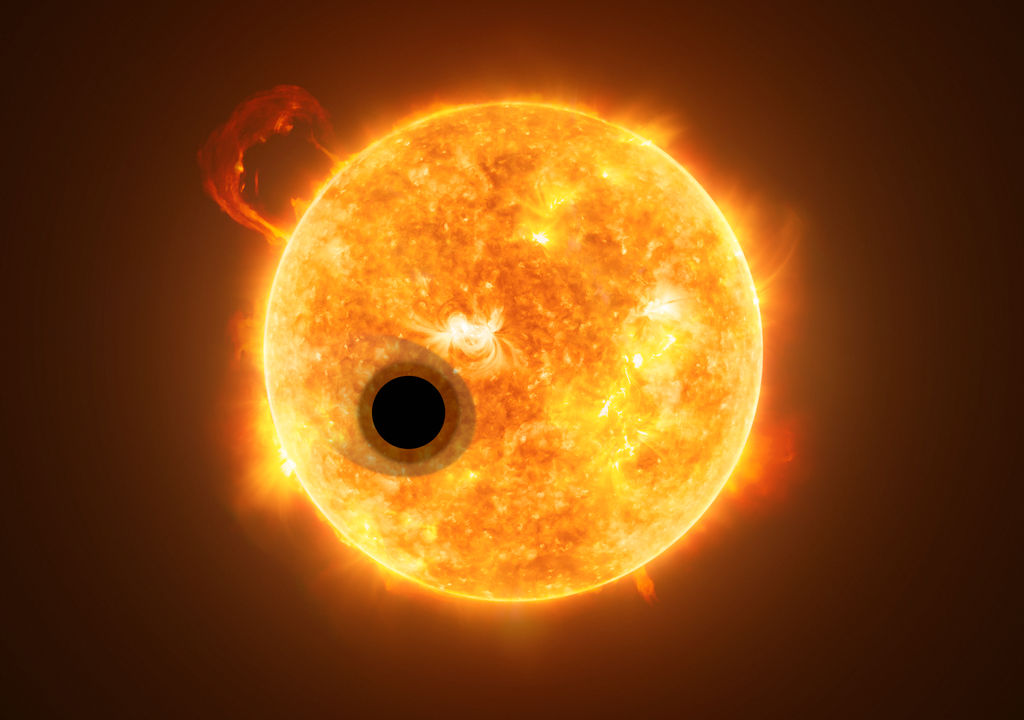
Scientists have identified a class of celestial objects that do not fit into the standard categories of stars or planets. These entities exhibit distinctive physical and chemical properties that set them apart from known cosmic bodies.
- Exotic Exoplanets:
These planets, located in far-off star systems, possess atmospheres rich in rare elements and compounds not found on Earth or within our solar system. Their gravitational fields indicate atypical mass distributions, suggesting internal structures that challenge existing planetary formation theories. - Rogue Planets:
These are free-floating planets that drift through interstellar space without orbiting a star. Their existence provides valuable insights into galactic evolution and the gravitational forces shaping the cosmos, highlighting a previously underestimated population of baryonic matter.
Anomalies in Cosmic Background Radiation
Recent measurements of the cosmic microwave background (CMB) have uncovered subtle irregularities that question the long-held assumption of a uniform and isotropic universe. These anomalies hint at the presence of large-scale structures and voids that deviate from the standard cosmological model.

- Implications for Cosmology:
These findings prompt reconsideration of theories regarding the universe’s expansion, including possibilities such as anisotropic growth, multiverse scenarios, or novel interactions between dark energy and matter.
Unexpected Behaviors in Galactic Clusters
Observations of certain galactic clusters reveal unusual velocity patterns and temperature variations that cannot be explained by known forces or matter alone. These phenomena suggest the influence of unknown particles or forces, potentially opening new frontiers in particle physics and cosmology.
Technological Innovations Driving Discoveries
The breakthroughs described have been made possible by cutting-edge instruments and analytical techniques:
- Advanced Space Telescopes:
Equipped with next-generation spectrometers and photometers, these observatories capture detailed data across the electromagnetic spectrum. - Machine Learning and Data Analytics:
Sophisticated algorithms analyze vast datasets to detect subtle patterns and anomalies that were previously undetectable.
Collaborative Scientific Approaches
The research integrates expertise from multiple disciplines, including astrophysics, quantum physics, chemistry, and computational science. This multidisciplinary collaboration enables a comprehensive examination of phenomena ranging from microscopic particle interactions to the evolution of cosmic structures, bridging theoretical models with empirical observations.
Philosophical and Public Impact
Beyond scientific circles, these discoveries influence philosophical discussions about the nature of reality, the origin of matter, and the future of the cosmos. They inspire public curiosity and wonder, encouraging a deeper appreciation of humanity’s place within an intricate and ever-changing universe.
Future Content and Educational Tools
Upcoming materials will delve into detailed analyses of abnormal planetary atmospheres, the role of rogue planets in galactic ecology, and the peculiarities found in primordial cosmic signals. Additionally, explanations of the latest observational technologies and data processing methods will clarify how these insights were achieved. Expert commentary will connect empirical findings with theoretical frameworks, enhancing understanding.
- Visual Aids:
Illustrations of the most unusual planets, visualizations of cosmic microwave background irregularities, and graphical depictions of galactic dynamics will support learning. - Interactive Features:
Simulations of gravitational interactions and atmospheric compositions may be provided to engage readers and deepen comprehension.
Conclusion: The Expanding Frontier of Cosmic Knowledge
These recent discoveries represent a transformative phase in the exploration of the universe. They challenge established paradigms and invite both scientists and the public to embrace the mysteries of the cosmos with renewed enthusiasm. Each new finding underscores the universe’s vast complexity and beauty, reminding us that our understanding is continually evolving. The journey of cosmic discovery is ongoing, revealing a universe far more extraordinary than previously imagined.

Leave a Reply