
Short Answer
Definition of Dark Matter
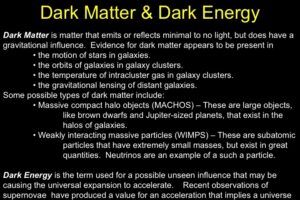
Dark matter is a mysterious and invisible form of matter that exerts a significant gravitational influence on the cosmos. Although it cannot be observed directly through electromagnetic radiation, it is estimated to make up about 27% of the universe’s total mass-energy content, vastly exceeding the amount of ordinary, visible matter. This elusive substance plays a crucial role in shaping the large-scale structure of galaxies and the universe as a whole.
Historical Context and Indirect Evidence
For decades, dark matter has evaded direct observation, with its existence inferred primarily through indirect phenomena. Scientists first noticed discrepancies in the rotational speeds of galaxies, which could not be explained by visible matter alone. Additional evidence emerged from gravitational lensing, where light from distant objects bends around unseen mass, and from subtle fluctuations in the cosmic microwave background radiation. These clues collectively point to a hidden mass component influencing cosmic dynamics.
Modern Experimental Approaches
Recent advancements in dark matter research emphasize scaling up both the complexity of detection technologies and the volume of data collected. Cutting-edge experiments are conducted deep underground, shielded by thick layers of rock to minimize interference from cosmic rays and natural radioactivity. These subterranean laboratories provide an environment where faint signals, potentially generated by rare interactions between dark matter particles and ordinary matter, can be isolated from background noise.
Cryogenic Detectors
One prominent technique involves cryogenic detectors cooled to temperatures near absolute zero. At these ultra-low temperatures, the detectors can identify minuscule energy deposits caused by hypothetical particles called Weakly Interacting Massive Particles (WIMPs) colliding with atomic nuclei. Increasing the detector mass and enhancing noise reduction methods improve the likelihood of capturing these rare events, offering a direct glimpse into dark matter’s interaction with the physical world.
Noble Gas Detectors
Another innovative method employs large volumes of ultra-pure noble gases such as liquid xenon or argon. These detectors monitor for tiny flashes of light and electrical signals that may indicate a dark matter particle interaction. The scalability of this approach is remarkable, with some experiments utilizing multiple tons of noble gas to push the boundaries of sensitivity and detection capability.
Complementary Techniques in Dark Matter Research
Beyond underground detectors, astronomical observatories and particle accelerators contribute vital insights. Facilities like the Large Hadron Collider recreate conditions similar to those just after the Big Bang, searching for transient dark matter candidates produced in high-energy collisions. Meanwhile, large-scale astronomical surveys map the distribution of dark matter by observing its gravitational effects on galactic structures, providing a macroscopic perspective on its cosmic role.
Integration of Advanced Data Analysis
The expansion of dark matter searches also involves sophisticated data processing techniques. Machine learning and artificial intelligence algorithms are increasingly employed to analyze vast datasets, distinguishing genuine dark matter signals from background noise and false positives. These digital tools enhance the efficiency and accuracy of detection efforts, enabling researchers to uncover subtle patterns that might otherwise remain hidden.
Diverse Dark Matter Candidates
While WIMPs have traditionally been the primary focus, the range of potential dark matter particles has broadened significantly. Current research explores candidates such as axions-ultralight particles proposed to solve certain symmetry problems in particle physics-and sterile neutrinos, along with more exotic possibilities like primordial black holes and hypothetical dark sector forces. This diversity drives the development of specialized detectors tailored to detect various interaction signatures, fostering a multifaceted experimental landscape.
Global Collaboration and Scientific Synergy
The quest to uncover dark matter is a global endeavor, uniting physicists, engineers, and data scientists from numerous countries. International partnerships pool intellectual resources and funding, enabling the construction and operation of large-scale detectors that would be unattainable by individual nations. This collaborative spirit exemplifies humanity’s collective ambition to solve one of the universe’s deepest mysteries, transcending cultural and disciplinary boundaries.
Significance of Discovering Dark Matter
Unveiling the nature of dark matter would revolutionize our understanding of fundamental physics, potentially revealing new particles and forces beyond the Standard Model. Such a breakthrough could illuminate the invisible framework that supports galaxies and cosmic structures, offering profound insights into the evolution and composition of the universe. The discovery would not only reshape theoretical physics but also enhance our comprehension of the cosmos at every scale.
Challenges and the Scientific Journey
The search for dark matter epitomizes the perseverance and humility inherent in scientific exploration. Despite technological advancements and growing detector sizes, dark matter remains hidden, reminding us that the most profound truths often require patience and ingenuity to uncover. Researchers are not merely building larger instruments; they are forging pathways into the unknown, expanding the frontiers of human knowledge and curiosity.
Conclusion: The Ongoing Odyssey
Each incremental improvement in detector sensitivity and data analysis brings humanity closer to demystifying dark matter. This ongoing journey challenges existing assumptions and inspires new hypotheses, reflecting the dynamic nature of scientific inquiry. Ultimately, the scaling up of dark matter searches symbolizes the spirit of exploration itself-a beacon guiding us through the vast, shadowed realms of the universe’s hidden fabric.
FAQ
What is dark matter?
Dark matter is an invisible form of matter that makes up about 27% of the universe’s total mass-energy content, exerting a significant gravitational influence.
How do scientists detect dark matter?
Scientists use various methods, including cryogenic and noble gas detectors, to identify potential interactions between dark matter particles and ordinary matter.
What are WIMPs?
Weakly Interacting Massive Particles (WIMPs) are a leading candidate for dark matter, hypothesized to interact very weakly with normal matter.
Why is dark matter important?
Understanding dark matter is crucial for explaining the structure and evolution of the universe, as it influences galaxies and cosmic dynamics.





Leave a Reply