How Far the Sun’s Gravity Actually Extends

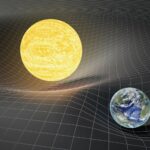
Definition of the Sun’s Gravitational Influence The sun, a massive star at the center of our solar system, exerts a gravitational force that governs the motion of planets, comets, asteroids, and other celestial bodies. This gravitational pull is the fundamental force that keeps the solar system bound together, orchestrating the orbits of its constituents. Understanding […]
Read More →

What If a Planet Were More Massive Than the Sun?

Definition and Classification of Stars and Planets In the cosmic hierarchy, stars and planets are traditionally distinguished by their mass and internal processes. Stars are celestial bodies massive enough to sustain nuclear fusion in their cores, primarily converting hydrogen into helium, which generates immense light and heat. Planets, on the other hand, lack the mass […]

Read More →

Does Gravity Pull—or Is Space Actually Pushing?

Definition of Gravity and Its Traditional Interpretation Gravity is commonly understood as an invisible force that draws objects toward one another, fundamentally shaping the structure and motion of celestial bodies such as planets, stars, and galaxies. This classical view, rooted in everyday experience and Newtonian physics, describes gravity as an attractive force acting between masses. […]

Read More →

What the Cosmic Microwave Background Reveals About the Universe

Definition of the Cosmic Microwave Background The Cosmic Microwave Background (CMB) is a pervasive radiation field that fills the entire universe, serving as a relic glow from the universe’s earliest epoch. Originating over 13 billion years ago, this faint microwave radiation is a critical observational cornerstone in cosmology, offering a snapshot of the universe shortly […]

Read More →

The Most Stunning Images From the Webb Telescope

Definition The James Webb Space Telescope (JWST) is a groundbreaking astronomical observatory designed to capture highly detailed images of the universe. It operates primarily in the infrared spectrum, allowing it to peer through cosmic dust and observe phenomena invisible to previous telescopes. The images produced by JWST reveal intricate structures and processes occurring billions of […]

Read More →

Can Dark Matter Interact With Light or Photons?

Understanding Dark Matter Dark matter is a mysterious form of matter that does not emit, absorb, or reflect electromagnetic radiation, rendering it invisible to conventional observational tools like telescopes. Despite its invisibility, dark matter exerts a significant gravitational influence, shaping the structure and dynamics of galaxies and the universe at large. Its presence is inferred […]

Read More →

Is Gravity a Property of Matter or Space-Time?

Understanding Gravity: An Overview Gravity has captivated the curiosity of scientists, philosophers, and thinkers throughout history. At its core lies a profound question: is gravity an inherent characteristic of matter, or does it arise from the structure of space-time itself? This inquiry transcends classical physics and delves into modern theoretical landscapes, revealing a complex interplay […]

Read More →

Could Hidden Civilizations Exist in Dark Matter?

Definition of Dark Matter and Its Cosmic Role Dark matter constitutes an invisible and mysterious component of the universe, accounting for roughly 85% of all matter. Unlike ordinary matter, it neither emits nor absorbs light, making it undetectable through conventional electromagnetic observations. Instead, its presence is inferred from gravitational effects on visible cosmic structures such […]

Read More →