

Short Answer
Definition of the Cosmic Microwave Background
The Cosmic Microwave Background (CMB) is a pervasive radiation field that fills the entire universe, serving as a relic glow from the universe’s earliest epoch. Originating over 13 billion years ago, this faint microwave radiation is a critical observational cornerstone in cosmology, offering a snapshot of the universe shortly after the Big Bang. Far from being a uniform signal, the CMB encodes vital information about the universe’s birth, composition, and large-scale structure.
Historical Context and Discovery
Initially detected as a uniform microwave signal permeating the sky, the CMB was first observed as a nearly isotropic radiation with a temperature close to 2.7 Kelvin above absolute zero. This discovery provided compelling evidence for the Big Bang theory, distinguishing it from alternative cosmological models. The uniformity of the CMB suggested that the early universe was in a state of thermal equilibrium, a finding that has shaped modern cosmological thought.
Physical Origin and Formation
The CMB originated approximately 380,000 years after the Big Bang during an era known as recombination. At this time, the universe cooled enough for protons and electrons to combine into neutral hydrogen atoms, allowing photons to travel freely without constant scattering. This decoupling of matter and radiation transformed the universe from opaque to transparent, leaving behind the thermal radiation we now observe as the CMB.
Temperature Uniformity and Anisotropies
While the CMB is remarkably uniform in temperature, subtle variations exist at the level of one part in 100,000. These tiny temperature fluctuations, or anisotropies, represent primordial density irregularities in the early universe. These irregularities acted as the seeds for the formation of galaxies, clusters, and the vast cosmic web observed today.
- Isotropy:
The near-uniform temperature of the CMB across the sky indicates a highly homogeneous early universe. - Anisotropies:
Minute temperature differences reveal the initial density fluctuations that led to cosmic structure formation.
Spectral Characteristics and Blackbody Radiation
The CMB exhibits a nearly perfect blackbody spectrum, a hallmark of thermal radiation emitted by an opaque, hot plasma. This spectral shape was predicted by Big Bang cosmology and later confirmed by precise measurements, such as those from the COBE satellite. The blackbody curve reflects the thermal state of the universe at the time of photon decoupling, providing a direct window into the universe’s early thermal history.
Polarization of the Cosmic Microwave Background
Beyond temperature fluctuations, the CMB also displays polarization patterns caused by Thomson scattering of photons off free electrons in the presence of quadrupole anisotropies. These polarization signals offer deeper insights into cosmic epochs such as reionization and the inflationary period.
- E-mode Polarization:
Generated by scalar density perturbations, these patterns help map the distribution of matter in the early universe. - B-mode Polarization:
Potentially arising from primordial gravitational waves, these elusive signals provide clues about the physics of inflation.
Cosmological Implications and Parameters
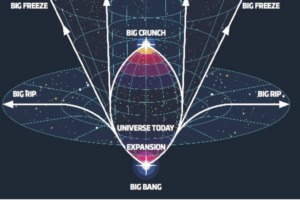
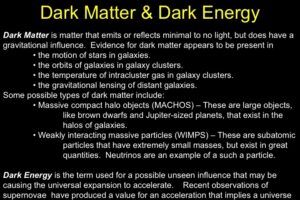
Analysis of the CMB’s temperature anisotropies and polarization has allowed scientists to determine key cosmological parameters with remarkable precision. These include the universe’s geometry, which appears spatially flat, and the relative proportions of ordinary matter, dark matter, and dark energy. The CMB power spectrum encodes this information, enabling predictions about the universe’s past evolution and future fate.
Inflation and the Horizon Problem
The extraordinary uniformity of the CMB across vast regions of the sky presents a challenge known as the horizon problem: classical physics suggests these regions could not have exchanged information to reach thermal equilibrium. The theory of cosmic inflation-a rapid exponential expansion of space-time shortly after the Big Bang-resolves this paradox by allowing distant regions to have once been causally connected, explaining the observed isotropy.
Real-World Applications and Observations
Modern cosmology relies heavily on CMB observations to test theoretical models and refine our understanding of the universe. Satellites such as COBE, WMAP, and Planck have mapped the CMB with increasing accuracy, providing data that underpin much of contemporary astrophysics and cosmology.
Common Misconceptions About the CMB
The CMB is uniform and featureless.
Although largely uniform, the CMB contains tiny temperature fluctuations that are crucial for understanding cosmic structure formation.
The CMB originates from stars or galaxies.
The CMB is primordial radiation from the early universe, predating the formation of stars and galaxies.
Significance of the Cosmic Microwave Background
The CMB is fundamental to modern cosmology, serving as a cosmic blueprint that reveals the universe’s initial conditions and subsequent evolution. Its detailed study has confirmed the Big Bang model, illuminated the nature of cosmic inflation, and constrained the composition and geometry of the cosmos. Beyond its scientific value, the CMB inspires profound reflection on humanity’s place in an evolving universe, connecting us to the very origins of space, time, and matter.
FAQ
What is the Cosmic Microwave Background?
The Cosmic Microwave Background (CMB) is the afterglow radiation from the Big Bang, providing a snapshot of the universe approximately 380,000 years after its formation.
Why is the CMB important in cosmology?
The CMB helps scientists understand the universe’s early conditions, supports the Big Bang theory, and provides key measurements of cosmological parameters.
How was the CMB discovered?
The CMB was discovered in the 1960s as a uniform microwave radiation detected in all directions of the sky, confirming predictions made by the Big Bang theory.



Leave a Reply