
Short Answer
Definition and Classification of Stars and Planets
In the cosmic hierarchy, stars and planets are traditionally distinguished by their mass and internal processes. Stars are celestial bodies massive enough to sustain nuclear fusion in their cores, primarily converting hydrogen into helium, which generates immense light and heat. Planets, on the other hand, lack the mass required to initiate fusion and instead reflect or absorb the radiation emitted by their host stars. This fundamental difference establishes stars as luminous centers of planetary systems, with planets orbiting as comparatively smaller companions.
- Stars:
Objects capable of nuclear fusion, producing their own light and heat. - Planets:
Bodies that do not undergo fusion and rely on stars for illumination.
Gravitational Dynamics and Mass Relationships
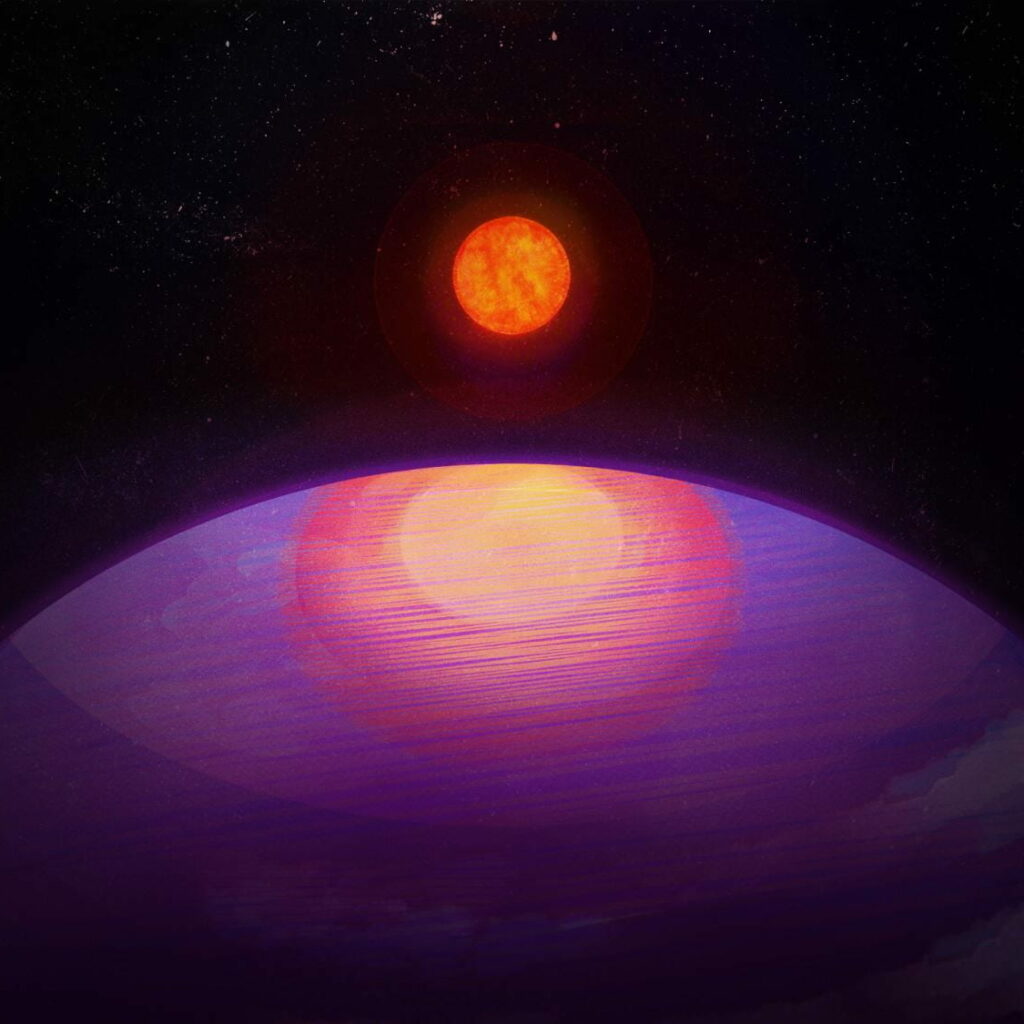
The mass of a celestial object directly influences its gravitational pull, which governs the orbital patterns of surrounding bodies. Typically, stars possess greater mass than their planets, anchoring the system’s gravitational center. However, if a planet were to exceed the mass of its star, this gravitational order would be reversed. The dominant gravitational force would shift from the star to the planet, potentially causing the star to orbit the planet or resulting in a complex binary system where the center of mass lies outside the star itself.
Challenges in Classification: When Planets Outweigh Stars
Such an inversion raises significant questions about how we classify celestial bodies. The traditional categories-planet, brown dwarf, star-are based not only on mass but also on formation history and internal processes. A planet more massive than its star might blur these lines, possibly warranting reclassification as a brown dwarf or a low-mass star. This scenario challenges astronomers to reconsider the criteria used to define these objects and to explore rare or unconventional formation mechanisms that could produce such anomalies.
Exoplanet Discoveries and Blurred Boundaries
The study of exoplanets-planets orbiting stars beyond our solar system-has expanded our understanding of planetary masses and system configurations. Some exoplanets have been found with masses approaching or even surpassing those of the smallest stars, complicating the distinction between planets and stellar objects. Occasionally, systems are observed where a relatively small star hosts a companion whose mass is near the threshold of starhood, prompting ongoing debates about classification and formation processes.
Planet Formation Theories and Unusual Mass Ratios
Planetary formation is generally understood to occur through the accumulation of dust and gas within protoplanetary disks surrounding young stars. The available material and the star’s gravitational influence typically limit the mass a planet can attain. For a planet to outweigh its star, extraordinary conditions must exist, such as mass transfer in dense star clusters or dynamic interactions in binary systems that redistribute mass in unexpected ways. These scenarios suggest alternative pathways for planet formation that challenge conventional models.
Physical and Astrophysical Implications
A planet surpassing its star in mass would exert significant tidal forces, potentially affecting the star’s surface stability and magnetic activity. This gravitational stress could lead to unusual stellar phenomena, including erratic brightness variations and intense flare events. Additionally, the planet’s atmosphere-if gaseous-would experience extreme compression and heating, possibly resulting in exotic atmospheric behaviors far beyond those observed in typical gas giants.
Philosophical and Conceptual Reflections
The idea of a planet more massive than its star resonates deeply because it disrupts the familiar cosmic order. Humans naturally seek hierarchical structures in nature, and the universe often presents nested scales, such as stars dominating planetary systems and galaxies containing stars. When these scales are inverted, it challenges our assumptions and stimulates curiosity, driving scientific inquiry into new and unexplored realms.
Potential Habitability and Environmental Considerations
Habitability traditionally depends on the energy output of a star, which regulates the climate and potential for life on orbiting planets. If the central luminous body were relatively faint compared to a massive planetary companion, questions arise about the viability of life. Could such a planet generate sufficient internal heat through residual formation energy or radioactive decay to support ecosystems? These considerations expand the scope of astrobiology and the search for life beyond Earth.
Ongoing Evolution of Celestial Taxonomy
As exoplanet research advances, the distinctions between planets, brown dwarfs, and stars remain fluid. Each new discovery challenges existing paradigms and highlights the diversity and complexity of celestial phenomena. This evolving taxonomy reflects the dynamic nature of scientific understanding and the need to adapt classifications to accommodate novel findings.
Conclusion: Expanding Cosmic Perspectives
Contemplating a planet more massive than its star underscores the provisional nature of our cosmic knowledge. It exemplifies the intersection of empirical observation and theoretical imagination, encouraging scientists to broaden the conceptual framework of celestial bodies. This thought experiment not only enriches astrophysical discourse but also inspires a deeper appreciation for the universe’s vast and enigmatic grandeur.
FAQ
What happens if a planet is more massive than its star?
The gravitational dynamics would invert, potentially causing the star to orbit the planet, challenging existing classifications.
Can a massive planet support life?
If the planet generates sufficient internal heat, it could support ecosystems despite the faintness of its host star.

Leave a Reply