
Short Answer
Understanding Dark Matter
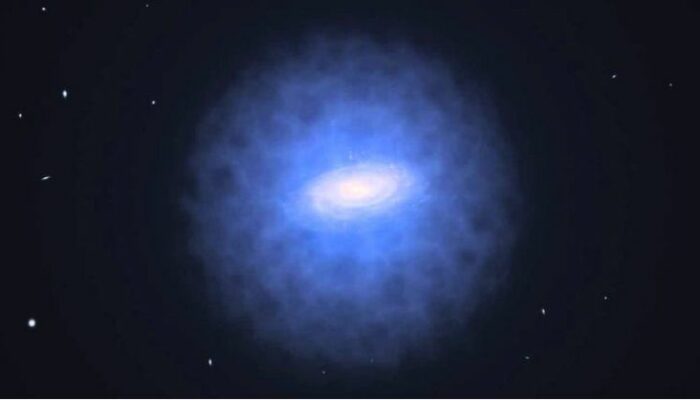
Dark matter is a mysterious form of matter that does not emit, absorb, or reflect electromagnetic radiation, rendering it invisible to conventional observational tools like telescopes. Despite its invisibility, dark matter exerts a significant gravitational influence, shaping the structure and dynamics of galaxies and the universe at large. Its presence is inferred through phenomena such as the anomalous rotation speeds of galaxies, gravitational lensing effects where light bends around massive objects, and the large-scale distribution of cosmic matter.
Dark Matter and Photons: The Fundamental Question
One of the most intriguing puzzles in modern physics is whether dark matter interacts with photons-the elementary particles responsible for light. Unlike ordinary matter, which readily interacts with photons by emitting, absorbing, or scattering light, dark matter appears to be completely non-interactive with electromagnetic radiation. This lack of interaction is why dark matter is often described as a cosmic phantom: it influences the universe gravitationally but remains undetectable through electromagnetic means.
Hypothetical Interactions: The Concept of Dark Photons
Within theoretical physics, there are proposals suggesting that dark matter might engage with photons indirectly through hypothetical particles known as dark photons. These particles would be counterparts to ordinary photons but exist in a hidden sector of physics, potentially mediating subtle interactions between dark matter and electromagnetic fields. If dark photons exist, they could mix faintly with regular photons, creating a delicate bridge between the visible universe and the dark sector.
- Dark Photon Analogy:
If ordinary photons are like the familiar light bulbs illuminating our surroundings, dark photons might resemble the faint glow of bioluminescent creatures in a deep ocean-barely noticeable but undeniably present. - Detection Efforts:
Experiments designed to detect dark photons often involve highly sensitive detectors placed underground to minimize background noise, aiming to capture the subtle signals that could indicate their presence.
Alternative Theoretical Possibilities
Beyond dark photons, other theoretical frameworks propose that dark matter might possess a tiny electric charge or an anapole moment, enabling weak interactions with photons without violating current observational limits. Such millicharged particles could leave subtle imprints on the cosmic microwave background (CMB), potentially altering its polarization or spectral characteristics in ways that could be measured.
Additionally, dark matter might influence photons indirectly through quantum mechanical effects, such as loop processes involving intermediary particles. These higher-order interactions are extremely suppressed, making their detection challenging. However, certain unexplained astrophysical phenomena-like excess gamma-ray emissions or unusual absorption features in quasar spectra-might one day provide clues to these subtle couplings.
Experimental Searches and Constraints
Despite the theoretical allure, direct experimental evidence for electromagnetic interactions of dark matter remains absent. Many detection strategies rely on the premise that dark matter occasionally collides with ordinary matter, producing detectable flashes of light or ionization in sensitive detectors made from scintillating crystals or noble gases. The consistent lack of positive results from these experiments highlights the elusive nature of any potential photon-dark matter interaction.
Astrophysical observations also impose stringent limits. Studies of the cosmic microwave background and observations of galaxy cluster collisions restrict the strength of any possible interaction between dark matter and photons. If such interactions were stronger, they would produce distortions in the cosmic fabric that conflict with precise astronomical measurements. These constraints help refine theoretical models, narrowing the range of viable scenarios.
Significance of Dark Matter-Photon Interactions
Discovering that dark matter interacts with photons would profoundly impact our understanding of the universe. It would challenge the prevailing view of dark matter as solely a gravitational entity and open new avenues for detection and study. Such a breakthrough could revolutionize particle physics, cosmology, and potentially lead to novel technologies based on the properties of dark matter.
Summary: The Cosmic Dance of Light and Darkness
Photons serve as the universe’s luminous messengers, revealing the cosmos in visible and invisible wavelengths. Dark matter, in contrast, acts as an unseen architect, shaping cosmic structures without emitting light. Whether these two fundamental components engage in any form of interaction remains one of the most profound questions in contemporary science. As experimental techniques advance and theoretical models evolve, the quest to uncover any hidden dialogue between dark matter and photons continues to inspire and challenge researchers worldwide.
FAQ
What is dark matter?
Dark matter is a form of matter that does not emit, absorb, or reflect light, making it invisible. Its presence is inferred from its gravitational effects on visible matter.
Can dark matter interact with light?
Current theories suggest that dark matter does not interact with light in the same way ordinary matter does, but hypothetical particles like dark photons may allow for indirect interactions.
What are dark photons?
Dark photons are theoretical particles that could exist alongside regular photons, potentially mediating interactions between dark matter and electromagnetic fields.





Leave a Reply