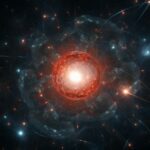
Are “Dark Photons” the Key to Solving the Mystery?

Definition of Dark Photons Dark photons are hypothetical particles proposed as counterparts to the well-known photon, the quantum of electromagnetic radiation responsible for light. Unlike ordinary photons, dark photons are theorized to belong to a hidden or “dark” sector of the universe, interacting weakly with both dark matter and, to a lesser extent, normal matter. […]
Read More →

Best Topics for Astrophysics Research Projects

Understanding Astrophysics Astrophysics captivates human curiosity by exploring the vast and mysterious universe. The night sky, adorned with countless stars and cosmic phenomena, inspires a deep desire to comprehend the origins, mechanisms, and ultimate fate of the cosmos. This fascination extends beyond mere observation, driving a profound quest to decode the universe’s fundamental principles. For […]

Read More →

Could Dark Matter and Dark Energy Be the Same Thing?

Definition of Dark Matter and Dark Energy Dark matter and dark energy are two enigmatic components that together constitute about 95% of the universe’s total content. Despite their invisibility and elusive nature, they play crucial roles in shaping the cosmos. Dark matter is an unseen form of matter that exerts gravitational attraction, helping to hold […]

Read More →

What Is the Speed of Light in Space vs Earth?

Definition of the Speed of Light The speed of light is a fundamental physical constant representing the maximum velocity at which electromagnetic waves, including visible light, propagate through a vacuum. Denoted by the symbol c, it is approximately 299,792 kilometers per second (about 186,282 miles per second). This velocity serves as a universal speed limit, […]

Read More →

Scientists Still Can’t Explain 95% of the Universe

Understanding the Universe’s Hidden Majority Modern astrophysics reveals a staggering truth: the vast expanse of the universe remains largely unexplored and mysterious. Despite significant technological progress and sophisticated theoretical models, scientists have only managed to decode a small fraction of the cosmos. Approximately 95% of the universe’s content is still unknown, presenting a profound challenge […]

Read More →

Has Dark Matter Ever Been Detected Directly?

Understanding Dark Matter Dark matter is a mysterious and invisible component of the universe, integral to its structure yet undetectable through conventional means. Unlike ordinary matter, which interacts with light by emitting, absorbing, or reflecting it, dark matter remains impervious to electromagnetic forces. This makes it invisible to telescopes and other instruments that rely on […]

Read More →

Can We Create Artificial Gravity Like in Sci-Fi?

Understanding Artificial Gravity Artificial gravity refers to the creation of a force that mimics the natural gravitational pull experienced on Earth, within environments where gravity is otherwise negligible or absent, such as spacecraft or space stations. This engineered force aims to replicate the sensation of weight and the physiological effects of Earth’s gravity, providing a […]

Read More →

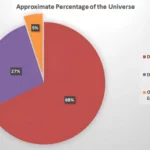
What Percentage of the Universe Is Dark Energy vs Matter?

Understanding the Composition of the Universe The universe is an immense and complex entity, filled with various forms of matter and energy. While we often consider the tangible matter around us-stars, planets, and living beings-as the primary constituents of the cosmos, this visible matter represents only a small fraction of the universe’s total makeup. The […]

Read More →

Are Black Holes Truly Black or Just Invisible?

Definition of Black Holes Black holes are extraordinary cosmic objects characterized by gravitational fields so intense that nothing, not even light, can escape once it crosses a critical boundary known as the event horizon. Commonly perceived as completely dark voids, black holes are far more complex entities that influence their surroundings in remarkable ways, revealing […]

Read More →