
Short Answer
Understanding Astrophysics
Astrophysics captivates human curiosity by exploring the vast and mysterious universe. The night sky, adorned with countless stars and cosmic phenomena, inspires a deep desire to comprehend the origins, mechanisms, and ultimate fate of the cosmos. This fascination extends beyond mere observation, driving a profound quest to decode the universe’s fundamental principles. For researchers venturing into astrophysics, choosing engaging topics is crucial-topics that connect observable celestial events with theoretical insights and open doors to unexplored realms. The field’s allure lies in its fusion of empirical data and imaginative theorizing, offering endless opportunities to investigate some of the most profound questions in science.
Scope and Significance of Astrophysics Research
The field of astrophysics encompasses a broad spectrum of subjects, ranging from the smallest particles to the largest cosmic structures. Ideal research topics align with the latest scientific breakthroughs while addressing timeless mysteries that have intrigued scholars for generations. Selecting a research focus that reflects current trends and stimulates innovative thinking is essential for advancing knowledge. Below, we explore several compelling and impactful topics that are at the forefront of astrophysical investigation today.
Key Research Areas in Astrophysics
Dark Matter and Dark Energy: Unseen Cosmic Components
Dark matter and dark energy remain among the most perplexing enigmas in modern cosmology. Although invisible to direct observation, these components are believed to constitute about 95% of the universe’s total mass-energy. Studying their properties sheds light on the universe’s large-scale structure, the peculiar rotation speeds of galaxies, and the accelerating expansion of space. Research may focus on developing detection techniques, simulating dark matter distributions, or formulating theoretical models that integrate dark energy with quantum physics. These invisible forces exemplify the profound unknowns that continue to challenge astrophysicists.
Black Hole Genesis and Development
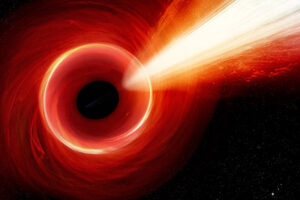
Black holes, regions of spacetime exhibiting gravitational forces so intense that nothing can escape, represent some of the most extreme phenomena in the universe. Research spans various types, including stellar-mass black holes, supermassive black holes at galactic centers, and primordial black holes formed shortly after the Big Bang. Investigations aim to understand their formation, growth, and influence on galaxy evolution, bridging observational data with theories of general relativity and quantum mechanics. Projects might explore accretion disk behavior, gravitational wave signals from black hole mergers, or the paradoxes surrounding information loss and Hawking radiation.
Cosmic Microwave Background Radiation and the Early Universe
The cosmic microwave background (CMB) radiation is a relic radiation field dating back to roughly 380,000 years after the Big Bang, providing a snapshot of the early universe. Analyzing fluctuations in the CMB reveals critical information about the universe’s age, composition, and the formation of large-scale structures. Research often utilizes data from missions like Planck and WMAP to investigate inflationary theories, baryon acoustic oscillations, and primordial gravitational waves. Studies of the CMB offer invaluable insights into the universe’s initial conditions and the processes that shaped its evolution.
Exoplanet Discovery and Potential for Life
The identification of planets orbiting stars beyond our solar system has transformed our understanding of planetary systems and the possibility of life elsewhere. Research focuses on detection methods such as transit photometry, radial velocity measurements, and direct imaging, as well as characterizing exoplanet atmospheres and environments. Projects may assess habitability criteria, the impact of stellar radiation on planetary climates, or the search for biosignatures. This area intersects astrophysics with astrobiology and planetary science, fueling humanity’s quest to determine whether life exists beyond Earth.
Neutron Stars and Pulsars: Extreme Physics in Action
Neutron stars, the dense remnants of supernova explosions, and their rotating counterparts, pulsars, emit beams of electromagnetic radiation detectable from Earth. These objects serve as natural laboratories for studying matter under extraordinary densities and magnetic fields, conditions impossible to replicate on Earth. Research includes examining pulsar timing variations, emission processes, and the neutron star equation of state. Studies contribute to understanding nuclear physics, gravitational waves, and magnetohydrodynamics, highlighting the exotic nature of these celestial bodies.
Gravitational Waves and the Era of Multi-Messenger Astronomy
The detection of gravitational waves-ripples in spacetime caused by massive cosmic events like black hole or neutron star mergers-has inaugurated a new era in astrophysics. Multi-messenger astronomy combines gravitational wave data with electromagnetic signals, neutrinos, and cosmic rays to provide a comprehensive view of astrophysical phenomena. Research may involve developing detection algorithms, analyzing merger events, or exploring implications for fundamental physics and general relativity. This interdisciplinary approach exemplifies cutting-edge innovation in the field.
Galactic Dynamics and the Role of Dark Matter Halos
The movement of stars and gas within galaxies is heavily influenced by the gravitational pull of surrounding dark matter halos. Investigating galactic rotation curves, mass distribution, and interactions between visible and dark matter enhances our understanding of galaxy formation and evolution. Research often employs computer simulations, observational surveys, and theoretical models to elucidate the universe’s large-scale structure. This topic bridges cosmology and computational science, revealing the framework supporting visible matter.
Stellar Astrophysics and the Creation of Elements
The life cycle of stars-from their birth in molecular clouds to their explosive deaths-forms a cornerstone of astrophysics. This field examines star formation, stability, and end-of-life phenomena such as supernovae and nucleosynthesis processes responsible for producing heavy elements. Research includes spectroscopic studies, modeling stellar interiors, and analyzing variable stars. Understanding these processes explains how essential elements are synthesized and distributed throughout the cosmos, linking astrophysics to the origins of life.
Why Astrophysics Research is Vital
Each of these research areas not only illuminates different facets of the universe but also raises profound philosophical and scientific questions about existence, time, and the laws governing nature. Astrophysics uniquely combines the study of observable phenomena with the exploration of realms beyond direct perception, making it a field of immense intellectual appeal. By addressing fundamental questions-such as the nature of reality on a cosmic scale, the formation and transformation of cosmic structures, and the ultimate fate of the universe-astrophysics occupies a pivotal role at the intersection of curiosity and scientific rigor.
Future Directions and Opportunities
With rapid technological advancements and expanding data availability, the potential for groundbreaking discoveries in astrophysics is immense. Aspiring researchers can navigate this dynamic landscape by selecting projects that not only push the boundaries of scientific understanding but also satisfy humanity’s enduring desire to comprehend the cosmos and our place within it. The journey through astrophysics is one of continuous discovery, where each answer leads to new questions and deeper insights into the universe’s mysteries.
FAQ
What is astrophysics?
Astrophysics is the branch of astronomy that uses the principles of physics to understand celestial bodies and the universe.
Why is research in astrophysics important?
Astrophysics research helps answer fundamental questions about the universe's origins, structure, and ultimate fate.



Leave a Reply