Can Gravity Change Over Time on Earth or Mars?

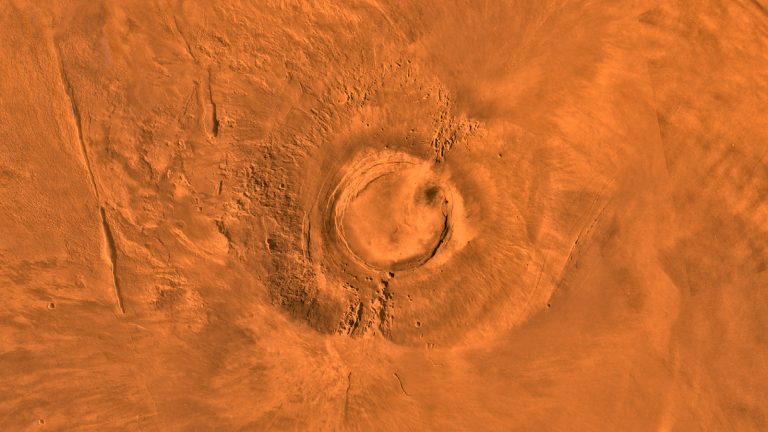
Definition of Gravity and Its Planetary Significance Gravity is a fundamental natural force responsible for the attraction between masses, governing the motion of planets, moons, and other celestial bodies. It also influences the behavior of objects on planetary surfaces, shaping environments and affecting biological adaptations. On planets like Earth and Mars, gravity plays a crucial […]

Read More →

Dropping Atoms Measuring Gravity: G Gets a Precise Update

Understanding Gravitational Acceleration Gravitational acceleration, commonly denoted as g, represents the acceleration experienced by an object due to the Earth’s gravitational pull. It is a fundamental physical constant essential for various scientific disciplines, including physics, geophysics, and cosmology. Precise determination of g is crucial for accurate modeling of natural phenomena and technological applications. Traditional Techniques […]

Read More →

Falling for Science: Rethinking Gravity’s Simple Truths

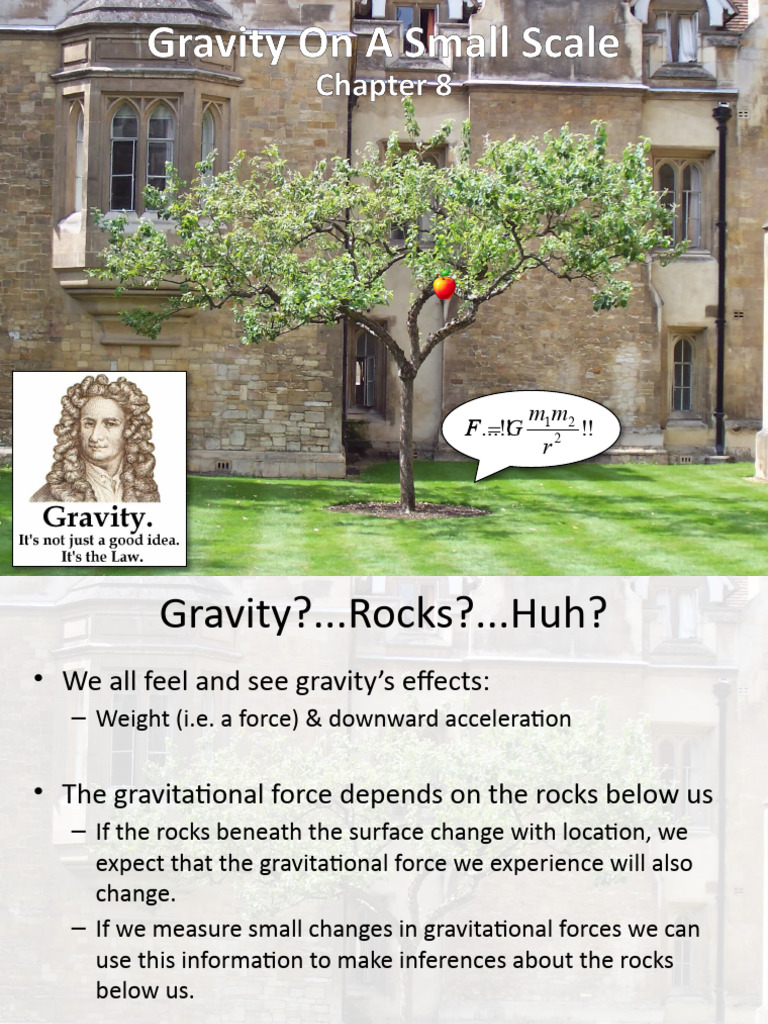
Understanding Gravity: A Fundamental Force Gravity is a universal force that influences the movement of objects both on Earth and throughout the cosmos. Despite its everyday presence and seemingly straightforward nature, gravity encompasses a complex array of scientific principles that merit detailed exploration. This article, titled “Falling for Science: Rethinking Gravity’s Simple Truths,” aims to […]

Read More →

Why is there no gravity between two molecules?

Understanding Gravity at the Molecular Scale Gravity is a fundamental force that shapes the universe, governing the motion of planets, stars, and galaxies. However, its influence becomes almost imperceptible when examined at the scale of molecules. This raises an intriguing question: why does gravity exert no meaningful attraction between two molecules? To answer this, it […]

Read More →

What could be the origin of gravity?

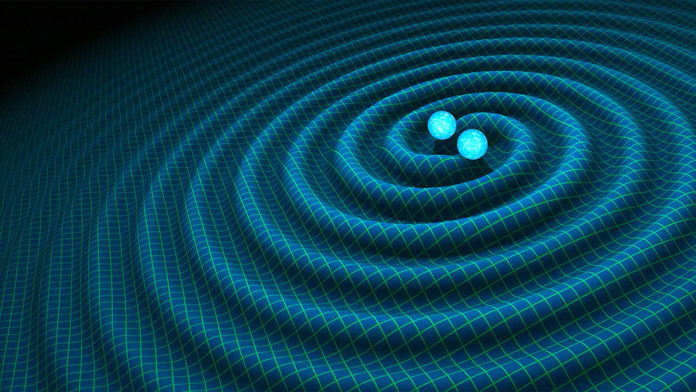
Definition of Gravity Gravity is a fundamental interaction that governs the attraction between masses. It is a universal force influencing objects from the smallest particles to the largest cosmic structures. This force shapes the motion of planets, stars, galaxies, and even the expansion of the universe itself. Universal Attraction: Gravity causes every mass to pull […]

Read More →

Why doesn’t gravity fit into the standard model?

Understanding Gravity and Its Role in Physics Gravity is a fundamental force that governs the motion of planets, stars, and galaxies, shaping the very structure of the universe. Despite its omnipresence and critical influence on cosmic phenomena, gravity remains conspicuously absent from the Standard Model of particle physics. This model, a foundational framework in modern […]

Read More →

Why is gravity so difficult to include in the Standard Model?

Understanding Gravity Gravity is a fundamental force that orchestrates the motion of celestial bodies such as planets and stars. Despite its universal influence, gravity remains one of the most perplexing phenomena in modern theoretical physics. While the Standard Model successfully describes three fundamental forces-electromagnetic, weak nuclear, and strong nuclear interactions-gravity resists incorporation into this framework. […]

Read More →

Does gravity affect nuclear reactions?

Definition of Gravity and Nuclear Reactions Gravity is a universal force that influences the motion of planets, stars, and galaxies, shaping the large-scale structure of the universe. Nuclear reactions, on the other hand, involve transformations within atomic nuclei, often accompanied by the release or absorption of energy. These reactions include processes such as nuclear fusion, […]

Read More →

What is the difference between gravity and the strong force?

Definition of Fundamental Forces The universe is governed by four fundamental interactions: gravitational, electromagnetic, weak nuclear, and strong nuclear forces. Among these, gravity and the strong nuclear force play crucial roles in shaping matter and the cosmos. Gravity influences large-scale structures such as planets and galaxies, while the strong force operates at the subatomic level, […]

Read More →

Bouncing Atoms Weigh In: A New Way to Measure Gravity

Definition of Gravity and Its Measurement Gravity is a fundamental natural force that governs the attraction between masses. It has intrigued scientists and philosophers for centuries due to its universal influence and complex behavior. Measuring gravitational acceleration accurately is essential for advancing our understanding of physics and the universe. Traditional techniques, such as pendulum experiments […]

Read More →