
Short Answer
Definition of Gravity
Gravity is a fundamental interaction that governs the attraction between objects possessing mass. It is the force responsible for the motion of planets, the behavior of objects on Earth, and the overall architecture of the cosmos. On Earth, gravity manifests as the pull that keeps us grounded, sustains the atmosphere, and maintains the oceans. Yet, when viewed from a universal perspective, the strength of Earth’s gravity invites deeper inquiry into its relative power compared to other fundamental forces.
Historical Perspectives on Gravity
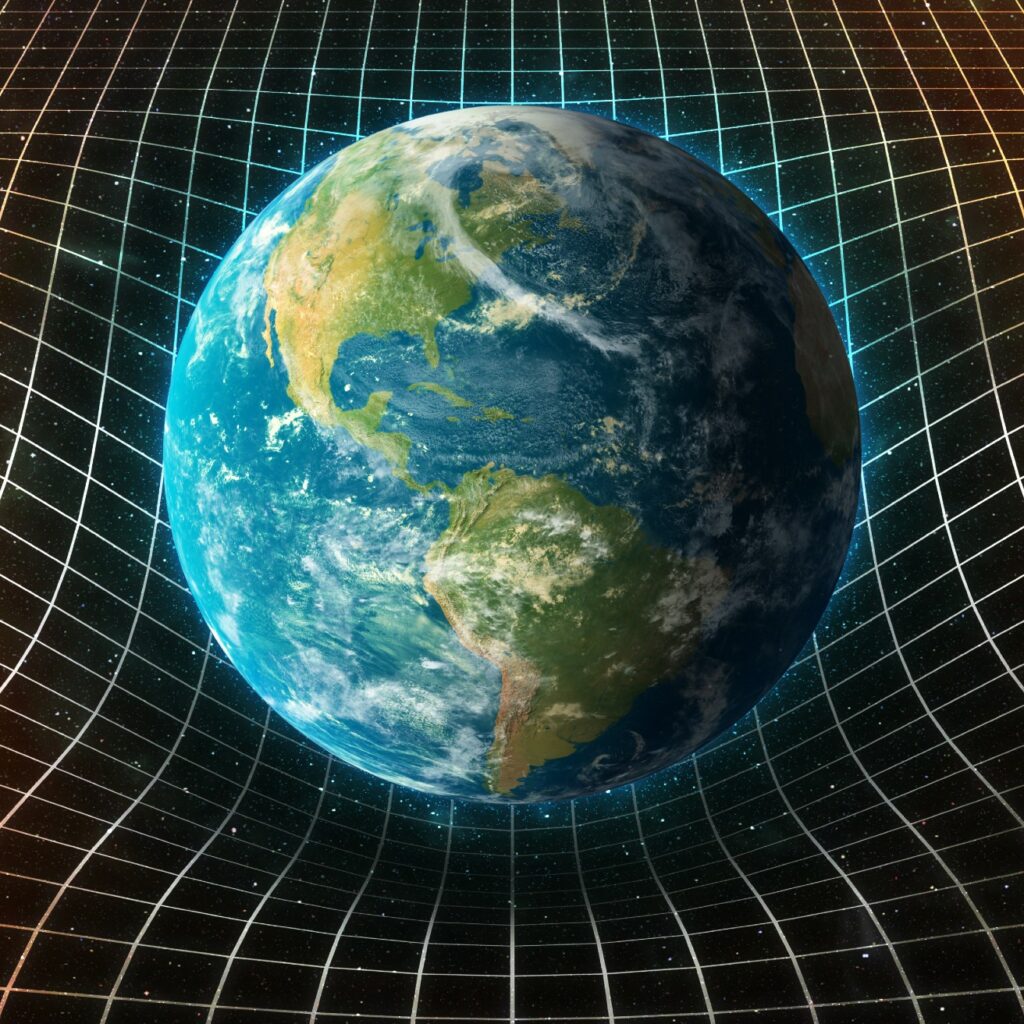
The concept of gravity has evolved significantly over time. Sir Isaac Newton first characterized gravity as a universal force acting between masses, explaining phenomena such as planetary orbits and falling objects. Later, Albert Einstein transformed our understanding by describing gravity not as a force but as the curvature of spacetime caused by mass and energy, a cornerstone of his General Theory of Relativity.
Gravity Among the Fundamental Forces
Gravity is one of the four fundamental forces of nature, alongside electromagnetism, the strong nuclear force, and the weak nuclear force. Despite its universal reach, gravity is remarkably feeble compared to the others. For instance, the electromagnetic force is approximately 1036 times stronger than gravity. This vast disparity has puzzled physicists and remains a central question in modern theoretical physics.
Earth’s Gravity: Strength and Variability
From a terrestrial viewpoint, Earth’s gravity is a consistent and significant force. It determines the weight of objects, retains the atmosphere, and influences projectile motion. The acceleration due to gravity at Earth’s surface averages about 9.8 m/s², a value dependent on Earth’s mass and radius. However, this acceleration is not uniform everywhere; it varies slightly due to factors such as Earth’s oblate shape and rotational effects, causing gravity to be marginally weaker at the equator than at the poles.
Comparative Gravity in the Solar System
When compared to other planets, Earth’s gravitational pull is moderate. Mars, with its smaller mass and size, exerts roughly 38% of Earth’s surface gravity, making it easier for objects to escape its pull. Conversely, Jupiter’s gravity is about 2.5 times stronger than Earth’s, illustrating the wide range of gravitational forces present within our solar system.
Why Is Gravity Considered Weak?
Despite its importance, gravity is often described as the weakest fundamental force. This characterization stems from its relative strength compared to other forces and its behavior at quantum scales. The question arises: why does gravity appear so feeble?
Theories Explaining Gravity’s Weakness
One prominent hypothesis involves the existence of extra spatial dimensions beyond the familiar three dimensions of space and one of time. According to this idea, gravity may “leak” into these additional dimensions, causing its apparent strength in our four-dimensional spacetime to be diluted. This concept is supported by advanced theoretical frameworks such as string theory and brane cosmology, which propose a multi-dimensional universe where gravity’s true intensity is masked by its propagation through higher-dimensional spaces.
Gravity’s Role in the Universe
Gravity’s influence extends far beyond Earth. Unlike nuclear forces that operate only at subatomic distances, gravity acts over vast cosmic scales without completely fading. It governs planetary orbits, holds galaxies together, and shapes the large-scale structure of the universe. On Earth, gravity is essential for maintaining atmospheric pressure and enabling the presence of liquid water, both critical for life.
Practical Applications and Technological Significance
Precise measurements of Earth’s gravitational field have practical implications in navigation, satellite technology, and geophysical exploration. For example, the Global Positioning System (GPS) relies on accounting for gravitational time dilation effects predicted by Einstein’s relativity to maintain accuracy. These subtle influences of gravity on time demonstrate its pervasive and complex nature despite its relatively modest force.
Common Misconceptions About Gravity
Gravity is a strong force on Earth.
While gravity feels strong enough to hold us down, it is actually the weakest of the fundamental forces when compared on a universal scale.
Gravity acts only on Earth.
Gravity is a universal force acting between all masses, shaping the motion of celestial bodies and the structure of the universe.
Gravity is a force like electromagnetism.
According to General Relativity, gravity is better understood as the curvature of spacetime rather than a conventional force.
Why Understanding Gravity Matters
Exploring the nature and relative weakness of gravity is crucial for advancing physics and cosmology. It challenges scientists to unify all fundamental forces into a single theoretical framework and deepens our comprehension of the universe’s fabric. Moreover, gravity’s role in everyday phenomena and cutting-edge technology underscores its significance in both scientific inquiry and practical applications.
Summary
Although Earth’s gravity may seem weak compared to other fundamental forces, this perception depends on the scale and context. On a planetary level, gravity is a vital force that sustains life and shapes our environment. On a cosmic scale, its apparent weakness invites profound questions about the universe’s dimensions and the fundamental laws governing reality. Continued research into gravity promises to unlock new scientific horizons and enhance our understanding of the cosmos.
FAQ
Why is gravity considered weak?
Gravity is considered weak because it is significantly weaker than other fundamental forces like electromagnetism.
How does Earth's gravity compare to other planets?
Earth's gravity is moderate; for example, Mars has about 38% of Earth's gravity, while Jupiter's is about 2.5 times stronger.

Leave a Reply