
Short Answer
Definition of the Sun’s Gravitational Influence
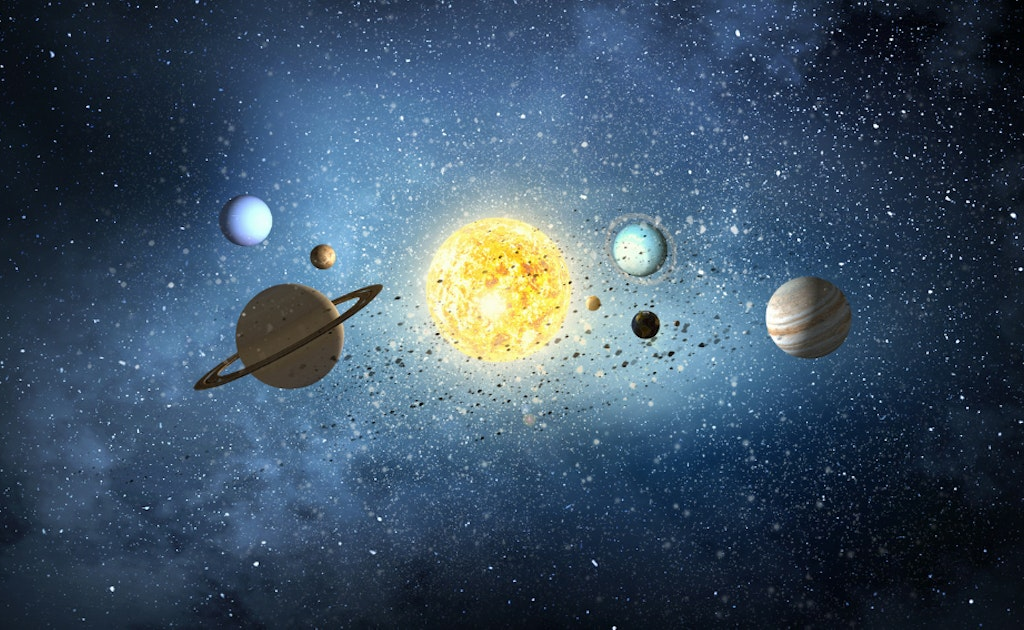
The Sun’s gravitational force is the fundamental attraction exerted by the Sun’s massive body, which governs the motion of all objects within the solar system. This force acts as the central anchor, maintaining the orbits of planets, comets, asteroids, and smaller particles, ensuring their continuous and orderly movement around the Sun. It is a key component in the structure and stability of our cosmic neighborhood.
Fundamental Principles Behind Solar Gravity
The seemingly simple, steady paths traced by planets around the Sun are governed by deep physical laws, primarily Newton’s law of universal gravitation. This law states that every mass attracts every other mass with a force proportional to their masses and inversely proportional to the square of the distance between them. The Sun’s enormous mass-over 330,000 times that of Earth-creates a powerful gravitational pull that extends far beyond its visible surface, influencing all bodies within its reach.
Gravitational Mechanics and Orbital Dynamics
The Sun’s gravity warps the fabric of space-time, a concept explained by Einstein’s theory of general relativity, resulting in the gravitational attraction experienced by objects in the solar system. This force causes planets and other bodies to accelerate toward the Sun, but the balance between this pull and their forward motion produces stable elliptical orbits rather than collisions. These elliptical paths vary in distance from the Sun, reflecting a delicate equilibrium that prevents planets from drifting away or spiraling inward.
Elliptical Orbits and Their Significance
- Elliptical Shape:
Planets follow elliptical, not perfectly circular, orbits, which means their distance from the Sun changes throughout their revolution. - Orbital Stability:
The Sun’s gravity finely tunes the balance between centripetal force and inertia, maintaining consistent orbital paths.
Influence on Smaller Celestial Bodies
Beyond planets, the Sun’s gravitational field captures and directs the motion of smaller objects such as comets and asteroids. These bodies often have more elongated and irregular orbits, originating from distant regions like the Oort Cloud or the asteroid belt. While their trajectories can be altered by the gravitational effects of planets or passing stars, the Sun’s gravity remains the dominant force shaping their paths.
Role in the Formation and Evolution of the Solar System
The Sun’s gravity was instrumental in the birth and ongoing development of the solar system. Billions of years ago, a massive molecular cloud collapsed under its own gravitational pull, leading to the formation of the Sun’s core and the ignition of nuclear fusion. The residual gas and dust surrounding this young star gradually coalesced through gravitational attraction and accretion, forming the planets, moons, and smaller bodies that orbit the Sun today.
Complex Gravitational Interactions Within the Solar System
Gravitational forces within the solar system are dynamic and interdependent. Planetary resonances, where the orbital periods of planets influence each other, exemplify this complexity. These resonances help maintain long-term stability by preventing chaotic collisions. For instance, Jupiter’s strong gravitational field shapes the asteroid belt by creating gaps and clusters through resonant orbital patterns.
Solar Gravity’s Impact on Earth and Space Phenomena
The Sun’s gravitational pull affects not only celestial mechanics but also phenomena observable on Earth. While the Moon primarily drives ocean tides, the Sun’s gravity modulates these effects, producing spring and neap tides that influence coastal ecosystems. This connection highlights the Sun’s gravitational role in linking cosmic forces with terrestrial environments.
Scientific Exploration and Practical Applications
Modern space missions depend heavily on precise knowledge of the Sun’s gravitational field. Satellites and probes navigating the solar system use calculations of solar gravity to plot trajectories and conduct scientific investigations. These missions have expanded our understanding of planetary atmospheres, solar wind, and magnetic fields, all of which are influenced by the gravitational context established by the Sun.
Philosophical and Inspirational Perspectives
The Sun’s gravitational influence symbolizes the unseen forces that maintain order and harmony in the universe. This cosmic choreography inspires awe and reflection on the natural laws that govern existence beyond human perception. It serves as a reminder of the intricate balance and unity underlying the vastness of space and time.
Significance of the Sun’s Gravity in Cosmic Order
Ultimately, the Sun’s gravitational force is more than a physical phenomenon; it is the architect of the solar system’s structure and stability. By shaping the environment where life on Earth can thrive, it plays a crucial role in the continuity of our planetary system. Understanding this force deepens humanity’s connection to the cosmos and fuels ongoing scientific curiosity and exploration.
FAQ
What is the primary force that keeps planets in orbit around the Sun?
The Sun's gravitational force is the primary force that keeps planets and other celestial bodies in stable orbits around it.
How does the Sun’s gravity affect smaller celestial bodies like comets and asteroids?
The Sun’s gravity captures and directs the motion of smaller objects such as comets and asteroids, influencing their often more elongated and irregular orbits.
What role does the Sun’s gravity play in the formation of the solar system?
The Sun’s gravity was crucial in the collapse of a molecular cloud that led to the Sun’s formation and the subsequent accretion of planets, moons, and smaller bodies around it.
How does solar gravity influence phenomena on Earth?
The Sun’s gravity affects ocean tides by modulating the tidal effects primarily driven by the Moon, resulting in spring and neap tides.
Why are planetary orbits elliptical rather than perfectly circular?
Planetary orbits are elliptical because of the balance between the Sun’s gravitational pull and the forward velocity of orbiting bodies, creating stable elliptical paths.

Leave a Reply