
Short Answer
Understanding Gravity: A Fundamental Force of Nature
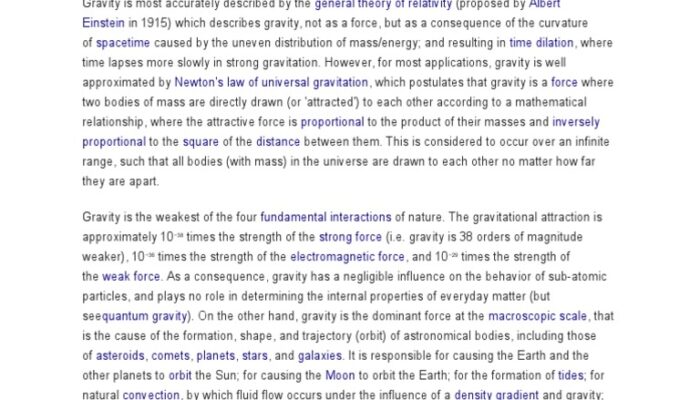
Gravity is the invisible force that governs the motion and structure of celestial bodies, from planets and stars to entire galaxies. It acts as the cosmic glue that holds the universe together, influencing everything from the smallest particles to the largest black holes. Despite its omnipresence, gravity remains one of the most intriguing and complex phenomena in physics, inspiring centuries of scientific exploration and philosophical inquiry.
Historical Perspectives on Gravity
The concept of gravity has evolved significantly over time. In the 17th century, Sir Isaac Newton formulated the law of universal gravitation, describing gravity as an attractive force between masses that acts instantaneously across space. This groundbreaking theory provided a mathematical framework that explained planetary orbits and terrestrial phenomena alike, yet it left unanswered questions about the mechanism behind this “action at a distance.”
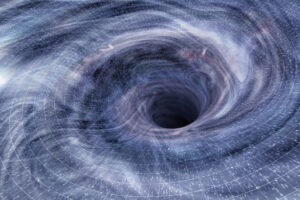
In the early 20th century, Albert Einstein revolutionized our understanding with his general theory of relativity. Rather than viewing gravity as a force, Einstein described it as the curvature of spacetime caused by mass and energy. Objects move along curved paths, or geodesics, within this warped spacetime fabric. This geometric interpretation resolved many paradoxes inherent in Newtonian gravity and accurately predicted phenomena such as the bending of light by gravity and the existence of gravitational waves-ripples propagating through spacetime itself.
The Intersection of Gravity and Quantum Mechanics
While general relativity excels at describing gravity on large scales, it does not reconcile with the principles of quantum mechanics, which govern the microscopic world. Quantum mechanics introduces a probabilistic and discrete nature to particles and forces, contrasting with the smooth, continuous spacetime of relativity. Bridging this divide to develop a quantum theory of gravity remains one of the foremost challenges in modern physics.
Several theoretical frameworks aim to unify gravity with quantum mechanics. Notable among these are string theory, which posits that fundamental particles are one-dimensional strings vibrating in higher-dimensional space, and loop quantum gravity, which attempts to quantize spacetime itself. Despite their mathematical elegance, these theories currently lack direct experimental verification due to the extremely small scales-near the Planck length-at which quantum gravitational effects become significant.
Experimental Challenges and Research Frontiers
Testing theories of quantum gravity is hindered by the immense difficulty of probing phenomena at the Planck scale. Consequently, researchers explore indirect methods such as studying black holes, analyzing the cosmic microwave background, and detecting gravitational waves to glean insights into gravity’s deeper nature. These approaches may eventually reveal subtle clues that help unravel the mysteries of gravity.
Philosophical Implications of Gravity
Gravity’s reinterpretation as a geometric property of spacetime raises profound questions about the nature of reality itself. It challenges the traditional view of space and time as fundamental entities, suggesting instead that they might emerge from more basic quantum processes. Some hypotheses propose that spacetime arises from entangled quantum states, implying that our everyday experience of space and gravity is a macroscopic manifestation of an underlying quantum structure.
Significance of Gravity in Science and Beyond
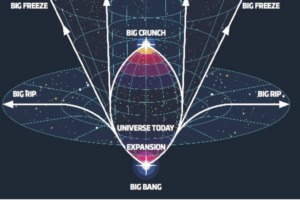
Understanding gravity is crucial not only for advancing physics but also for comprehending the universe’s ultimate fate. Gravity influences cosmic expansion, the formation of structures, and scenarios such as the “big crunch” or heat death of the cosmos. Insights into gravity could unlock new technologies, potentially enabling manipulation of spacetime or harnessing gravitational phenomena in ways currently considered science fiction.
Common Misconceptions About Gravity
Gravity is simply a force pulling objects downward.
Gravity is a manifestation of spacetime curvature caused by mass and energy, influencing the motion of objects along curved paths.
Newton’s law fully explains gravity.
Newton’s law accurately describes many gravitational effects but does not account for relativistic phenomena or quantum aspects of gravity.
Gravity acts instantaneously.
According to general relativity, changes in gravitational fields propagate at the speed of light as gravitational waves.
Gravity’s Ongoing Mystery and the Future of Research
The quest to fully comprehend gravity is an evolving journey marked by both breakthroughs and enigmas. Each scientific advance deepens our understanding while revealing new complexities. Gravity may never be completely understood in absolute terms but will continue to inspire inquiry and innovation. This pursuit embodies humanity’s enduring curiosity and the drive to explore the cosmos at all scales.
Conclusion: Gravity as a Gateway to Deeper Knowledge
Exploring gravity invites us to reconsider our place in the universe and embrace the complexity of reality. It challenges us to integrate diverse scientific perspectives and to remain open to new paradigms. Whether or not we achieve a complete theory, the endeavor enriches our intellectual and spiritual horizons, fostering a profound appreciation for the interconnectedness of all things and the mysteries that propel scientific discovery.
FAQ
What is gravity?
Gravity is the force that attracts two bodies towards each other, affecting everything from falling apples to the orbits of planets.
How has our understanding of gravity changed?
Understanding of gravity evolved from Newton's law of universal gravitation to Einstein's general relativity, which describes gravity as the curvature of spacetime.
What are the challenges in studying gravity?
Challenges include the difficulty of testing theories at the Planck scale and the need for advanced experimental techniques to study gravitational phenomena.

Leave a Reply