
Short Answer
Understanding Dark Matter and Dark Energy
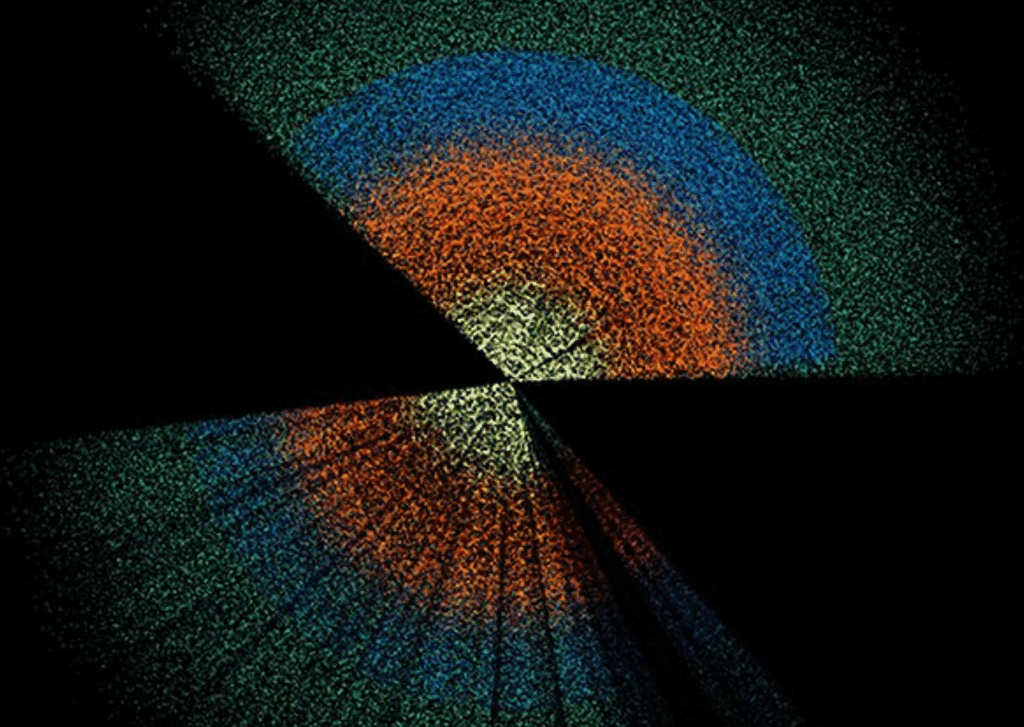
The universe is dominated by two mysterious components: dark matter and dark energy. Together, they constitute roughly 95% of the total mass-energy content of the cosmos, yet their true nature remains elusive. These enigmatic substances challenge our comprehension of the universe, as they cannot be directly observed but are inferred through their gravitational effects and influence on cosmic expansion.
Gravity: The Fundamental Cosmic Force
Gravity is a universal force that governs the motion of planets, stars, and galaxies, anchoring us to Earth and orchestrating the large-scale structure of the universe. Beyond its familiar role, gravity also reveals subtle and complex interactions that hint at phenomena beyond visible matter. The gravitational pull observed in galaxies and clusters often exceeds what can be explained by luminous matter alone, suggesting the presence of unseen mass-dark matter. Additionally, gravity influences the bending of light, known as gravitational lensing, further indicating hidden mass distributions.
Dark Matter: Gravitational Evidence and Theories
Dark matter manifests primarily through its gravitational effects, which cannot be accounted for by ordinary matter:
- Galactic Rotation Curves:
Stars in the outer regions of spiral galaxies rotate faster than expected, implying additional unseen mass. - Galaxy Cluster Dynamics:
The gravitational pull within clusters is stronger than what visible matter can produce. - Gravitational Lensing:
Light from distant objects is bent more than predicted by visible mass alone, revealing hidden gravitational influences.
These observations have led to hypotheses such as Modified Newtonian Dynamics (MOND), which propose alterations to gravity’s behavior at low accelerations, offering alternative explanations without invoking dark matter particles.
Dark Energy and Cosmic Acceleration
Dark energy is an even more perplexing phenomenon responsible for the accelerating expansion of the universe. Contrary to the traditional view of gravity as an attractive force that should slow cosmic expansion, observations show that the universe’s expansion rate is increasing. This suggests the presence of a repulsive component within spacetime, often modeled as a cosmological constant or dynamic fields like quintessence. These models, while mathematically consistent, imply that our understanding of gravity on cosmological scales is incomplete.
Reevaluating Gravity: Modified Theories and New Perspectives
To reconcile the mysteries of dark matter and dark energy, scientists have proposed modifications to Einstein’s general relativity. These theories introduce additional fields, dimensions, or changes in gravitational behavior over large distances:
- Modified Gravity Theories:
Adjustments to classical gravity that can mimic dark matter effects without requiring new particles. - Repulsive Gravity Effects:
The same modifications may explain the accelerated expansion attributed to dark energy. - Entropic Gravity:
A radical idea suggesting gravity emerges from thermodynamic principles, potentially linking it to quantum information and explaining cosmic acceleration naturally.
Such approaches hint at a unified gravitational mechanism underlying both dark matter and dark energy phenomena.
Gravity’s Role in Cosmic Structure and Evolution
Gravity’s influence extends across cosmic history and scales:
- Galactic Scale:
The flat rotation curves of galaxies and gravitational lensing patterns provide strong evidence for gravitational effects beyond visible matter. - Cosmic Microwave Background:
Fluctuations in this relic radiation reflect gravitational interactions shaped by dark matter during the early universe. - Cosmic Expansion:
The accelerating universe challenges classical gravity, suggesting new gravitational dynamics at play.
Philosophical and Scientific Implications
The possibility that gravity unites dark matter and dark energy challenges traditional dichotomies in physics. It suggests that the apparent division between matter and energy, attraction and repulsion, visible and invisible may stem from incomplete understanding rather than fundamental differences. Gravity, therefore, emerges not just as a force but as a central thread weaving the universe’s grand narrative, inviting a deeper exploration of the cosmos and our place within it.
Current Research and Future Directions
Ongoing investigations employ advanced cosmological simulations, gravitational lensing surveys, and space-based observatories to detect subtle gravitational signatures linked to dark matter and dark energy. Progress in quantum gravity theories also aims to bridge the gap between gravity and quantum mechanics, potentially revealing the fundamental nature of spacetime. As observational tools and theoretical models improve, the prospect that gravity serves as the key to these cosmic mysteries grows increasingly plausible.
Conclusion: Gravity as the Cosmic Unifier
The hypothesis that gravity could be the missing link connecting dark matter and dark energy offers an elegant and profound perspective. Rather than relying solely on undiscovered particles or exotic forces, this view reimagines gravity itself as a versatile and intricate phenomenon. As a cosmic mediator, gravity may govern phenomena beyond the visible universe, transforming from a well-known interaction into a gateway for understanding the deepest secrets of existence. This evolving understanding holds the potential to redefine astrophysics and reshape humanity’s cosmic worldview.
FAQ
What is dark matter?
Dark matter is a type of matter that does not emit light or energy and is inferred from its gravitational effects on visible matter.
What is dark energy?
Dark energy is a mysterious force that is causing the acceleration of the universe's expansion.
How does gravity relate to dark matter and dark energy?
Gravity may provide a unifying framework for understanding the interactions and implications of dark matter and dark energy.

Leave a Reply