How fast are the particles in cosmic rays?

Definition of Cosmic Rays Cosmic rays are highly energetic particles originating from outer space that travel vast interstellar distances before reaching Earth. These particles primarily consist of protons but also include heavier atomic nuclei, electrons, and positrons. They are broadly classified into two categories: Primary Cosmic Rays: These originate from extraterrestrial sources such as supernova […]

Read More →

Can the speed of cosmic rays be measured?

Definition of Cosmic Rays Cosmic rays are highly energetic particles originating from outer space, primarily composed of protons, with smaller proportions of atomic nuclei and electrons. These particles emerge from diverse astrophysical phenomena such as supernova explosions, active galactic nuclei, and solar emissions. Upon entering Earth’s atmosphere, cosmic rays interact with atmospheric nuclei, producing extensive […]

Read More →

Why don’t space telescopes use adaptive optics?

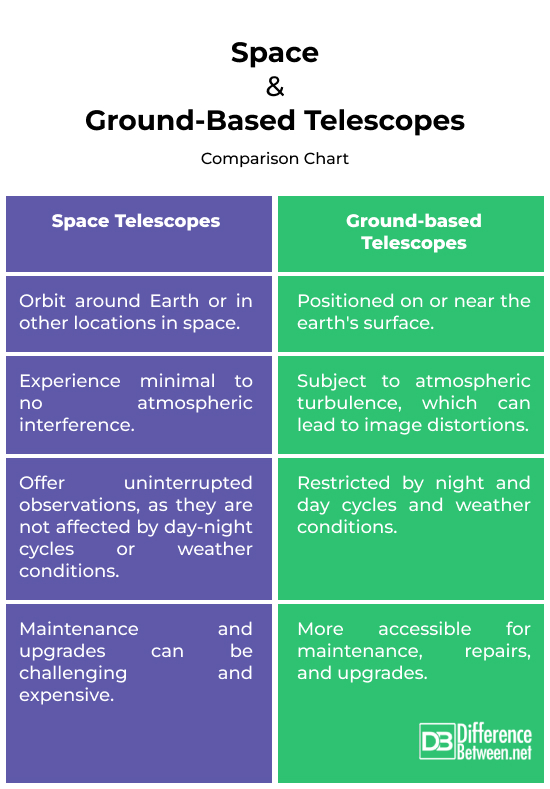
Definition of Space Telescopes and Adaptive Optics Space telescopes are advanced astronomical instruments positioned beyond Earth’s atmosphere to observe celestial objects with minimal interference. Adaptive optics, on the other hand, is a technology primarily used in ground-based telescopes to correct distortions caused by atmospheric turbulence, thereby enhancing image clarity. Space Telescopes: Instruments placed in orbit […]

Read More →