

Short Answer
Understanding Dark Matter
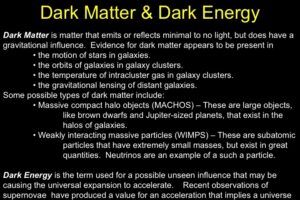
Dark matter is an elusive and invisible form of matter that permeates the universe, making up approximately 27% of its total matter content. Unlike ordinary matter, which interacts with light and can be observed directly, dark matter does not emit, absorb, or reflect electromagnetic radiation, rendering it undetectable by conventional telescopes and instruments. Its presence is inferred primarily through gravitational effects on visible matter, such as the rotation of galaxies and the large-scale structure of the cosmos.
- Invisible Mass:
Dark matter cannot be seen directly but exerts gravitational influence on galaxies and galaxy clusters. - Composition Hypotheses:
Candidates include Weakly Interacting Massive Particles (WIMPs), axions, and sterile neutrinos, all of which interact very weakly with normal matter.
Scientific Significance of Dark Matter
Dark matter plays a crucial role in the formation and stability of cosmic structures. Without its gravitational pull, galaxies would not hold together as observed, and the universe’s large-scale web-like structure would be vastly different. Understanding dark matter is essential for completing the picture of the universe’s composition and evolution.
Challenges in Detecting Dark Matter
The primary difficulty in studying dark matter lies in its minimal interaction with ordinary matter. Dark matter particles are believed to pass through normal matter, including human bodies, almost undisturbed. This near-invisibility complicates efforts to detect or measure any direct effects it might have on biological systems or everyday life.
Speculative Interactions Between Dark Matter and Humans
While current scientific evidence does not support direct interactions between dark matter and living organisms, some speculative theories propose rare or unknown mechanisms by which dark matter could influence human biology. These hypotheses explore the possibility that dark matter particles might interact with cellular structures or neural processes, potentially triggering extraordinary changes in physical or cognitive abilities.
- Biochemical Catalysis:
Hypothetical interactions could facilitate novel biochemical reactions, enhancing sensory perception or accelerating healing. - Neural Effects:
Dark matter might influence neural synapses, possibly altering cognitive functions or consciousness.
Potential Influence on Fundamental Fields
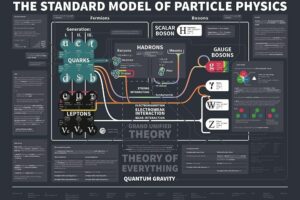
One imaginative theory suggests that dark matter could affect the Higgs field, a quantum field responsible for giving particles their mass. If dark matter modulates this field’s interaction with human cells, it might hypothetically alter physiological properties such as mass or strength, or even enable manipulation of gravitational forces on a personal scale. Although highly speculative, this idea highlights the profound mysteries surrounding dark matter’s nature.
Quantum Biology and Dark Matter
Quantum biology investigates how quantum phenomena impact biological processes, such as photosynthesis and animal navigation. Some theorists speculate that if dark matter interacts with quantum fields permeating the universe, it might enhance or stabilize quantum coherence within the human nervous system. This could, in theory, lead to augmented cognitive abilities or psychic-like phenomena, though no empirical evidence currently supports this notion.
Scientific Limitations and Current Understanding
Despite these intriguing possibilities, no experimental data confirm that dark matter directly affects living beings. Particle detectors and underground laboratories have yet to observe definitive interactions between dark matter and normal matter. The extremely low probability of such interactions, known as the interaction cross-section, makes the spontaneous acquisition of superhuman abilities through dark matter exposure highly improbable under current physical laws.
Common Misconceptions About Dark Matter and Superpowers
Dark matter can easily interact with human cells to grant superpowers.
Dark matter particles rarely interact with ordinary matter, making such effects virtually impossible with current scientific knowledge.
Dark matter is a source of unknown energy that humans can harness.
There is no evidence that dark matter can be controlled or utilized as an energy source by biological organisms.
The Broader Importance of Dark Matter Research
Exploring dark matter is fundamental to advancing our understanding of the universe. While the idea of it granting superhuman abilities remains within the realm of fiction, the pursuit of knowledge about dark matter drives technological innovation and deepens our grasp of fundamental physics. Discoveries in this field could eventually lead to breakthroughs in energy, materials science, and other technologies that enhance human capabilities in unforeseen ways.
Conclusion: The Intersection of Science and Imagination
Could dark matter endow humans with extraordinary powers? Based on current scientific evidence, the answer is no. However, the question itself fuels curiosity and inspires exploration at the frontier of physics and cosmology. As researchers continue to unravel the mysteries of dark matter, the universe invites us to imagine possibilities beyond our present understanding-reminding us that the greatest superpower may be the pursuit of knowledge itself.
FAQ
What is dark matter?
Dark matter is a type of matter that does not emit, absorb, or reflect light, making it invisible and detectable only through its gravitational effects.
Can dark matter grant superpowers?
No scientific evidence currently supports the idea that dark matter can grant superpowers to humans.
What are the main challenges in studying dark matter?
The primary challenge is its minimal interaction with ordinary matter, making detection difficult.
What are some misconceptions about dark matter?
One common misconception is that dark matter can easily interact with human cells to grant superpowers.


Leave a Reply