
Short Answer
Definition of Celestial Mass Measurement
Determining the mass of astronomical objects such as stars and planets involves unraveling a complex cosmic puzzle. Mass, the fundamental property responsible for gravitational attraction, orchestrates the movements and interactions of celestial bodies. Unlike objects on Earth that can be weighed directly, stars and planets cannot be measured by conventional scales. Instead, astronomers rely on indirect methods rooted in physics and observational astronomy to infer mass from gravitational influences and light behavior across vast distances.
Fundamental Principles: Gravity and Mass
At the heart of measuring celestial mass lies the intrinsic relationship between gravity and mass. Gravity acts as the universal force that every object with mass exerts on others, shaping the structure and dynamics of the universe. The magnitude of gravitational attraction depends directly on the masses involved, allowing scientists to deduce mass by observing gravitational effects such as orbital motions and perturbations.
Orbital Mechanics as a Tool for Mass Estimation
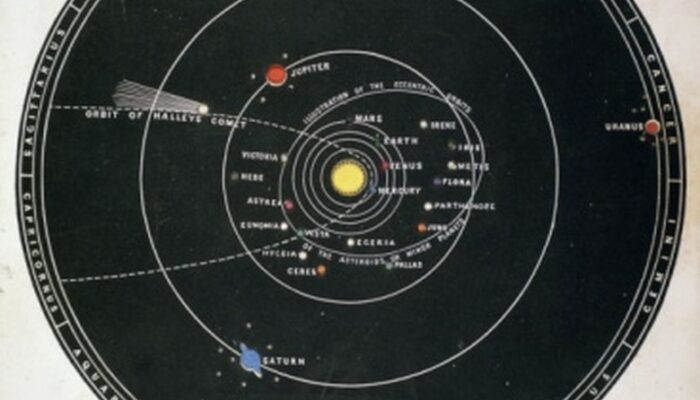
One of the primary approaches to determining mass involves analyzing the orbital behavior of celestial bodies. When a planet orbits a star, both revolve around a common center of mass called the barycenter. By precisely measuring the orbital period and the size of the orbit, astronomers can calculate the combined mass of the system. This method is grounded in Kepler’s Third Law, enhanced by Newtonian gravitational theory, which relates the square of the orbital period to the cube of the orbit’s semi-major axis.
- Kepler’s Third Law:
The square of the orbital period (T²) is proportional to the cube of the semi-major axis (a³) of the orbit. - Newtonian Refinement:
Incorporates gravitational constant and masses to convert orbital parameters into mass values.
For example, if a planet’s mass is negligible compared to its star, the orbital measurements primarily reveal the star’s mass. This technique is fundamental in determining masses within our solar system and for exoplanets orbiting distant stars.
Detecting Gravitational Influences: Astrometric and Radial Velocity Methods
Planets exert subtle gravitational forces on their host stars, causing detectable wobbles in the star’s position or velocity. These effects are key to measuring planetary masses indirectly.
- Astrometric Wobble:
This method tracks minute shifts in a star’s position in the sky caused by orbiting planets, requiring extremely precise measurements. - Radial Velocity Shifts:
Based on the Doppler effect, this technique observes changes in the star’s spectral lines as it moves toward or away from Earth, revealing the gravitational tug of orbiting planets.
Both methods decode the gravitational signature of planets, providing mass estimates combined with orbital data.
Stellar Models and Indirect Mass Determination
When direct orbital observations are unavailable, astrophysicists turn to theoretical models of stellar structure and evolution. By analyzing a star’s emitted light spectrum, temperature, luminosity, and radius, scientists infer its mass through correlations established by nuclear fusion processes and radiative dynamics within the star’s core.
Binary Star Systems: Natural Laboratories for Mass Measurement
Binary stars, pairs of stars orbiting each other, offer exceptional opportunities for precise mass determination. By monitoring their orbital motions and applying Newton’s laws, astronomers can calculate the masses of both stars. Eclipsing binaries, where one star periodically obscures the other from Earth’s perspective, provide especially accurate measurements of stellar radii and masses.
Gravitational Lensing as a Mass Probe
Gravitational lensing occurs when a massive object bends and magnifies the light from a background source. The degree of light bending depends on the mass of the lensing body, enabling mass estimation. While commonly used for galaxies and clusters, this phenomenon can also reveal the mass of stars and planets under certain conditions by analyzing their influence on passing starlight.
Spacecraft Navigation and Planetary Mass Measurement
Within our solar system, spacecraft trajectories provide a highly accurate method for determining planetary masses. As spacecraft fly near planets, their paths are subtly altered by the planet’s gravitational pull. By tracking these trajectory deviations and comparing them with detailed models, scientists derive precise planetary mass values. This approach exemplifies the synergy between human technology and cosmic observation.
Advancements in Technology and Future Prospects
Modern astronomical missions and instruments, such as the Gaia space observatory, are revolutionizing mass measurement techniques. Gaia’s unprecedented astrometric precision enhances positional data for stars and planets, refining mass calculations. The growing catalog of exoplanets and binary systems, combined with these technological advances, continues to improve the accuracy and scope of celestial mass determinations.
Why Measuring Celestial Mass Is Crucial
Understanding the mass of stars and planets is fundamental to astrophysics and cosmology. Mass governs gravitational interactions, influences stellar evolution, and shapes planetary system dynamics. Accurate mass measurements enable scientists to comprehend the formation, structure, and fate of celestial bodies, bridging theoretical physics with observable phenomena. This knowledge deepens our connection to the universe, revealing the delicate balance and order underlying cosmic complexity.
Summary
Measuring the mass of stars and planets transcends simple weighing; it involves interpreting the universe’s gravitational choreography through light and motion. From orbital mechanics and stellar models to gravitational lensing and spacecraft tracking, a variety of sophisticated methods converge to unveil the hidden mass of distant worlds. These measurements not only quantify celestial heft but also enrich our understanding of the cosmos and our place within it.

Leave a Reply