
Short Answer
Definition of Dark Matter
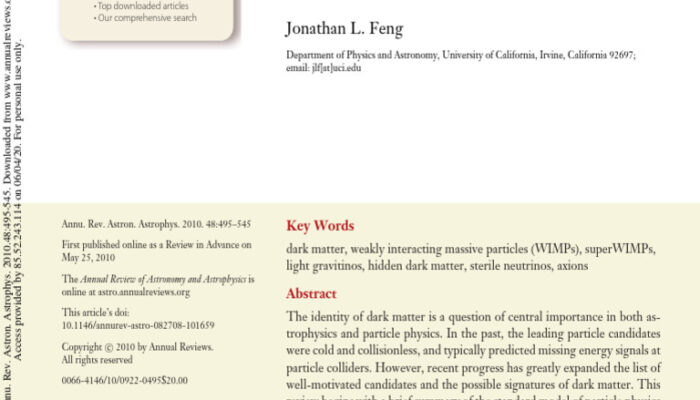
Dark matter is a mysterious and invisible form of matter that permeates the universe, constituting a significant portion of its total mass. Unlike ordinary matter, it does not emit, absorb, or reflect light, making it undetectable through conventional electromagnetic observations. Despite its invisibility, dark matter exerts a powerful gravitational influence, shaping the large-scale structure and dynamics of galaxies and the cosmos as a whole.
- Invisible Substance:
Dark matter cannot be seen directly because it does not interact with electromagnetic radiation. - Massive Component:
It accounts for roughly 27% of the universe’s total mass-energy content, far exceeding the amount of visible matter. - Gravitational Influence:
Its presence is inferred from gravitational effects on visible matter, radiation, and the large-scale structure of the universe.
Observational Evidence and Cosmic Role
The existence of dark matter is primarily deduced from its gravitational effects on galaxies and galaxy clusters. For example, galaxies rotate at speeds that visible matter alone cannot explain; without an additional unseen mass, stars would fly apart rather than remain bound. This invisible mass forms a halo around galaxies, acting as a gravitational scaffold that maintains their structural integrity.
Moreover, dark matter plays a crucial role in the formation and evolution of cosmic structures. It acts as the gravitational “glue” that pulls ordinary matter together, enabling the formation of stars, galaxies, and clusters over billions of years. Without dark matter, the universe’s large-scale architecture would be drastically different, lacking the complexity observed today.
Leading Candidates for Dark Matter Composition
Scientists have proposed various theoretical candidates to explain the nature of dark matter, spanning from exotic particles to astrophysical objects. These candidates extend beyond the familiar baryonic matter (protons, neutrons, and electrons) and delve into realms of particle physics and cosmology.
Weakly Interacting Massive Particles (WIMPs)
WIMPs are among the most studied hypothetical particles. They are thought to have mass and interact very weakly with ordinary matter, which explains why they have eluded direct detection despite extensive experimental efforts. WIMPs would have been produced thermally in the early universe and subsequently “froze out,” leaving a relic density consistent with the observed dark matter abundance. Experiments using ultra-sensitive detectors deep underground aim to capture the rare interactions between WIMPs and normal matter.
Axions
Axions arise from theoretical attempts to resolve the strong CP problem in quantum chromodynamics. These ultra-light particles are nearly impossible to detect directly but could exist in vast quantities throughout the cosmos. Axions may form a coherent quantum field that subtly affects electromagnetic phenomena over large distances. Current detection strategies involve resonant cavities and strong magnetic fields designed to convert axions into detectable photons.
Sterile Neutrinos
Sterile neutrinos are hypothetical relatives of the known neutrinos but differ by interacting only through gravity and possibly via mixing with active neutrinos. Their heavier mass compared to ordinary neutrinos makes them candidates for warm dark matter, potentially addressing some inconsistencies in small-scale cosmic structure formation. Observations of X-ray emissions from their possible decay provide an indirect method to search for these elusive particles.
Massive Compact Halo Objects (MACHOs)
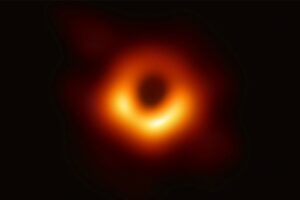
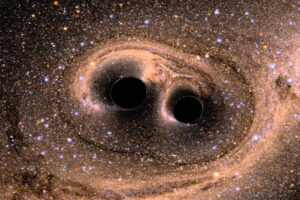
MACHOs represent a class of dark matter candidates composed of ordinary matter but are difficult to detect because they emit little or no light. Examples include black holes, neutron stars, and faint stellar remnants. They can be detected indirectly through gravitational microlensing, where their gravity bends the light from background stars. However, studies indicate MACHOs contribute only a small fraction of the total dark matter, implying most dark matter is non-baryonic.
Other Exotic Candidates
Additional theories propose more unconventional constituents such as primordial black holes formed shortly after the Big Bang or particles predicted by supersymmetric extensions of the Standard Model, including neutralinos and gravitinos. These candidates remain speculative but offer intriguing possibilities that bridge particle physics and cosmology.
Mechanisms Behind Dark Matter Detection
Detecting dark matter involves indirect and direct methods, each targeting different candidate properties. Direct detection experiments seek to observe rare interactions between dark matter particles and atomic nuclei using highly sensitive detectors shielded from background noise deep underground. Indirect detection focuses on identifying byproducts of dark matter annihilation or decay, such as gamma rays or X-rays, using space- and ground-based telescopes. Gravitational lensing studies also provide insights by mapping the distribution of dark matter through its bending effect on light from distant objects.
Mathematical Framework and Cosmological Implications
The density and distribution of dark matter are often described using cosmological parameters and equations derived from general relativity and particle physics. The relic abundance of WIMPs, for example, can be estimated using the thermal freeze-out mechanism:
ΩDM h² ≈ (3 × 10-27 cm³/s) / ⟨σv⟩
- ΩDM h²: Dark matter density parameter scaled by the Hubble constant.
- ⟨σv⟩: Thermally averaged annihilation cross-section times velocity.
This formula links particle physics properties to cosmological observations, providing constraints on candidate particles based on their interaction strengths and masses.
Common Misunderstandings About Dark Matter
- Misconception: Dark matter is the same as dark energy.
Correction: Dark matter and dark energy are distinct; dark matter exerts gravitational attraction, while dark energy drives the accelerated expansion of the universe. - Misconception: Dark matter is made of ordinary matter that is simply hidden.
Correction: Most dark matter is non-baryonic, meaning it is composed of particles unlike protons and neutrons, as evidenced by cosmological and nucleosynthesis constraints. - Misconception: Dark matter can be seen with powerful telescopes.
Correction: Dark matter does not interact with light, so it cannot be observed directly with electromagnetic instruments.
Significance of Dark Matter in Science and Technology
Understanding dark matter is pivotal for advancing our knowledge of the universe’s composition, structure, and evolution. It challenges and extends the boundaries of particle physics, cosmology, and astrophysics. The quest to identify dark matter drives innovation in detector technology, data analysis, and theoretical modeling. Moreover, unraveling its nature could unlock new physics beyond the Standard Model, potentially leading to breakthroughs in fundamental science and technology.
Future Prospects and Ongoing Research
As detection methods become increasingly refined and observational data more precise, the veil obscuring dark matter’s true nature is expected to lift. Large-scale experiments, such as underground detectors, space telescopes, and particle accelerators, continue to probe the dark sector. The synergy between theoretical predictions and experimental results fuels optimism that the coming decades will bring transformative insights into the invisible framework that governs cosmic evolution.
FAQ
What is dark matter?
Dark matter is a form of matter that does not emit, absorb, or reflect light, making it invisible and detectable only through its gravitational effects.
What are the leading candidates for dark matter?
Leading candidates include WIMPs, axions, sterile neutrinos, and MACHOs, each with unique properties and implications for cosmic structure.
How is dark matter detected?
Dark matter is detected through indirect methods like observing gravitational effects or by direct detection experiments aimed at finding interactions between dark matter and regular matter.


Leave a Reply