Observatories Without Borders: The Rise of Virtual Telescopes

Definition of Virtual Telescopes Virtual telescopes represent a groundbreaking innovation in astronomy, enabling the observation of celestial bodies through digital platforms that integrate data from multiple physical telescopes worldwide. Unlike traditional observatories fixed at specific locations, virtual telescopes operate as interconnected networks, allowing users to remotely access and analyze astronomical data without geographical constraints. Virtual […]

Read More →

Cluster Formation Caught in Action: Cosmic Architecture Emerges

Definition of Cosmic Architecture and Galaxy Clusters Cosmic architecture refers to the grand-scale structural organization of the universe, showcasing the intricate patterns and order emerging from the vast cosmic expanse. Central to this architecture are galaxy clusters-massive assemblies of galaxies bound together by gravity. These clusters can contain hundreds to thousands of galaxies and act […]

Read More →

Black Hole Winds Stronger Than Expected: Blowing Away Galactic Gas

Understanding Black Holes Black holes are among the most intriguing objects in the cosmos, characterized by gravitational fields so intense that nothing, not even light, can escape their grasp. These enigmatic entities have fascinated scientists for decades, prompting extensive research into their nature and influence on the universe. Black holes are primarily classified based on […]

Read More →

Hubble Gets an Upgrade: Astronauts Ready for a Space Makeover

Overview of the Hubble Space Telescope The Hubble Space Telescope stands as a monumental achievement in astronomical research, captivating both scientists and the public with its groundbreaking observations. Since its launch in 1990, Hubble has transformed our comprehension of the universe by operating beyond Earth’s atmospheric distortions, providing crystal-clear images and invaluable data that terrestrial […]

Read More →

Could cosmic rays be used for spacecraft propulsion?

Definition of Cosmic Rays and Their Role in Space Propulsion Cosmic rays are highly energetic particles that originate from various astrophysical sources, including the sun, supernovae, and active galactic nuclei. These particles primarily consist of protons but also include heavier atomic nuclei and electrons traveling at velocities close to the speed of light. Their energies […]

Read More →

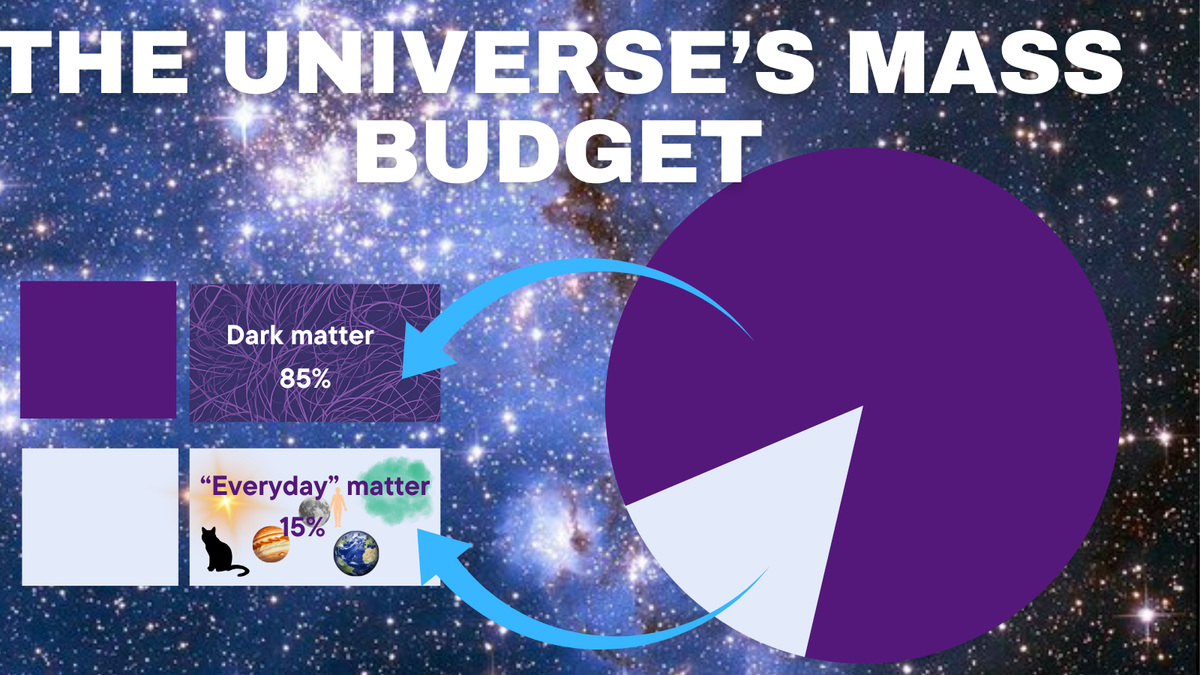
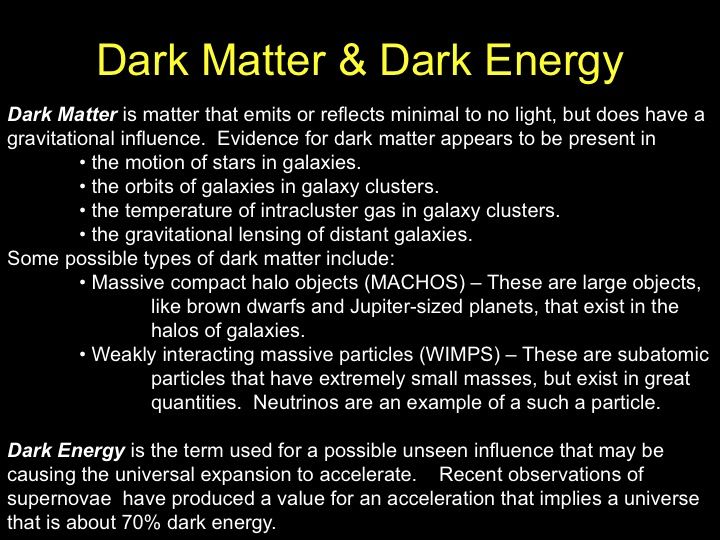
How is dark matter not made up of atoms?

Definition of Dark Matter Dark matter is a mysterious form of matter that constitutes about 27% of the total mass-energy content of the universe. Unlike ordinary matter, which is made up of atoms, dark matter does not emit, absorb, or reflect light, making it invisible to current electromagnetic detection methods. Its existence is inferred primarily […]

Read More →

Swelling Star in Sight: Astronomers Close in on a Dying Giant

Definition of a Supergiant Star Supergiant stars are among the most massive and luminous stars in the universe, representing a late evolutionary stage of stellar development. These colossal stars possess masses several times greater than that of the Sun and exhibit extraordinary brightness and size. Their life cycle culminates in dramatic transformations that often lead […]

Read More →

Identity Physics: Who Are We in the Multiverse?

Understanding Identity in the Context of the Multiverse The concept of identity has long fascinated thinkers across disciplines, from philosophy to science. It encompasses more than just physical attributes, delving into consciousness, existence, and the fundamental nature of reality. Recent developments in theoretical physics, especially the multiverse hypothesis, add a complex and captivating layer to […]

Read More →

Neutrinos Take Center Stage: Background Particles in the Spotlight

Definition of Neutrinos Neutrinos are fundamental subatomic particles classified within the lepton family, which also includes electrons and muons. Characterized by their extremely small mass and lack of electric charge, neutrinos are elusive particles that interact very weakly with matter. They are produced in vast quantities during nuclear reactions, such as those occurring in stellar […]

Read More →