
Short Answer
Definition of Neutron Stars
Neutron stars are among the most fascinating and mysterious objects in the cosmos. They are the compact remnants left behind after massive stars undergo catastrophic supernova explosions. Characterized by incredibly high densities and extreme physical conditions, neutron stars serve as natural laboratories for studying matter under conditions unattainable on Earth. Their evolution encompasses a complex sequence of physical transformations, interactions, and sometimes dramatic endpoints, making them key subjects in astrophysics.
Formation and Physical Characteristics
Neutron stars form when stars with initial masses roughly between 8 and 25 times that of the Sun exhaust their nuclear fuel and collapse under their own gravity. During this collapse, the core’s protons and electrons combine to create neutrons, while the outer layers are expelled violently into space in a supernova explosion. The resulting neutron star is an ultra-dense object with densities on the order of 1017 kilograms per cubic meter, comparable to atomic nuclei.
- Size and Mass:
Despite having masses similar to the Sun, neutron stars are incredibly compact, with radii typically between 10 and 15 kilometers. - Density:
Their density is so immense that a sugar-cube-sized amount of neutron star material would weigh billions of tons on Earth. - Quantum and Relativistic Effects:
The extreme conditions inside neutron stars mean that quantum mechanics and general relativity play crucial roles in governing their structure and behavior.
Early Life and Observable Phenomena
Newly formed neutron stars are extremely hot, often exceeding temperatures of one million Kelvin, and rotate rapidly. Many of these stars are observed as pulsars, emitting beams of electromagnetic radiation that sweep across space like cosmic lighthouses. This pulsed emission arises because the magnetic axis of the neutron star is misaligned with its rotational axis.
- Rotation Rates:
Some neutron stars spin hundreds of times per second immediately after formation. - Magnetic Fields:
Their magnetic fields are extraordinarily strong, ranging from 1012 to 1015 gauss, far exceeding any magnetic fields found elsewhere in the universe. - Pulsar Emission:
The periodic pulses detected on Earth are a direct consequence of the star’s rotation and magnetic field geometry.
Evolution Over Time
As neutron stars age, they undergo significant changes in rotation, magnetic field strength, and thermal properties. Their spin gradually slows down due to the emission of electromagnetic radiation and particle winds, a process known as spin-down. This deceleration can span millions to billions of years, depending on the star’s initial conditions.
- Spin-Down:
The gradual loss of rotational energy causes pulsar signals to weaken and may eventually render them undetectable. - Magnetic Field Decay:
The intense magnetic fields diminish over time through mechanisms such as ambipolar diffusion, Ohmic decay, and interactions between the star’s crust and superfluid interior. - Millisecond Pulsars:
Some neutron stars in binary systems can be spun up to very high rotation rates by accreting matter from a companion star, resulting in millisecond pulsars.
Neutron Stars in Binary Systems and Accretion Phenomena
Neutron stars often exist in binary systems where they can accumulate matter from a companion star. This accretion process releases vast amounts of gravitational energy, primarily in the form of X-rays, making these systems some of the brightest X-ray sources in the sky.
- X-ray Emission:
Matter falling onto the neutron star’s surface or magnetosphere heats up and emits intense X-rays. - X-ray Bursts:
Accumulated material can ignite thermonuclear explosions on the star’s surface, causing sudden increases in brightness known as X-ray bursts. - Astrophysical Laboratories:
These systems provide unique opportunities to study nuclear processes under extreme gravity and to probe the equation of state of ultra-dense matter.
Internal Composition and Cooling Processes
The interiors of neutron stars are composed of exotic forms of matter at densities exceeding nuclear saturation. The core may contain superfluid neutrons, superconducting protons, hyperons, or even deconfined quark matter, where quarks exist freely beyond their usual confinement within nucleons.
- Superfluidity and Superconductivity:
These quantum states influence the star’s rotational dynamics and thermal evolution. - Cooling Mechanisms:
Neutron stars cool rapidly during their first million years by emitting neutrinos and thermal radiation, then cool more slowly over subsequent billions of years.
Glitches: Sudden Rotational Changes
Neutron stars occasionally experience abrupt increases in their rotation rate, known as glitches. These events are thought to arise from interactions between the superfluid interior and the solid crust, causing sudden transfers of angular momentum.
- Significance:
Glitches offer valuable insights into the microphysical properties of neutron star interiors, including superfluid dynamics and nuclear matter behavior.
Ultimate Fate and Cosmic Impact
As neutron stars continue to age, their energy output diminishes, and they may become undetectable. However, they can still exert gravitational influence within binary systems or contribute to astrophysical phenomena through rare events.
- Binary Mergers:
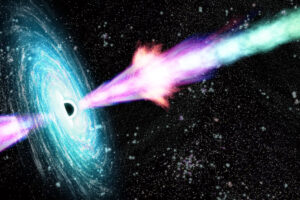
Neutron star pairs can spiral inward due to gravitational wave emission, eventually merging in spectacular events that produce short gamma-ray bursts and gravitational waves. - Heavy Element Synthesis:
These mergers are responsible for dispersing heavy elements like gold and platinum into the universe, playing a crucial role in cosmic chemical evolution. - Collapse to Black Holes:
If a neutron star gains enough mass to exceed the Tolman-Oppenheimer-Volkoff limit, it will collapse into a black hole, marking the end of its existence as a neutron star.
Why Neutron Stars Are Important
Neutron stars are vital to our understanding of fundamental physics and astrophysics. Their extreme conditions provide natural testbeds for theories of quantum mechanics, nuclear physics, and general relativity. Studying their life cycles-from formation to eventual demise-enhances our knowledge of stellar evolution, the behavior of matter at nuclear densities, and the dynamic processes shaping the universe.

Leave a Reply