Between the Lines – A Multiverse Special: Infinite Universes or Infinite Interpretations?

Understanding the Multiverse Concept The multiverse theory has become a focal point in modern cosmology and theoretical physics, sparking debates about whether our reality is just one among countless parallel universes or if all perspectives ultimately describe a single universe. This idea extends beyond physical science, touching on philosophical questions about the nature of existence […]

Read More →

A Fondness for Bits: Information Theory Meets the Universe

Definition of Information Theory and Its Cosmic Relevance Information theory, established by Claude Shannon in the 1940s, is a mathematical framework that quantifies, stores, and transmits information. It revolves around the concept of the bit, the smallest unit of data, typically represented as ‘0’ or ‘1’. While originally developed to optimize communication systems, this theory […]

Read More →

The Why and How of It All: Science’s Eternal Questions

Definition of the Quest for Cosmic Understanding The pursuit to grasp the nature of the universe and humanity’s role within it is a timeless endeavor, deeply rooted in human history. Central to this quest are profound questions such as “Why do we exist?” and “What constitutes the universe?” These inquiries span multiple disciplines, including philosophy […]

Read More →

Cosmology Gets Precise: Mapping the Universe in Ultra HD

Definition of Ultra-High-Definition Imaging in Cosmology Ultra-high-definition (UHD) imaging refers to visual data captured at resolutions of no less than 3840 x 2160 pixels, offering an extraordinary level of detail far surpassing conventional imaging techniques. In the context of cosmology, UHD imaging enables scientists to observe celestial objects and phenomena with remarkable clarity, facilitating deeper […]

Read More →

Echoes of the Past: Ancient Radiation Illuminates Early Cosmos

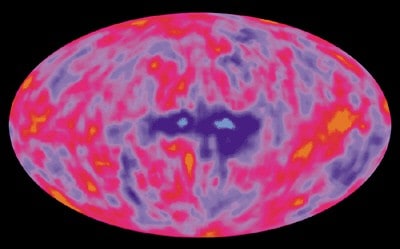
Definition of Ancient Cosmic Radiation Ancient cosmic radiation refers to the residual electromagnetic signals that permeate the universe, originating from its earliest epochs. These radiation remnants serve as vital clues, offering insights into the universe’s formation and evolution. Among these, the Cosmic Microwave Background Radiation (CMBR) stands out as the most significant, representing the afterglow […]

Read More →

11 Key Questions About the Universe: What We Still Don’t Know

Understanding the Universe: An Overview The universe, an immense and intricate expanse filled with countless mysteries, continues to captivate the curiosity of scientists and thinkers alike. Despite significant breakthroughs in astrophysics and cosmology over the last hundred years, many fundamental questions about the cosmos remain unanswered. This article explores eleven essential inquiries that highlight the […]

Read More →

Is dark energy weak or strong?

Definition of Dark Energy Dark energy is a mysterious form of energy that permeates all of space and is believed to be responsible for the accelerated expansion of the universe. It constitutes roughly 68% of the total energy content of the cosmos, making it the dominant component in the large-scale dynamics of the universe. Unlike […]

Read More →

Does dark matter interact with dark energy?

Definition of Dark Matter and Dark Energy Dark matter and dark energy are two fundamental yet mysterious components that dominate the composition of the universe. Together, they constitute about 95% of the total mass-energy content, profoundly influencing cosmic dynamics and structure. Dark Matter: A form of matter that does not emit, absorb, or reflect light, […]

Read More →