

Short Answer
Understanding Cosmophysics
Cosmophysics is a scientific discipline dedicated to unraveling the complexities of the universe, blending principles from cosmology and physics to explore the fundamental nature of cosmic phenomena. It addresses profound questions about the origin, structure, and evolution of the cosmos, seeking to decode the intricate patterns that govern everything from subatomic particles to vast galactic formations.
Current Challenges in Cosmology
Modern cosmology faces significant hurdles that challenge existing theoretical frameworks. Notably, the enigmatic concepts of dark matter and dark energy, which together constitute about 95% of the universe’s total mass-energy content, remain largely unexplained. These mysterious components defy detection through conventional means and resist integration into established physical laws, highlighting the urgent need for new mathematical models and theoretical approaches.
- Dark Matter:
An invisible form of matter that exerts gravitational effects on visible matter, influencing galaxy rotation curves and large-scale structure formation. - Dark Energy:
A mysterious force driving the accelerated expansion of the universe, counteracting gravitational attraction on cosmic scales.
Limitations of Traditional Theories
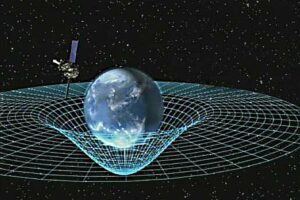
Classical physics, grounded in Newtonian mechanics and Einstein’s general relativity, has provided a robust foundation for understanding many cosmic phenomena. However, these theories encounter significant limitations when applied to the universe’s most perplexing aspects. For instance, Einstein’s field equations, while revolutionary, do not fully account for the behavior of dark energy or the quantum nature of gravity. Quantum mechanics, despite its success in describing the microcosm, struggles to reconcile with gravitational forces, leaving a gap in the unified description of fundamental interactions.
Emerging Theoretical Frameworks
To bridge these gaps, researchers have proposed innovative theories such as string theory and loop quantum gravity. These approaches attempt to unify gravity with quantum mechanics by exploring phenomena at the Planck scale and hypothesizing the existence of multiple universes. However, these models often remain highly abstract and lack direct experimental confirmation, underscoring the necessity for equations that not only offer theoretical elegance but also yield testable predictions.
Fractal Mathematics in Cosmology
One promising direction involves the application of fractal geometry to cosmological structures. Fractals are mathematical constructs characterized by self-similarity across different scales, which can effectively model the complex, seemingly chaotic distribution of galaxies and cosmic filaments. Incorporating fractal dimensions into cosmological models enhances our understanding of the universe’s large-scale architecture and reveals underlying patterns within apparent randomness.
Interdisciplinary Insights: Thermodynamics and Information Theory
The intersection of cosmology with thermodynamics and information theory offers profound perspectives on the universe’s evolution. The Second Law of Thermodynamics, which predicts increasing entropy and eventual disorder, frames discussions about the universe’s ultimate fate. Conversely, information theory suggests that the cosmos may encode its history in a manner that preserves essential information despite entropic decay. These interdisciplinary approaches inspire the development of equations that capture the dynamic interplay between order, chaos, and information in cosmic evolution.
Advances in Computational Cosmology
High-performance computing has revolutionized the study of cosmology by enabling detailed simulations of cosmic phenomena. Utilizing sophisticated algorithms, including machine learning and neural networks, scientists analyze vast datasets from telescopes and particle accelerators. These computational methods facilitate the derivation of refined equations that better describe universal laws and predict new phenomena, accelerating the pace of discovery.
Role of Observational Technologies
Empirical data remains the cornerstone of cosmological progress. Cutting-edge instruments like the James Webb Space Telescope and gravitational wave observatories provide unprecedented observational capabilities. The integration of these rich data sources into theoretical models is essential for validating new equations and refining our understanding of the universe’s behavior, ensuring that theoretical advances remain grounded in measurable reality.
Philosophical and Cultural Dimensions
The quest for new cosmophysics equations transcends scientific inquiry, touching on philosophical questions about existence, consciousness, and humanity’s place in the cosmos. The narratives woven around these discoveries resonate deeply with cultural and metaphysical traditions, reflecting humanity’s enduring fascination with the universe. Effective communication of scientific findings, therefore, requires not only mathematical rigor but also storytelling that bridges the gap between complex theories and public engagement.
Significance of Developing New Equations
Innovative mathematical formulations in cosmophysics are vital for advancing our comprehension of the universe. They enable scientists to address unresolved mysteries, integrate disparate physical theories, and predict phenomena that can be empirically tested. This progress not only enriches scientific knowledge but also inspires technological innovation and deepens our philosophical understanding of existence.
Conclusion: The Imperative for Innovation in Cosmophysics
The scientific community stands at a pivotal moment where traditional models are insufficient to explain emerging cosmic enigmas. The development of novel equations that unify theoretical insights with observational data is essential for unlocking the universe’s secrets. Cosmophysicists are called upon to pioneer these breakthroughs, crafting mathematical tools that illuminate the profound mysteries of our cosmic environment and propel humanity’s quest for knowledge forward.
FAQ
What is cosmophysics?
Cosmophysics is a scientific discipline combining cosmology and physics to study the fundamental nature of the universe, including its origin, structure, and evolution.
Why are new equations needed in cosmophysics?
New equations are necessary to address unresolved phenomena like dark matter and dark energy, unify quantum mechanics with gravity, and provide testable predictions for emerging cosmic mysteries.
How do fractal mathematics contribute to cosmology?
Fractal mathematics models the self-similar, complex distribution of galaxies and cosmic structures, helping to reveal patterns within the universe's large-scale architecture.
What role do computational methods play in cosmophysics?
High-performance computing and machine learning enable detailed simulation and analysis of cosmic phenomena, aiding in the derivation of refined theoretical equations.
How do observational technologies impact cosmophysics?
Advanced instruments like the James Webb Space Telescope provide critical empirical data that validate theoretical models and guide the development of new cosmophysics equations.



Leave a Reply