
Short Answer
Definition of Reflecting Symmetry
Reflecting symmetry, also known as bilateral symmetry, refers to a property where an object or system can be divided into two mirror-image halves along a central axis. Each half is a reflection of the other, creating a balanced and harmonious structure. This form of symmetry is prevalent in numerous domains, including biology, geology, architecture, and physics, highlighting its universal relevance.
- Bilateral Symmetry:
The division of an entity into two congruent parts that are mirror images across a line or plane. - Central Axis:
The imaginary line or plane that acts as the mirror boundary between the two symmetrical halves.
Psychological and Evolutionary Significance
Humans exhibit a natural attraction to symmetrical patterns, which is deeply rooted in psychological comfort and evolutionary biology. Symmetry signals balance and order, traits that are often subconsciously associated with health and genetic fitness. This preference has influenced mate selection and aesthetic appreciation across cultures and epochs.
- Evolutionary Advantage:
Symmetrical features in potential mates often indicate good health and strong genetics, guiding reproductive choices. - Aesthetic Appeal:
Symmetry is widely regarded as beautiful, influencing art, design, and cultural expressions worldwide.
Reflecting Symmetry in Scientific Principles
In the realm of science, reflecting symmetry is foundational to understanding physical laws and natural phenomena. Symmetry principles underpin conservation laws and invariances in physics, where certain properties remain unchanged under symmetrical transformations. This concept is crucial in fields such as particle physics and cosmology.
- Physical Invariance:
Laws of physics maintain consistency regardless of spatial orientation, exemplified by rotational and reflecting symmetries. - Conservation Laws:
Symmetry principles lead to conservation of energy, momentum, and other fundamental quantities.
Role in Particle Physics and Cosmology
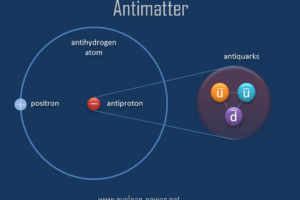
Reflecting symmetry plays a pivotal role in the standard model of particle physics, influencing the behavior and interactions of fundamental particles like electrons and protons. The concept extends to the relationship between matter and antimatter, where symmetrical counterparts highlight profound cosmic questions about the universe’s composition and evolution.
- Particle Symmetry:
Particles and their antiparticles exhibit symmetrical properties that govern their interactions. - Matter-Antimatter Asymmetry:
The observed imbalance between matter and antimatter raises questions about the universe’s inherent symmetry or lack thereof.
Philosophical Reflections on Symmetry and Asymmetry
The presence of symmetry suggests an underlying order in the cosmos, yet the existence of asymmetries introduces complexity and dynamism. This duality invites philosophical contemplation about the nature of the universe, its origins, and its future trajectory. The interplay between symmetry and chaos may be fundamental to the evolution and unpredictability of cosmic structures.
- Cosmic Order:
Symmetry implies a structured, balanced universe governed by predictable laws. - Asymmetry and Complexity:
Imperfections and imbalances, such as the dominance of matter, contribute to the universe’s dynamic and evolving nature.
Geometric Foundations and Practical Applications
Reflecting symmetry is a cornerstone in geometry, influencing both theoretical frameworks and practical designs. From natural mirror-image patterns to intricate fractal geometries, symmetry informs architectural aesthetics and engineering solutions, blending functionality with visual harmony.
- Geometric Patterns:
Symmetry shapes natural and mathematical forms, providing a basis for design and analysis. - Architectural Design:
Symmetrical principles guide the creation of structures that are both efficient and visually appealing.
Symmetry in Art and Cultural Expression
Artists have long harnessed reflecting symmetry to evoke emotional resonance and convey meaning. From the detailed mosaics of Islamic art to contemporary sculptures, symmetry serves as a universal language that bridges personal and cultural narratives, enriching human experience.
- Artistic Techniques:
Use of symmetry to create balance, rhythm, and harmony in visual compositions. - Cultural Significance:
Symmetry as a symbol of order, spirituality, and beauty across diverse traditions.
Interplay Between Symmetry and Chaos
The dynamic tension between symmetry and chaos shapes our understanding of existence. While symmetry offers stability and predictability, chaos fosters creativity and transformation. This balance is essential in scientific inquiry and philosophical thought, reflecting the complexity of the universe.
Why Reflecting Symmetry Is Important
Reflecting symmetry holds profound significance across multiple disciplines. It enhances our comprehension of natural laws, informs technological and architectural innovation, and enriches cultural and artistic expression. Recognizing the balance between symmetry and asymmetry deepens our appreciation of the universe’s intricate design and ongoing evolution.
Summary
Reflecting symmetry is a fundamental concept that permeates nature, science, art, and philosophy. Its presence signals harmony and order, while its interplay with asymmetry introduces complexity and growth. From evolutionary biology to particle physics, and from geometric design to cultural art, symmetry remains a vital lens through which humanity interprets and interacts with the world.
FAQ
What is reflecting symmetry?
Reflecting symmetry is a property where an object can be divided into two mirror-image halves.
Why is reflecting symmetry important in science?
It helps in understanding physical laws, conservation principles, and the behavior of particles.





Leave a Reply