Evidence Mounts for Axion-like Particles: A Particle Physicist’s Dream

Definition of Axion-Like Particles (ALPs) Axion-like particles (ALPs) are hypothetical elementary particles that extend the concept of the axion, originally proposed to solve specific problems in particle physics. These particles are characterized by their extremely low mass and weak interactions with ordinary matter, making them prime candidates in the search for dark matter. ALPs are […]

Read More →

Evidence for Supersolid Firmed Up: When Solids Flow Like Liquids

Definition of Supersolids Supersolids represent a unique phase of matter that intriguingly combines the rigid, ordered structure of a solid with the frictionless flow characteristic of superfluids. Unlike conventional solids, which maintain a fixed shape due to tightly bound atoms or molecules, supersolids exhibit the ability to flow without viscosity while preserving their crystalline lattice. […]

Read More →

EXO-200 Narrows the Search for Majorana Neutrinos

Definition of Majorana Neutrinos Majorana neutrinos are a hypothesized type of neutrino proposed by physicist Ettore Majorana in 1937. Unlike conventional neutrinos, which are distinct from their antiparticles, Majorana neutrinos are theorized to be their own antiparticles. This unique property challenges existing notions of particle-antiparticle symmetry and has profound implications for particle physics and cosmology. […]

Read More →

Dark Energy: A 9-Billion-Year-Old Mystery Unveiled

Definition of Dark Energy Dark energy is a fundamental yet enigmatic component of the universe, playing a crucial role in modern cosmology. It is an invisible form of energy that permeates all of space and is responsible for the accelerated expansion of the cosmos. Despite its pervasive presence, dark energy remains largely mysterious, influencing the […]

Read More →

Are Extra Dimensions Hiding in the Big Bang’s Afterglow?

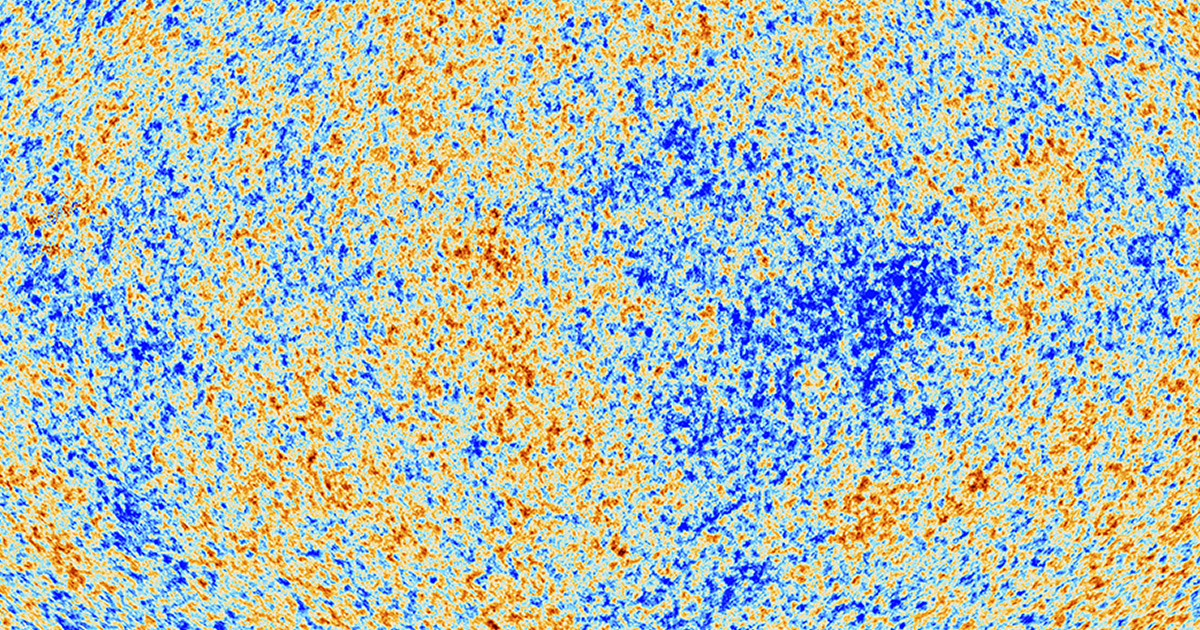
Definition of Cosmic Microwave Background Radiation The cosmic microwave background radiation (CMB) is a faint, pervasive electromagnetic radiation that fills the universe, serving as a relic from the early cosmos. It represents the thermal remnant from approximately 380,000 years after the Big Bang, marking the epoch when photons decoupled from matter, allowing light to travel […]

Read More →

Excess Electrons May Reveal Hidden Dark Matter Clues

Understanding Dark Matter Dark matter is a mysterious component of the universe, accounting for roughly 27% of its total mass-energy content. Unlike ordinary matter, it neither emits nor absorbs light, making it invisible to traditional telescopes and detectors. Its presence is inferred primarily through gravitational effects on visible matter, radiation, and the large-scale structure of […]

Read More →

Evidence Mounts for Bose Glass: Disorder Meets Quantum Fluids

Definition of Bose Glass The Bose glass represents a unique phase of matter observed in bosonic systems subjected to disorder. It emerges when bosons-particles that follow Bose-Einstein statistics-become localized due to random potential fluctuations, disrupting their ability to form a coherent superfluid state. This phase is distinguished by the coexistence of localized, insulating regions and […]

Read More →