

Short Answer
Definition of the Universe’s Origin
The origin of the universe refers to the moment and process through which all matter, energy, space, and time came into existence. This profound concept encompasses scientific theories, philosophical reflections, and ongoing investigations aimed at understanding how the cosmos began and evolved. It addresses fundamental questions about the nature of reality, the beginning of time, and the structure of everything that exists.
Scientific Theories Explaining the Beginning
Central to modern cosmology is the Big Bang theory, which asserts that the universe emerged roughly 13.8 billion years ago from an extremely hot, dense state known as a singularity. This event not only marked the creation of matter and energy but also initiated the expansion of space itself. Following this initial explosion, the universe underwent rapid growth, leading to the formation of elementary particles and atoms.
- Big Bang:
The universe began as a singularity, expanding and cooling to form fundamental particles. - Nucleosynthesis:
The process by which hydrogen, helium, and other light elements were created in the early universe. - Cosmic Inflation:
A brief period of exponential expansion immediately after the Big Bang, explaining the uniformity of the cosmic microwave background radiation.
Exploring Pre-Big Bang Concepts and the Multiverse
The question of what preceded the Big Bang remains one of the most challenging puzzles in cosmology. Some contemporary hypotheses suggest the existence of a multiverse-a collection of multiple universes, each potentially governed by distinct physical laws and constants. This idea expands the scope of inquiry beyond our observable universe, challenging traditional notions of beginnings and boundaries.
Mechanisms Behind Cosmic Structure Formation
During the inflationary epoch, tiny quantum fluctuations were magnified, seeding the large-scale structures we observe today, such as galaxies and clusters of galaxies. These fluctuations may represent either random occurrences or evidence of an underlying cosmic order, a question that continues to intrigue scientists.
Observational Evidence Supporting Cosmic Expansion
Empirical data from instruments like the Hubble Space Telescope have been pivotal in confirming that the universe is expanding. Observations show that galaxies are moving away from us, with their speed proportional to their distance-a relationship known as Hubble’s Law. This expansion raises further questions about the nature of space and what, if anything, lies beyond the universe’s observable limits.
Time and Space: A Relativistic Perspective
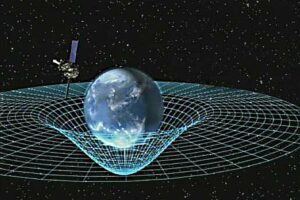
Einstein’s theory of relativity revolutionized our understanding of time and space, revealing that time is not absolute but relative and intertwined with the fabric of space-time. This insight complicates traditional views of temporal beginnings and suggests that time itself may be a property emerging from the universe’s structure rather than an independent entity.
The Enigmatic Roles of Dark Matter and Dark Energy
While ordinary matter accounts for only about 5% of the universe’s total content, dark matter and dark energy constitute approximately 27% and 68%, respectively. Dark matter influences the gravitational behavior of galaxies, whereas dark energy drives the accelerated expansion of the universe. Despite their significance, the true nature and origins of these components remain largely unknown, posing profound questions for cosmology and physics.
Philosophical Reflections on Cosmic Origins
The scientific exploration of the universe’s beginnings naturally intersects with philosophical considerations about existence, purpose, and meaning. Are humans passive observers in a vast, indifferent cosmos, or do we have the capacity to find or create significance within it? These reflections enrich the dialogue between science, philosophy, and spirituality, deepening our understanding of our place in the universe.
Advancements in Technology and Future Prospects
Technological progress continues to enhance our ability to investigate the cosmos. The James Webb Space Telescope, for example, promises unprecedented insights into the early universe and cosmic phenomena previously beyond reach. Additionally, the integration of artificial intelligence with astronomical research is poised to transform data analysis and theoretical modeling, potentially accelerating discoveries about the universe’s origin and evolution.
Common Misconceptions About the Universe’s Origin
The Big Bang was an explosion in space.
The Big Bang was an expansion of space itself, not an explosion occurring within pre-existing space.
Time existed before the Big Bang.
According to relativity, time began with the Big Bang and is inseparable from the universe’s fabric.
Dark matter and dark energy are the same.
Dark matter exerts gravitational pull, while dark energy causes the universe’s accelerated expansion; they are distinct phenomena.
Significance of Understanding the Universe’s Origin
Comprehending how the universe began is crucial for multiple fields, including physics, astronomy, and philosophy. It informs our knowledge of fundamental forces, the nature of matter and energy, and the evolution of cosmic structures. Moreover, this understanding shapes humanity’s worldview, influencing how we perceive our existence and future within the vast cosmos.
Real-World Examples Illustrating Cosmic Principles
Observations such as the redshift of distant galaxies provide tangible evidence of cosmic expansion. The cosmic microwave background radiation serves as a relic snapshot of the early universe, offering clues about its initial conditions. Additionally, the distribution of galaxies and galaxy clusters reflects the influence of primordial quantum fluctuations amplified during inflation.
FAQ
What is the Big Bang theory?
The Big Bang theory proposes that the universe began about 13.8 billion years ago from an extremely hot and dense singularity, which expanded and cooled to form matter, energy, space, and time.
What is cosmic inflation?
Cosmic inflation is a brief period of rapid exponential expansion immediately after the Big Bang that explains the uniformity of the cosmic microwave background radiation.
What roles do dark matter and dark energy play in the universe?
Dark matter influences the gravitational behavior of galaxies, while dark energy drives the accelerated expansion of the universe. Together, they account for approximately 95% of the universe’s total content.
Does time exist before the Big Bang?
According to Einstein’s theory of relativity and current cosmological understanding, time began with the Big Bang and is intertwined with the fabric of the universe.
What is the multiverse hypothesis?
The multiverse hypothesis suggests that our universe is one of many, each potentially governed by different physical laws and constants, expanding the scope of cosmological inquiry beyond our observable universe.

Leave a Reply