
Short Answer
Definition of Cosmology
Cosmology is the scientific discipline dedicated to exploring the universe’s beginnings, its ongoing development, and its eventual destiny. It seeks to understand the large-scale properties and fundamental nature of the cosmos, encompassing everything from the earliest moments after the Big Bang to the far future of cosmic evolution.
- Scope:
Investigates the origin, structure, dynamics, and ultimate fate of the universe. - Focus Areas:
Includes the study of dark matter, dark energy, spacetime, and the observable matter that forms stars, galaxies, and planets.
The Cosmic Composition: Visible and Invisible Elements
The universe is composed predominantly of components that remain largely mysterious to us. Approximately 27% of the cosmos consists of dark matter, an elusive form of matter that influences gravitational forces but does not emit or absorb light. Even more enigmatic is dark energy, which makes up about 68% of the universe and is responsible for its accelerated expansion. The ordinary matter that forms stars, planets, and living beings accounts for a mere 5%, highlighting a profound disparity between what we can observe and what fundamentally governs cosmic behavior.
Historical Evolution of Cosmological Thought
Human understanding of the universe has evolved dramatically over millennia. Early explanations were rooted in mythology and philosophy, but the scientific revolution brought about a transformative shift. Pioneers such as Isaac Newton formulated laws describing celestial motion, while Albert Einstein’s theory of general relativity redefined gravity and spacetime. The emergence of quantum mechanics further revolutionized cosmology by introducing principles that challenge classical interpretations, prompting new inquiries into the universe’s underlying fabric.
Technological Innovations Driving Modern Cosmology
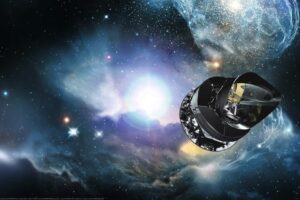
Recent decades have witnessed remarkable advancements in observational technology, vastly enhancing our ability to study the cosmos. Ground-based and spaceborne telescopes, including the cutting-edge James Webb Space Telescope, have expanded our view into the distant past. Webb’s extraordinary sensitivity allows it to detect faint signals from the universe’s infancy, offering unprecedented insights into epochs previously hidden from view.
Theoretical Frontiers: Bridging Quantum Mechanics and Relativity
One of the most exciting challenges in cosmology is uniting the principles of quantum mechanics with general relativity. Theoretical frameworks such as string theory and loop quantum gravity aim to reconcile these domains, potentially unlocking answers to profound questions about black holes, the nature of spacetime, and the origins of the universe. This intersection of theory and observation continues to propel cosmology into new realms of understanding.
Multimessenger Astronomy: A New Era of Cosmic Observation
The integration of diverse observational channels-electromagnetic radiation, gravitational waves, and neutrinos-has inaugurated a transformative approach known as multimessenger astronomy. The landmark detection of gravitational waves from merging black holes in 2015 exemplifies this progress, revealing dynamic processes in spacetime that were previously inaccessible. This holistic method enriches our comprehension of cosmic phenomena, including the elusive properties of dark energy and the mechanisms underlying the Big Bang.
Ethical Dimensions in Cosmological Exploration
As cosmological research advances, it raises important ethical questions. The potential discovery of extraterrestrial life and the exploration of other planetary environments necessitate careful consideration of our responsibilities. Ethical frameworks must guide how humanity interacts with and preserves these cosmic frontiers, ensuring that scientific progress is balanced with respect for the broader universe.
Philosophical Reflections on Our Place in the Universe
Cosmology not only expands scientific knowledge but also challenges human perspectives on existence. It confronts anthropocentric views by revealing the vastness and complexity of the cosmos, prompting profound questions about humanity’s significance. Each scientific breakthrough invites deeper contemplation about our role within the grand cosmic narrative, blending empirical inquiry with philosophical introspection.
The Enduring Appeal and Significance of Cosmology
Beyond its scientific rigor, cosmology captivates both experts and the general public by weaving a compelling story of cosmic discovery. It fosters a shared sense of wonder and curiosity, reflecting humanity’s innate drive to explore and understand the universe. The field’s ongoing advancements promise to illuminate the mysteries of existence, offering hope and inspiration amid the vast unknown.
Conclusion: The Promising Horizon of Cosmological Research
The future of cosmology is bright with potential, marked by groundbreaking discoveries, innovative technologies, and thoughtful ethical considerations. As we navigate the complexities of dark matter and dark energy, we uncover new possibilities that deepen our understanding of reality. Although uncertainty remains a constant companion in this quest, it is precisely this uncertainty that fuels scientific inquiry, guiding us toward a more profound comprehension of the universe and our place within it.
FAQ
What is cosmology?
Cosmology is the scientific study of the universe’s beginnings, evolution, and ultimate fate, exploring concepts like dark matter, dark energy, and the structure of spacetime.
What are dark matter and dark energy?
Dark matter makes up about 27% of the universe and influences gravity without emitting light, while dark energy constitutes about 68% and is responsible for the universe’s accelerated expansion.
How has technology advanced cosmology?
Technological advancements, particularly in telescopes like the James Webb Space Telescope, have significantly improved our ability to observe the cosmos, uncovering insights into its early history.

Leave a Reply