
Short Answer
Definition of Cosmic Microwave Background Radiation
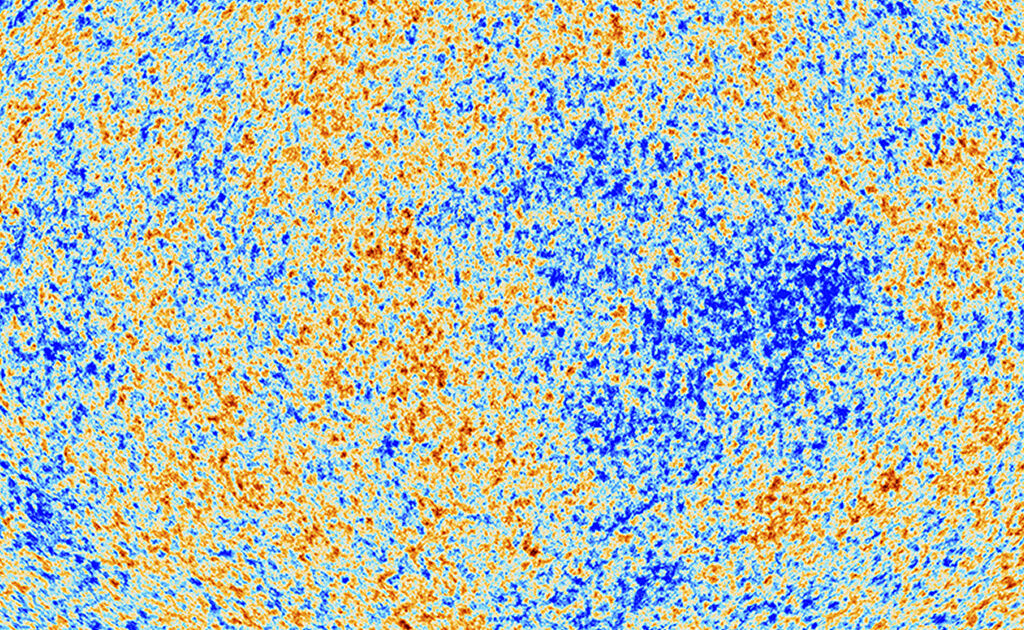
The cosmic microwave background radiation (CMB) is a faint, pervasive electromagnetic radiation that fills the universe, serving as a relic from the early cosmos. It represents the thermal remnant from approximately 380,000 years after the Big Bang, marking the epoch when photons decoupled from matter, allowing light to travel freely through space. This afterglow provides a crucial observational window into the universe’s infancy and its subsequent evolution.
- Origin:
The CMB emerged when the universe cooled enough for protons and electrons to combine into neutral hydrogen, making the universe transparent to radiation. - Significance:
It acts as a cosmic snapshot, revealing conditions of the early universe and enabling precise measurements of cosmological parameters. - Discovery:
Accidentally detected in the 1960s, the CMB has since become a foundational element in modern astrophysics and cosmology.
Exploring Extra Dimensions in Cosmology
Beyond the familiar three spatial dimensions and one time dimension, theoretical physics proposes the existence of additional spatial dimensions. These extra dimensions are central to advanced frameworks such as string theory and M-theory, which suggest that our observable universe might be a lower-dimensional projection embedded within a higher-dimensional space. This concept challenges conventional understanding and opens the possibility that traces of these hidden dimensions could be imprinted on cosmological phenomena like the CMB.
- String Theory:
Proposes that fundamental particles are one-dimensional strings vibrating in multiple dimensions, some of which are compactified and imperceptible at human scales. - M-Theory:
Extends string theory by incorporating membranes (branes) and additional dimensions, offering a more comprehensive framework for unifying forces. - Brane-World Scenarios:
Suggest our universe exists on a three-dimensional brane within a higher-dimensional bulk, where gravity can propagate into extra dimensions.
How Extra Dimensions Could Influence the Cosmic Microwave Background
The presence of extra dimensions may subtly affect the characteristics of the CMB through gravitational and quantum effects. These influences could manifest as anomalies or specific patterns in the temperature fluctuations and polarization of the CMB, which are otherwise unexplained by standard cosmological models.
- Gravitational Interactions:
Additional dimensions could alter gravitational waves and their propagation, leaving detectable imprints on the CMB anisotropies. - Quantum Fluctuations During Inflation:
The rapid expansion of the early universe might have generated fluctuations that reveal the existence of extra dimensions through primordial gravitational waves or polarization signals. - Spectral Distortions:
Deviations from the perfect blackbody spectrum of the CMB could indicate interactions influenced by higher-dimensional physics.
Mathematical Framework and Theoretical Models
The study of extra dimensions in relation to the CMB relies on complex mathematical formulations derived from higher-dimensional theories. These models often involve modifications to Einstein’s field equations and incorporate additional spatial coordinates.
- Higher-Dimensional Metrics:
The spacetime interval is extended to include extra dimensions, often compactified on small scales, represented as:
ds² = gμν dxμ dxν + hab dya dyb
- where gμν is the four-dimensional metric, and hab describes the geometry of the extra dimensions.
- Gravitational Wave Equations:
Modified to include effects from extra dimensions, potentially altering waveforms and frequencies detectable in the CMB. - Inflationary Perturbations:
Quantum fluctuations during inflation are modeled to include contributions from higher-dimensional fields, affecting the power spectrum of the CMB.
Observational Techniques and Experimental Efforts
Detecting the subtle signatures of extra dimensions within the CMB requires highly sensitive instruments and sophisticated data analysis methods. Current and future observational campaigns focus on refining measurements of CMB anisotropies, polarization, and spectral properties.
- Satellite Missions:
Projects like the Planck satellite have provided high-resolution maps of the CMB, enabling precise cosmological parameter estimation and searches for anomalies. - Ground-Based Telescopes:
Facilities such as the Atacama Cosmology Telescope and the South Pole Telescope complement satellite data by targeting specific CMB features. - Gravitational Wave Detectors:
Instruments like LIGO and future space-based observatories aim to detect primordial gravitational waves that could carry imprints of extra dimensions.
Real-World Implications and Significance
Understanding whether extra dimensions influence the CMB has profound consequences for physics and cosmology. It could provide evidence for unified theories of fundamental forces, reshape our conception of spacetime, and offer insights into the universe’s origin and ultimate fate.
- Advancing Fundamental Physics:
Confirmation of extra dimensions would support string theory and related models, potentially leading to a grand unified theory. - Cosmological Insights:
It would deepen knowledge of the early universe’s dynamics, including inflation and structure formation. - Technological Innovation:
The pursuit of detecting these subtle effects drives advancements in instrumentation and data analysis techniques.
Common Misconceptions About Extra Dimensions and the CMB
Extra dimensions are purely science fiction with no scientific basis.
Extra dimensions are a serious subject of theoretical physics, supported by mathematical models and ongoing experimental investigation.
The CMB directly shows images of extra dimensions.
The CMB does not provide direct images but may contain indirect signatures or anomalies hinting at extra-dimensional effects.
Detecting extra dimensions is impossible with current technology.
While challenging, advances in observational cosmology and gravitational wave astronomy are progressively enhancing detection capabilities.
Challenges and Future Directions
The quest to uncover extra dimensions through the CMB is fraught with theoretical and experimental difficulties. The subtlety of expected signals demands unprecedented precision and innovative methodologies. Future research will likely involve a combination of improved observational data, refined theoretical models, and interdisciplinary collaboration.
- Theoretical Complexity:
The mathematics of higher-dimensional models is intricate and often abstract, requiring new approaches to make testable predictions. - Data Interpretation:
Distinguishing extra-dimensional effects from conventional cosmological phenomena necessitates careful statistical and computational analysis. - Technological Development:
Next-generation satellites and detectors are essential to push the boundaries of sensitivity and resolution.
Conclusion: The Cosmic Microwave Background as a Gateway to Higher Dimensions
The cosmic microwave background remains a vital probe into the universe’s earliest moments and its fundamental structure. The intriguing possibility that it encodes information about extra spatial dimensions elevates its importance beyond traditional cosmology. As scientific inquiry advances, the CMB may reveal hidden layers of reality, challenging and expanding our understanding of the cosmos in profound ways.
FAQ
What is the cosmic microwave background radiation?
The cosmic microwave background radiation is electromagnetic radiation from the early universe, acting as a snapshot of the universe's conditions approximately 380,000 years after the Big Bang.
How do extra dimensions relate to the CMB?
Extra dimensions may affect the characteristics of the CMB through gravitational and quantum effects, potentially revealing their presence in temperature fluctuations and polarization patterns.


Leave a Reply