

Short Answer
Definition of the Universe’s Age
The age of the universe refers to the total time elapsed since the origin of all space, matter, and time itself. It represents the duration from the initial event known as the Big Bang to the present moment. Determining this age is a fundamental pursuit in cosmology, intertwining observational data, theoretical physics, and philosophical considerations about the nature of time and existence.
Foundational Theory: The Big Bang
The prevailing cosmological model, the Big Bang theory, asserts that the universe began as an extremely hot and dense singularity approximately 13.8 billion years ago. This event not only marks the birth of all matter and energy but also the inception of time as a measurable dimension. The Big Bang framework underpins modern efforts to calculate the universe’s age, relying on a synthesis of astronomical observations and physical laws.
Key Methods for Estimating the Universe’s Age
Cosmic Microwave Background Radiation (CMB)
The cosmic microwave background radiation is the residual thermal radiation from the early universe, often described as the afterglow of the Big Bang. Discovered accidentally in 1965, the CMB fills the cosmos with a nearly uniform glow. By examining minute temperature variations within this radiation, scientists have gained critical insights into the universe’s composition and expansion history. Missions such as the Wilkinson Microwave Anisotropy Probe (WMAP) and the Planck satellite have been instrumental in analyzing these fluctuations, enabling precise calculations of the universe’s age.
Expansion of the Universe and Redshift
The observation that galaxies are moving away from us, with speeds proportional to their distances, is a cornerstone of cosmology. This phenomenon, known as cosmic expansion, was first quantified by Edwin Hubble in the early 20th century and is described by Hubble’s Law. By measuring the redshift-the stretching of light to longer wavelengths-of distant galaxies, astronomers can determine their recessional velocities. These measurements allow researchers to estimate the rate of expansion and, consequently, the time elapsed since the Big Bang.
Age of Globular Clusters
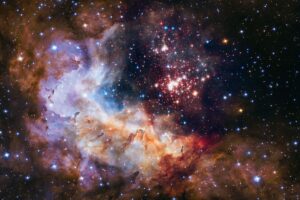
Globular clusters are dense, spherical collections of ancient stars orbiting the halos of galaxies. These stellar populations serve as natural chronometers for the universe’s age. Using stellar evolution models and techniques such as isochrone fitting, astronomers estimate that the oldest globular clusters formed roughly 13 billion years ago. These findings corroborate age estimates derived from cosmic microwave background studies, providing an independent line of evidence.
Radioactive Dating of Meteorites and Rocks
Radioisotope dating, particularly uranium-lead dating, applied to the oldest meteorites and terrestrial rocks, offers another method to constrain the universe’s timeline. The ages of these materials provide a minimum age for the solar system, which formed from earlier cosmic matter. By anchoring the solar system’s formation within the broader cosmic timeline, scientists indirectly refine estimates of the universe’s overall age.
Scientific Principles Underlying Age Determination
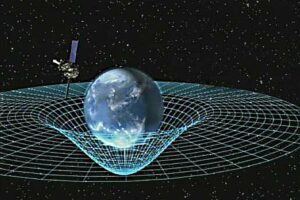
The calculation of the universe’s age depends heavily on the physics of cosmic expansion, governed by Einstein’s general theory of relativity. Precise measurements of cosmological parameters, such as the Hubble constant, are crucial. However, current discrepancies in the exact value of the Hubble constant introduce uncertainties in age estimates, a challenge that continues to stimulate research and debate within the astrophysical community.
Philosophical and Temporal Considerations
The concept of the universe’s age also raises profound philosophical questions about the nature of time itself. If time began with the Big Bang, it implies a temporal origin distinct from physical phenomena. This intersection of cosmology and metaphysics invites reflection on existence, causality, and the limits of human understanding.
Future Directions in Cosmic Chronology
Advancements in observational technology, including next-generation telescopes and space missions, promise to enhance the precision of cosmic age measurements. As data quality improves and theoretical models evolve, our comprehension of the universe’s timeline will become increasingly refined, potentially reshaping current paradigms.
Significance of Knowing the Universe’s Age
Understanding the age of the universe is vital for multiple scientific disciplines, including astrophysics, cosmology, and planetary science. It provides a temporal framework for the evolution of cosmic structures, the formation of galaxies and stars, and the development of planetary systems. Beyond science, this knowledge satisfies a deep human curiosity about our origins and place in the cosmos.
Summary
Determining the universe’s age is a complex endeavor that integrates diverse observational techniques and theoretical insights. The consensus estimate of approximately 13.8 billion years emerges from converging evidence such as cosmic microwave background analysis, galactic redshift measurements, stellar population studies, and radiometric dating. This multidisciplinary approach not only quantifies cosmic time but also enriches our understanding of the universe’s profound mysteries, inspiring ongoing exploration and contemplation.
FAQ
What is the significance of knowing the universe's age?
Knowing the universe's age helps us understand cosmic evolution, the formation of structures, and our place in the cosmos.


Leave a Reply