

Short Answer
Definition of Dark Energy
Dark energy is a fundamental yet enigmatic component of the universe, playing a crucial role in modern cosmology. It is an invisible form of energy that permeates all of space and is responsible for the accelerated expansion of the cosmos. Despite its pervasive presence, dark energy remains largely mysterious, influencing the large-scale structure and evolution of the universe without being directly observable.
- Nature:
Dark energy is hypothesized as a form of energy with repulsive gravitational effects, counteracting the attractive force of gravity on cosmic scales. - Discovery:
It was first inferred in the late 1990s through observations of distant supernovae, which indicated that the universe’s expansion is speeding up rather than slowing down.
Historical Background and Discovery
The concept of dark energy emerged from groundbreaking astronomical observations in the late 20th century. Two independent research groups studying Type Ia supernovae-stellar explosions used as standard candles to measure cosmic distances-found these supernovae to be dimmer than expected. This unexpected dimness implied that the universe’s expansion rate was accelerating, contradicting the earlier assumption that gravity would slow it down over time. This revelation led to the introduction of dark energy as a hypothetical force driving this acceleration.
The Cosmological Constant and Its Role
Central to understanding dark energy is the cosmological constant, symbolized by the Greek letter Lambda (Λ). Originally introduced by Albert Einstein in his general relativity equations to maintain a static universe model, the cosmological constant was later discarded by Einstein himself. However, it has since been revived as a key explanation for dark energy, representing a constant energy density filling space uniformly and driving cosmic acceleration.
- Einstein’s “Greatest Blunder”:
The cosmological constant was initially a mathematical fix to counteract gravity and achieve a static universe, a concept later invalidated by the discovery of cosmic expansion. - Modern Interpretation:
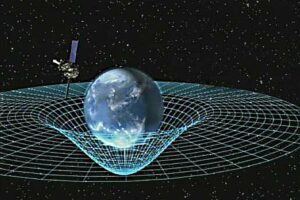
Today, Λ is understood as a measure of dark energy’s density, exerting a repulsive effect that accelerates the expansion of space-time.
Mechanisms Behind Dark Energy
Dark energy’s influence on the universe can be likened to an invisible mist enveloping all of space, subtly shaping the motion and formation of galaxies. Scientists employ various observational techniques to study its properties, including:
- Analysis of the cosmic microwave background radiation, which provides a snapshot of the early universe.
- Mapping the large-scale distribution of galaxies to understand the structure of the cosmos.
- Examining the dynamics of galaxy clusters to infer the effects of dark energy on gravitational interactions.
Theoretical Models Explaining Dark Energy
Several competing theories attempt to describe the nature and behavior of dark energy, each offering unique insights:
- Quintessence:
This model proposes that dark energy is a dynamic field that changes over time, rather than a fixed constant. It suggests that the strength and influence of dark energy evolve as the universe ages. - Modified Gravity Theories:
These theories challenge the conventional understanding of gravity, suggesting that alterations to Einstein’s general relativity could explain the observed cosmic acceleration without invoking dark energy as a separate entity.
Empirical Investigations and Technological Advances
Empirical data is essential for validating theories about dark energy. Cutting-edge projects like the Dark Energy Survey and the Euclid mission aim to create detailed maps of the universe’s expansion and structure. These initiatives focus on:
- Refining measurements of how fast the universe is expanding.
- Charting the spatial distribution of galaxies to detect patterns influenced by dark energy.
- Understanding the formation and evolution of cosmic structures over billions of years.
Additionally, the study of gravitational waves-ripples in space-time generated by massive cosmic events such as black hole mergers-offers a novel method to probe the interaction between dark energy and gravity, potentially unveiling new aspects of cosmic dynamics.
Implications for the Universe’s Fate
The presence and properties of dark energy have profound consequences for the ultimate destiny of the cosmos. Key questions include:
- Will dark energy continue to drive an eternal acceleration, leading to a “Big Freeze” where galaxies drift apart and stars eventually burn out?
- Could dark energy’s nature change over time, possibly reversing its effect and causing a contraction or other dramatic cosmic events?
These uncertainties make dark energy a central focus of cosmological research, as understanding it is vital to predicting the long-term evolution of the universe.
Why Dark Energy Is Crucial in Cosmology
Dark energy represents one of the most significant challenges and opportunities in astrophysics and cosmology. It dominates the energy content of the universe, shaping its expansion and large-scale structure. Studying dark energy not only advances our comprehension of fundamental physics but also deepens our understanding of the universe’s origin, evolution, and eventual fate. This pursuit exemplifies humanity’s quest to unravel the deepest mysteries of existence within the vast cosmic expanse.
FAQ
What is dark energy?
Dark energy is a mysterious form of energy that permeates all of space and is responsible for the accelerated expansion of the universe.
When was dark energy discovered?
Dark energy was first inferred in the late 1990s through observations of distant supernovae.
What is the cosmological constant?
The cosmological constant, symbolized by Lambda (Λ), is a key explanation for dark energy, representing a constant energy density filling space uniformly.
What are the implications of dark energy?
Dark energy influences the fate of the universe, potentially leading to scenarios like the 'Big Freeze' where galaxies drift apart.


Leave a Reply