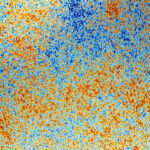
Cosmology’s Bright Future in a Dark Universe

Definition of Cosmology Cosmology is the scientific discipline dedicated to exploring the universe’s beginnings, its ongoing development, and its eventual destiny. It seeks to understand the large-scale properties and fundamental nature of the cosmos, encompassing everything from the earliest moments after the Big Bang to the far future of cosmic evolution. Scope: Investigates the origin, […]

Read More →

Dangled DNA Decodes Itself: Reading Genes with Gravity

Understanding DNA: The Blueprint of Life DNA, or deoxyribonucleic acid, is the fundamental molecule that encodes the instructions necessary for the development, functioning, and reproduction of all living organisms. Composed of nucleotide sequences, DNA serves as a comprehensive guide for protein synthesis, which in turn governs cellular activities and biological complexity. Far from being a […]

Read More →

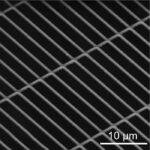
A Gossamer Nanoweb Blocks Light

Definition of Gossamer Nanoweb The Gossamer nanoweb is an innovative nanostructured material characterized by an ultra-lightweight, flexible framework designed to effectively block light. Composed of intricately woven nanoscale fibers, this material combines delicate aesthetics with exceptional strength and durability. Its unique architecture enables it to manipulate light transmission, making it a promising candidate for various […]

Read More →

Comet Collision Reveals Inner Secrets of the Solar System

Understanding Comets and Their Cosmic Significance Comets have fascinated both astronomers and the general public for centuries, often seen as celestial messengers signaling change or important events on Earth. Their fleeting appearances in the night sky inspire awe, yet beneath this mystique lies a wealth of scientific value. Recent observations of a comet colliding with […]

Read More →

Cosmic Microwave Background: Dark Energy’s Ancient Footprint

Definition of the Cosmic Microwave Background (CMB) The Cosmic Microwave Background (CMB) radiation represents the faint thermal remnant from the universe’s earliest moments, often described as the afterglow of the Big Bang. This pervasive radiation fills the entire cosmos, acting as a spectral imprint from a time when the universe was approximately 380,000 years old-an […]

Read More →

The Early Universe Comes into Focus: Peering Back to the Dawn of Time

Definition of the Early Universe The early universe refers to the initial stages of cosmic history, a period marked by rapid and profound transformations that laid the groundwork for all matter and structure observed today. This epoch encompasses the moments immediately following the universe’s origin, characterized by extreme conditions and the formation of fundamental particles […]

Read More →

A New Kind of Website Challenges the ArXiv Server

Definition of Academic Research Platforms Academic research platforms are digital repositories and interactive websites designed to host, share, and disseminate scholarly manuscripts and scientific findings. These platforms serve as crucial hubs for researchers to publish preprints, access cutting-edge studies, and engage with the academic community across various disciplines such as physics, mathematics, and computer science. […]

Read More →

DNA Nanobot Delivers Drugs with Atomic Precision

Definition of DNA Nanobots DNA nanobots are nanoscale molecular machines engineered from strands of deoxyribonucleic acid (DNA). By folding and assembling these strands with high precision, scientists create devices capable of performing specific, programmed tasks at the molecular level. These nanobots leverage the unique chemical and structural properties of DNA, such as its predictable base […]

Read More →

Still at Large: The Hunt for Dark Matter Continues

Definition of Dark Matter Dark matter is a mysterious and invisible form of matter that permeates the universe, making up about 27% of its total mass-energy content. Unlike ordinary matter, which constitutes roughly 5% of the universe and interacts with electromagnetic radiation, dark matter does not emit, absorb, or reflect light, rendering it undetectable by […]

Read More →

Cubic Neutrons? Why Some Particles Might Prefer Corners

Definition of Cubic Neutrons The concept of cubic neutrons refers to a speculative idea in particle physics where neutrons, typically considered spherical and point-like, are imagined to adopt geometrical shapes resembling cubes. This notion challenges traditional views by proposing that under certain extreme conditions, neutrons might favor spatial arrangements that emphasize corners or vertices, rather […]

Read More →