

Short Answer
Understanding Dark Matter and Its Origins
Dark matter is a mysterious and invisible form of matter that makes up a significant portion of the universe’s total mass-energy. Unlike ordinary matter, it does not emit, absorb, or reflect light, making it undetectable through conventional electromagnetic observations. Its presence is inferred primarily through its gravitational influence on visible matter, radiation, and the large-scale structure of the cosmos. Despite its crucial role in shaping galaxies and cosmic evolution, the exact nature and origin of dark matter remain elusive.
The Big Bang and the Beginning of Spacetime
The Big Bang theory is the prevailing cosmological model describing the universe’s origin approximately 13.8 billion years ago from an extremely hot and dense state. It marks the inception of both space and time, establishing a temporal framework for all subsequent cosmic events. This foundational concept raises a profound question: can anything, including dark matter, exist before the Big Bang if time itself began at that moment?
Exploring Pre-Big Bang Scenarios
Modern cosmology entertains several speculative models that challenge the notion of the Big Bang as an absolute beginning. Inflationary theory, for instance, describes a rapid expansion of spacetime fractions of a second after the Big Bang. More radical ideas, such as cyclic or bouncing cosmologies, propose that the universe undergoes endless cycles of contraction and expansion. These frameworks open the possibility that dark matter or its precursors might have existed in a phase preceding our current cosmic epoch.
Quantum Gravity and the Planck Epoch
The earliest moments of the universe, known as the Planck epoch (up to 10-43 seconds after the Big Bang), remain beyond the reach of current physical theories. At this scale, classical concepts of space and time break down, and a unified theory of quantum gravity is required to describe conditions accurately. It is within this mysterious domain that dark matter might have origins not yet comprehended by existing models.
Candidate Particles and Theories of Dark Matter
Several theoretical candidates have been proposed to explain the composition of dark matter:
- Weakly Interacting Massive Particles (WIMPs):
Hypothetical particles that interact via gravity and the weak nuclear force, potentially produced in the early universe. - Axions:
Extremely light particles that could have been abundantly generated shortly after the Big Bang, possibly predating conventional cosmic timelines. - Sterile Neutrinos:
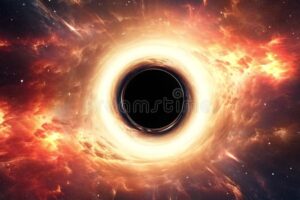
Hypothetical neutrinos that do not interact via the standard weak force, offering another dark matter candidate. - Primordial Black Holes:
Black holes formed from density fluctuations in the early universe, whose formation is tied closely to post-Big Bang conditions.
Each candidate carries implications for when and how dark matter might have emerged, with some suggesting a genesis that could extend beyond the classical Big Bang framework.
Multiverse and String Theory Perspectives
Advanced theoretical constructs such as string theory and multiverse hypotheses propose that our universe may be one among many, potentially cycling through phases or existing simultaneously with others. In these contexts, dark matter might originate from processes or entities outside our observable universe’s temporal boundaries, challenging the conventional understanding of cosmic beginnings.
Loop Quantum Cosmology and the Quantum Bounce
Loop quantum cosmology offers an alternative to the traditional Big Bang singularity by suggesting a quantum bounce-a transition from a contracting universe phase to the expanding universe we observe today. This model implies that matter and energy, including dark matter-like components, could have existed before the bounce, influencing the formation and evolution of the current cosmos.
Philosophical and Causal Implications
The idea of dark matter existing before the Big Bang confronts classical notions of causality, which dictate that causes precede effects within time. If time itself began with the Big Bang, the concept of “before” becomes problematic. However, in a quantum gravity framework, causality might be an emergent or flexible property rather than an absolute rule, allowing for more complex temporal relationships.
Challenges in Observing Pre-Big Bang Phenomena
Empirical investigation of conditions before the Big Bang is currently beyond our technological capabilities. Observations are limited to the post-Big Bang universe, constrained by the cosmic microwave background radiation and the observable light cone. Nevertheless, indirect evidence might arise from anomalies in dark matter behavior, cosmic microwave background irregularities, gravitational wave detections, or unexpected patterns in large-scale cosmic structures.
Future Prospects in Dark Matter Research
Upcoming advancements in particle detection and astronomical surveys hold promise for uncovering the microphysical properties of dark matter. Discovering non-thermal distributions, unusual interactions, or mass ranges inconsistent with standard cosmological models could hint at a more exotic origin, potentially supporting the hypothesis of dark matter’s existence prior to the Big Bang.
Metaphysical Considerations and Cosmic Continuity
Speculations about dark matter’s pre-Big Bang existence also intersect with metaphysical ideas about a primordial cosmic vacuum, quantum fields, or a multiversal backdrop. In this view, dark matter might be a vestige of pre-Big Bang physics, suggesting that the Big Bang represents a transitional phase rather than an absolute beginning, thereby redefining our understanding of cosmic origins.
Conclusion: The Significance of the Inquiry
Questioning whether dark matter existed before the Big Bang pushes the boundaries of both scientific inquiry and philosophical thought. While definitive answers remain elusive, this line of investigation stimulates the development of new theoretical models and observational techniques. As cosmology advances, the intertwined mysteries of dark matter and the Big Bang continue to inspire profound exploration into the nature of the universe, time, and existence itself.
FAQ
What is dark matter?
Dark matter is an invisible form of matter that does not emit, absorb, or reflect light, inferred primarily through its gravitational effects.
Can dark matter exist before the Big Bang?
The article discusses various theoretical models suggesting that dark matter could have existed in a phase prior to the Big Bang under certain conditions.


Leave a Reply