
Short Answer
Definition of Dark Matter
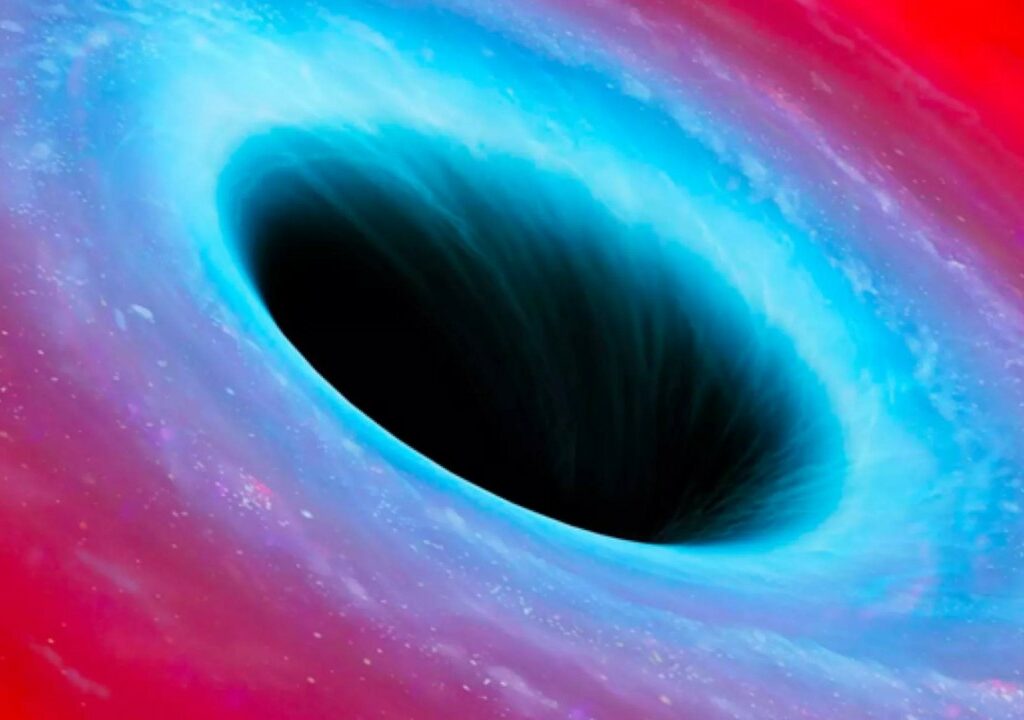
Dark matter is a mysterious and invisible form of matter that permeates the universe, making up about 27% of its total mass-energy content. Unlike ordinary matter, which constitutes roughly 5% of the universe and interacts with electromagnetic radiation, dark matter does not emit, absorb, or reflect light, rendering it undetectable by conventional telescopes. Its presence is inferred primarily through its gravitational effects on visible matter, radiation, and the large-scale structure of the cosmos.
- Composition:
The exact nature of dark matter remains unknown, but it is hypothesized to consist of particles that interact weakly with ordinary matter and light. - Significance:
Dark matter plays a crucial role in the formation and evolution of galaxies and cosmic structures.
Historical Background and Discovery
The concept of dark matter originated in the 1930s when astronomer Fritz Zwicky observed that the visible mass of galaxies in the Coma cluster was insufficient to account for their gravitational binding. This discrepancy suggested the existence of unseen mass, later termed “dark matter” due to its invisibility in electromagnetic observations. Since then, dark matter has become a central focus in astrophysics and cosmology, driving extensive theoretical and experimental research.
How Dark Matter Reveals Itself
Although dark matter cannot be observed directly, its gravitational influence provides compelling indirect evidence. For instance, the rotational speeds of galaxies remain constant at large radii, contrary to what would be expected if only visible matter were present. Similarly, the gravitational binding of galaxy clusters and the bending of light through gravitational lensing reveal the presence of substantial unseen mass.
- Galaxy Rotation Curves:
Stars in galaxies orbit at speeds that imply more mass than what is visible. - Gravitational Lensing:
The warping of light from distant objects by massive foreground clusters maps the distribution of dark matter. - Cosmic Structure Formation:
Simulations show that dark matter acts as a gravitational scaffold for the formation of galaxies and larger structures.
Theoretical Candidates for Dark Matter
Scientists have proposed various hypothetical particles to explain dark matter, each with unique properties and implications:
- Weakly Interacting Massive Particles (WIMPs):
These particles interact via gravity and the weak nuclear force but not electromagnetically, making them difficult to detect. - Axions:
Ultra-light particles predicted by certain extensions of the Standard Model of particle physics. - Sterile Neutrinos:
Hypothetical neutrinos that do not interact via the weak force, only through gravity.
Methods of Detection and Experimental Challenges
Efforts to detect dark matter involve a variety of experimental approaches, including:
- Direct Detection:
Experiments located deep underground aim to observe rare interactions between dark matter particles and atomic nuclei. - Collider Searches:
Particle accelerators like CERN attempt to produce dark matter particles through high-energy collisions. - Indirect Detection:
Observations seek signals from dark matter annihilation or decay products in cosmic rays or gamma rays.
Despite decades of research, no conclusive evidence has emerged, highlighting the possibility that dark matter may possess properties beyond current experimental capabilities or theoretical frameworks.
Role of Dark Matter in Cosmic Evolution
Dark matter is fundamental to understanding the universe’s large-scale structure. Cosmological models, such as the Lambda Cold Dark Matter (ΛCDM) model, simulate how dark matter’s gravitational pull drives the aggregation of matter into galaxies and clusters. However, discrepancies between simulations and observations-such as the distribution and formation rates of galaxies-indicate that our comprehension of dark matter’s behavior is incomplete. Additionally, the interplay between dark matter and dark energy adds complexity to cosmic evolution.
Gravitational Lensing and Mapping Dark Matter
Gravitational lensing serves as a powerful tool to visualize dark matter’s distribution. When massive objects bend the path of light from background sources, astronomers can reconstruct the mass profile of galaxy clusters, revealing concentrations of dark matter invisible to other detection methods. This technique has provided some of the most compelling evidence for dark matter’s existence and spatial arrangement.
Speculations on Dark Matter’s Properties
Emerging hypotheses suggest that dark matter might possess self-interactions or other complex characteristics not accounted for in standard particle physics. Such properties could influence the formation of cosmic structures and potentially open new avenues for detection. The possibility that dark matter represents a novel form of matter challenges existing paradigms and encourages the exploration of alternative theories.
Alternative Theories and Future Directions
Given the elusive nature of dark matter, scientists are exploring unconventional ideas, including modifications to gravity or emergent phenomena that could mimic dark matter effects. These approaches aim to address the limitations of current models and inspire innovative experimental designs. The ongoing quest to understand dark matter exemplifies the dynamic interplay between theoretical creativity and empirical rigor in modern science.
Importance of Dark Matter Research
Understanding dark matter is vital for a comprehensive picture of the universe. It influences galaxy formation, cosmic evolution, and the overall mass-energy balance. Advances in this field have the potential to revolutionize physics, shedding light on fundamental forces and particles. The pursuit of dark matter knowledge underscores humanity’s enduring drive to unravel the universe’s deepest mysteries.
Common Misconceptions About Dark Matter
Dark matter is the same as dark energy.
Dark matter and dark energy are distinct; dark matter exerts gravitational attraction, while dark energy drives the accelerated expansion of the universe.
Dark matter can be seen with telescopes.
Dark matter does not interact with light, making it invisible to all forms of electromagnetic observation.
Dark matter is made of ordinary matter like black holes or planets.
Dark matter is believed to be non-baryonic, composed of particles unlike those forming stars, planets, or black holes.
Conclusion: The Ongoing Quest to Unveil Dark Matter
The investigation into dark matter remains one of the most profound scientific endeavors of our time. As researchers refine theories and develop novel detection methods, each discovery reshapes our understanding of the cosmos. The challenge lies not only in identifying dark matter but also in expanding the boundaries of physics to accommodate this enigmatic component of the universe. Ultimately, unraveling the secrets of dark matter promises to illuminate the darkest corners of space and deepen our grasp of the fundamental nature of reality.
FAQ
What is dark matter?
Dark matter is an invisible form of matter that constitutes about 27% of the universe’s mass-energy content, detectable only through its gravitational effects.
How do scientists detect dark matter?
Detection methods include direct detection in underground experiments, collider searches at particle accelerators, and indirect detection via cosmic rays or gamma rays.
What are the main misconceptions about dark matter?
Common misconceptions include confusing dark matter with dark energy and the belief that dark matter can be seen with telescopes.


Leave a Reply