What class of particles do protons and neutrons belong to?

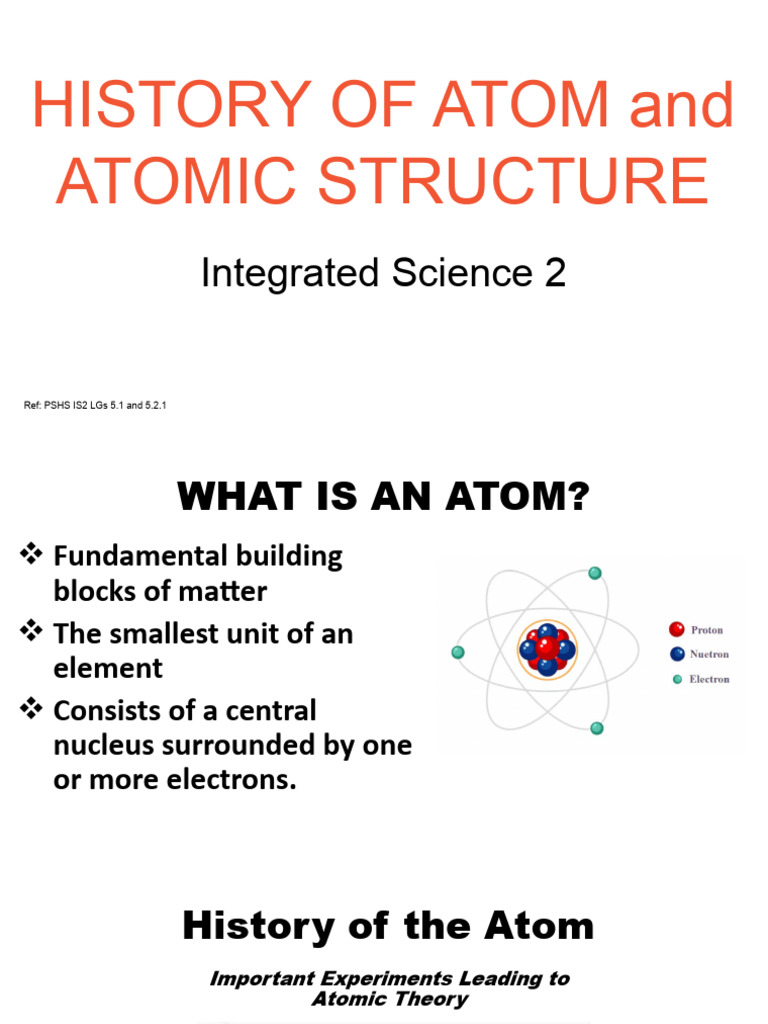
Definition of Protons and Neutrons Protons and neutrons are fundamental components of atomic nuclei, collectively known as nucleons. These subatomic particles are essential to the structure of atoms and play a critical role in the composition of matter. Understanding their classification provides insight into the fundamental forces and particles that govern the universe. Protons: Positively […]

Read More →

Are Particle Accelerators dangerous?

Definition of Particle Accelerators Particle accelerators are sophisticated devices engineered to propel charged particles, such as protons or electrons, to extremely high velocities, often approaching the speed of light. These machines enable scientists to conduct experiments that delve into the fundamental components and forces of the universe by inducing high-energy collisions between particles. Purpose: To […]

Read More →

BaBar Makes History: First Direct Measurement of Time-Reversal Violation

Understanding Time-Reversal Symmetry in Particle Physics In the field of particle physics, symmetries play a crucial role in revealing the fundamental principles that govern the universe. Time-reversal symmetry, in particular, posits that the fundamental physical processes should remain unchanged if the direction of time is reversed. This concept implies that the laws of physics are […]

Read More →

Casimir Ratchets: Tiny Engines Powered by Vacuum Fluctuations

Definition of the Casimir Effect and Casimir Ratchets The Casimir effect is a fundamental phenomenon in quantum field theory, arising from the intrinsic fluctuations present in vacuum states. It manifests as an attractive force between two uncharged, conductive plates placed in close proximity within a vacuum. This force emerges due to the alteration of electromagnetic […]

Read More →

Are sub atomic particles energy? Or matter?

Definition of Subatomic Particles Subatomic particles are the fundamental building blocks of matter, existing at scales smaller than atoms. They include protons, neutrons, electrons, and more elementary particles such as quarks and photons. These particles form the basis of all physical substances and phenomena, bridging the concepts of matter and energy in modern physics. The […]

Read More →

What are the origins of nuclear forces?

Definition of Nuclear Forces Nuclear forces are fundamental interactions that hold the components of an atomic nucleus together. These forces act as the binding agents that maintain the cohesion of protons and neutrons within the nucleus, overcoming the repulsive electromagnetic forces between positively charged protons. They are essential to the stability of matter and play […]

Read More →

What are the dangers of accelerators like CERN or Fermilab?

Definition of Particle Accelerator Hazards Particle accelerators, such as those at CERN and Fermilab, are advanced scientific instruments designed to propel charged particles to near-light speeds and collide them to explore the fundamental components of matter. While these machines have revolutionized our understanding of physics, they also present a variety of risks. These hazards stem […]

Read More →

What do neutrons and protons have in common?

Overview of Neutrons and Protons At the subatomic scale, neutrons and protons are fundamental constituents of atomic nuclei, playing crucial roles in defining the structure and identity of atoms. Despite their distinct characteristics, these particles share several intrinsic properties and functions that highlight their significance in particle physics and nuclear science. Classification and Fundamental Structure […]

Read More →

How does the Large Hadron Collider work?

Definition and Overview of the Large Hadron Collider The Large Hadron Collider (LHC) stands as the most extensive and powerful particle accelerator ever constructed. Located underground near Geneva, Switzerland, this colossal scientific instrument spans roughly 27 kilometers in circumference. It represents a global collaboration involving thousands of physicists, engineers, and researchers. The LHC’s fundamental purpose […]
Read More →