
Short Answer
Understanding the Expanding Universe of Astronomical Data
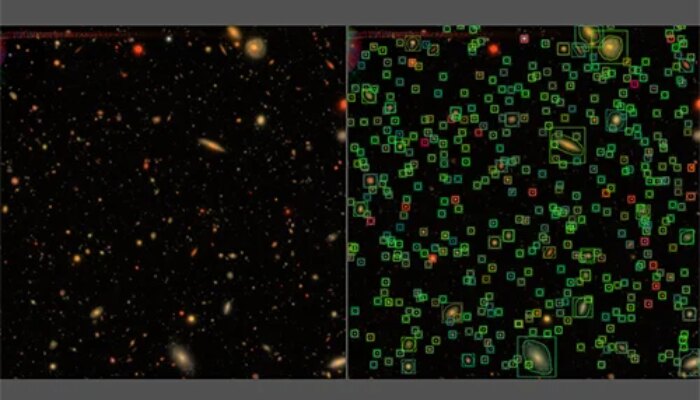
The universe, immense and mysterious, has long captivated human curiosity. For generations, people have gazed skyward, striving to unravel the cosmic dance that shapes existence. Recent advancements in telescope technology and data collection methods are revolutionizing this quest, challenging long-held beliefs and offering a transformative perspective on our cosmic environment. The flood of information from these cutting-edge instruments is not only broadening our celestial inventory but also prompting a fundamental reevaluation of astronomical theories, potentially reshaping humanity’s cosmic viewpoint.
Technological Innovations in Modern Telescopes
Contemporary telescopes, outfitted with sophisticated sensor arrays and enhanced by powerful computational techniques, enable astronomers to observe the universe with unprecedented depth and clarity. These devices capture data across a broad spectrum of electromagnetic wavelengths-from radio waves to gamma rays-simultaneously. This multi-wavelength capability reveals complex details of cosmic events that were previously hidden due to limited spectral observation, leading to the discovery of new classes of celestial bodies and behaviors. Consequently, many astrophysical models once considered definitive are now being revisited and refined.
Reevaluating Galactic Dynamics and Evolution
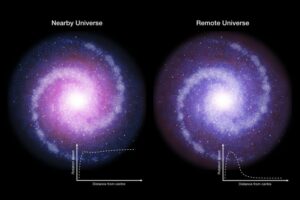
Galaxies, traditionally viewed as stable assemblies of stars, gas, dust, and dark matter evolving predictably under gravity over cosmic timescales, are now understood to be far more dynamic. High-resolution imaging and spectral data expose rapid and fluctuating activities within galactic centers and halos. These findings suggest that galaxies undergo cycles of intense star formation bursts followed by quieter phases, influenced by mechanisms that remain largely enigmatic.

The Role of Feedback Mechanisms
Emerging research highlights the significant influence of feedback processes involving supermassive black holes, quasars, and gamma-ray bursts. These phenomena appear to regulate galactic development, indicating a universe characterized by volatility rather than steady equilibrium. This evolving understanding enriches our knowledge of galactic ecosystems and the broader framework of cosmic evolution.
Insights into the Interstellar Medium
The interstellar medium-the sparse gas and dust filling the spaces between stars-has been reexamined with the aid of advanced telescopic data. Previously, its properties were inferred indirectly, leaving uncertainties in models of star formation and chemical processes. Enhanced observational sensitivity now allows direct study of the interplay between magnetic fields, turbulence, and shock waves that govern the birthplaces of stars, offering a clearer picture of these complex environments.
Artificial Intelligence in Astronomical Research
The sheer volume and intricacy of modern astronomical data exceed the capabilities of traditional analysis methods. Artificial intelligence and deep learning algorithms have become essential tools for processing these vast datasets, identifying patterns, and generating predictions that would be impossible through manual examination alone. This collaboration between human inquiry and machine intelligence accelerates discovery, progressively unveiling the universe’s secrets with greater accuracy.
Advancements in Understanding Dark Matter and Dark Energy
Dark matter and dark energy, which together constitute the majority of the universe’s mass-energy content, have long eluded direct detection and remained theoretical constructs. However, new observations from advanced telescopes, combined with innovative analytical frameworks, are tightening constraints on their characteristics. Precise measurements of gravitational lensing and galactic rotation curves reveal anomalies that challenge traditional cold dark matter models, suggesting alternative properties or new physics may be involved.
Implications for Fundamental Physics
These discoveries prompt physicists to reconsider foundational principles and explore possibilities beyond the Standard Model, including unknown particles, forces, or extra dimensions. This burgeoning field fosters a renaissance in theoretical and experimental physics, bridging cosmology with particle physics in unprecedented ways.
Exploring Exoplanets and Habitability
New telescopic technologies have revolutionized the study of exoplanets, moving beyond basic measurements of size and orbit to detailed spectroscopic analysis of their atmospheres. This allows scientists to assess chemical compositions, weather patterns, and potential biosignatures, significantly advancing the search for extraterrestrial life. These insights also prompt a reevaluation of what constitutes a habitable zone around stars.
Reconstructing the Early Universe
By capturing light emitted billions of years ago, modern telescopes provide a richly detailed view of the universe’s infancy. Observations of primordial fluctuations, the formation of the first stars and galaxies, and the epoch of reionization are being pieced together with remarkable precision. This historical reconstruction deepens our understanding of cosmic inflation and the processes that shaped large-scale structure.
The Ever-Evolving Nature of Cosmic Knowledge
While the influx of new data offers immense promise, it also underscores the complexity of the cosmos and the provisional status of scientific knowledge. Each discovery often leads to new questions, driving continuous refinement of methodologies, technological innovation, and interdisciplinary collaboration. Telescopes serve not just as observational tools but as portals to expanding cosmic awareness.
Conclusion: A New Era in Astronomy
The surge of groundbreaking data from next-generation telescopes marks a pivotal moment in the fields of astronomy and astrophysics. It challenges established doctrines and invites researchers to explore uncharted intellectual territories. The universe, once perceived as relatively simple, now reveals itself as a dynamic and interconnected tapestry of phenomena. This paradigm shift holds the potential for transformative insights into the nature of matter, energy, and the origins and fate of the cosmos, inspiring humanity to embark on an exhilarating journey of discovery and wonder.
FAQ
What is the significance of new telescope data?
New telescope data is significant as it challenges existing astronomical beliefs and enhances our understanding of the universe.


Leave a Reply