
Short Answer
Definition of Atomic and Particle Formation
The origin of atoms and subatomic particles represents a fundamental chapter in the history of the universe. Understanding how these basic units of matter came into existence requires examining the earliest phases of cosmic evolution. This process involves a complex interplay of physical phenomena, theoretical frameworks, and cosmological milestones that collectively led to the birth of atomic matter.
The Big Bang Theory: The Universe’s Starting Point
The widely accepted cosmological model, the Big Bang Theory, asserts that the universe began roughly 13.8 billion years ago from an extremely hot and dense singularity. At this initial moment, the universe existed as a primordial plasma composed of subatomic particles. The extreme temperatures and pressures created an environment conducive to the generation of elementary particles such as quarks, electrons, and leptons.
Formation of Fundamental Particles
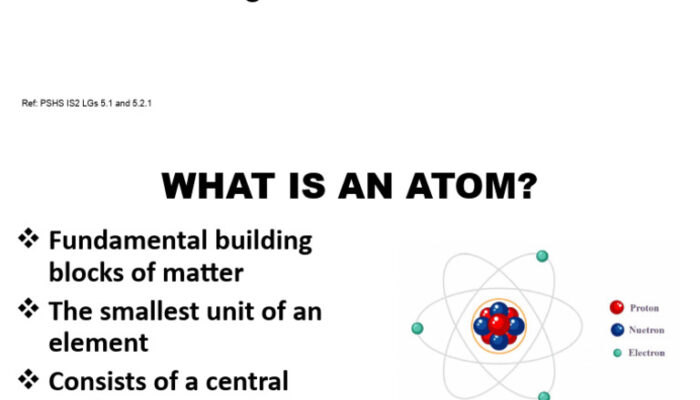
Within the first fractions of a second after the Big Bang, quarks-the elementary constituents of protons and neutrons-emerged. The universe’s immense energy density allowed quarks to combine through the strong nuclear force, governed by quantum chromodynamics, forming composite particles called baryons. These baryons primarily consisted of protons and neutrons, which are the building blocks of atomic nuclei.
Concurrently, as the universe expanded and cooled, electrons were produced from high-energy photons via a process known as pair production. These electrons, alongside protons and neutrons, became essential components in the formation of matter. The cooling was not uniform but featured fluctuations in temperature and density, influencing particle interactions and stability.
Recombination Epoch and the Birth of Neutral Atoms
Approximately 380,000 years after the Big Bang, the universe entered the recombination epoch. During this period, the temperature dropped sufficiently to allow electrons to bind with protons, creating neutral hydrogen atoms. This event marked the decoupling of matter from radiation, resulting in the release of the cosmic microwave background radiation-a pervasive signal that provides critical information about the early universe’s conditions.
Big Bang Nucleosynthesis: Formation of Light Elements
Following the creation of hydrogen atoms, the universe’s expansion enabled the synthesis of helium and trace amounts of lithium in a process called Big Bang nucleosynthesis. This occurred within the first few minutes of cosmic history. The relative abundance of these elements was determined by the neutron-to-proton ratio, temperature, and pressure prevailing at the time, setting the elemental composition of the primordial universe.
The Cosmic Dark Ages and Structure Formation
After the formation of neutral hydrogen and helium gases, the universe entered a period known as the cosmic dark ages. During this time, the absence of luminous sources meant the universe was largely dark. Gradually, gravitational forces caused primordial gas clouds to collapse, leading to the formation of protostars and eventually galaxies. These structures became sites where nuclear fusion processes would generate new atomic elements.
Stellar Nucleosynthesis and the Creation of Heavier Elements
Within the cores of early stars, helium atoms underwent fusion reactions that produced heavier elements such as carbon, nitrogen, and oxygen. This process, known as stellar nucleosynthesis, is vital to the chemical evolution of the universe. The explosive deaths of massive stars, or supernovae, dispersed these heavier elements into the interstellar medium, enriching it with the materials necessary for planet formation and the emergence of life.
Scientific Significance of Atomic Formation
The progression from elementary particles to complex atomic structures illustrates the dynamic nature of cosmic evolution and the fundamental forces shaping matter. The formation of the first atoms is not only a milestone in physical history but also underpins the existence of life on Earth. Understanding this sequence enhances our comprehension of the universe’s origin and the interconnectedness of all matter.
Summary and Ongoing Exploration
The story of the first atoms and particles is a remarkable scientific narrative tracing the universe’s transformation from a singularity to a vast expanse filled with diverse matter. The intricate interactions of fundamental forces and particles during key epochs have crafted the atomic diversity observed today. As research advances, new discoveries continue to illuminate the profound mysteries surrounding the universe’s beginnings, inspiring deeper inquiry into the nature of existence and matter itself.
FAQ
What is the significance of atomic formation?
The formation of the first atoms is crucial as it marks the beginning of matter in the universe, influencing the chemical evolution that eventually led to the development of stars, planets, and life.






Leave a Reply