Why are atoms building blocks of matter?

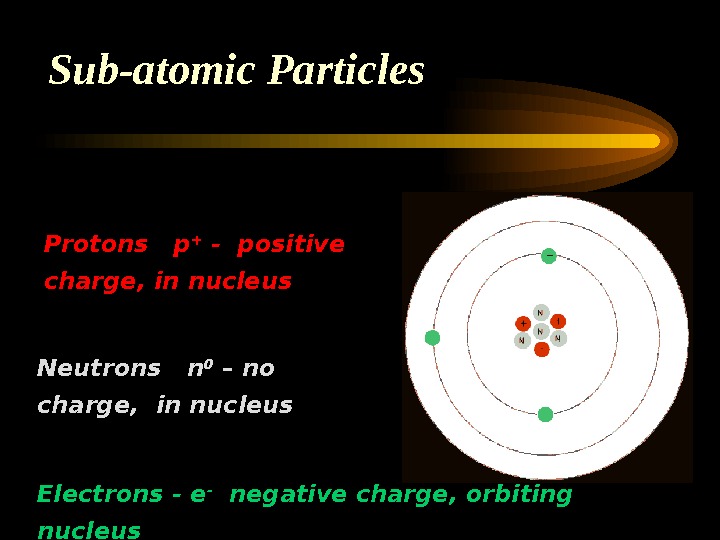
Definition of Atoms Atoms are the fundamental units that compose all matter in the universe. They serve as the essential building blocks from which everything tangible is constructed. This concept forms a foundational pillar in both chemistry and physics, providing a framework for understanding the material world. Atoms consist of smaller constituents-protons, neutrons, and electrons-that […]

Read More →

What is it like to be an experimental particle physicist?

Definition of an Experimental Particle Physicist An experimental particle physicist is a scientist dedicated to exploring the fundamental components of matter and the forces governing them through empirical investigation. This profession merges cutting-edge technology, theoretical physics, and philosophical reflection to probe the subatomic world, often venturing beyond the limits of current human knowledge. Their work […]

Read More →

What is the role of a high voltage in particle accelerators?

Definition of High Voltage in Particle Accelerators High voltage in particle accelerators refers to the substantial electric potential difference applied to accelerate charged particles such as protons, electrons, or ions. This voltage generates strong electric fields that impart kinetic energy to particles, enabling them to reach velocities close to the speed of light. The application […]

Read More →

Can Four Neutrons Form a Nucleus? The Search for the Tetraneutron

Definition of the Tetraneutron The tetraneutron is a hypothesized nuclear system composed exclusively of four neutrons bound together without any protons. This concept challenges traditional nuclear physics, which typically involves nuclei formed by both protons and neutrons. The tetraneutron represents an extreme case in the study of nuclear matter, focusing on whether neutrons alone can […]

Read More →

Is the mystery of the universe in the elementary particle?

Definition of Elementary Particles Elementary particles are the most fundamental units of matter and energy, serving as the foundational components from which all physical substances and forces arise. These particles are indivisible within the current scope of scientific understanding, forming the essential building blocks of the universe. Quarks: Fundamental constituents of protons and neutrons, existing […]

Read More →

What motivates people to get a degree in particle physics?

Understanding the Appeal of Particle Physics Particle physics, a scientific field at the intersection of fundamental research and cutting-edge technology, captivates students globally. This discipline seeks to unravel the universe’s most basic components and forces, offering both an intellectual challenge and a profound sense of wonder. But what drives individuals to embark on this demanding […]

Read More →

How would it help if we found free quarks?

Definition of Quarks and Their Significance Quarks are elementary particles that serve as fundamental constituents of matter. They combine to form composite particles called hadrons, including protons and neutrons, which make up atomic nuclei. Despite their foundational role in particle physics, quarks have never been observed in isolation due to a phenomenon known as confinement. […]

Read More →

What are particle accelerators used for?

Definition of Particle Accelerators Particle accelerators are advanced devices designed to propel charged particles, such as protons or electrons, to extremely high speeds. These machines enable scientists to investigate the fundamental properties of matter by creating high-energy collisions that mimic conditions similar to those just moments after the Big Bang. Beyond their role in fundamental […]

Read More →

How to conduct Rutherford’s gold leaf experiment at home?

Definition of Rutherford’s Gold Foil Experiment The Rutherford gold foil experiment, conducted in 1909 by Ernest Rutherford, was a landmark scientific investigation that revealed the internal structure of the atom. By directing alpha particles at a thin sheet of gold foil, Rutherford discovered that atoms consist of a tiny, dense nucleus surrounded by electrons, disproving […]

Read More →

How long until we miniaturize particle accelerators?

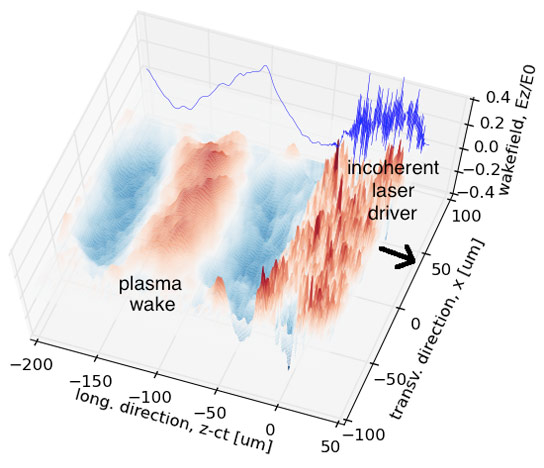
Definition of Particle Accelerator Miniaturization Miniaturization refers to the process of scaling down complex technological systems into smaller, more efficient, and manageable forms. In the context of particle accelerators, it involves designing compact devices capable of accelerating charged particles-such as electrons and protons-to high energies within significantly reduced physical footprints compared to traditional large-scale accelerators. […]
Read More →