
Short Answer
Definition of the Dark Big Bang Hypothesis
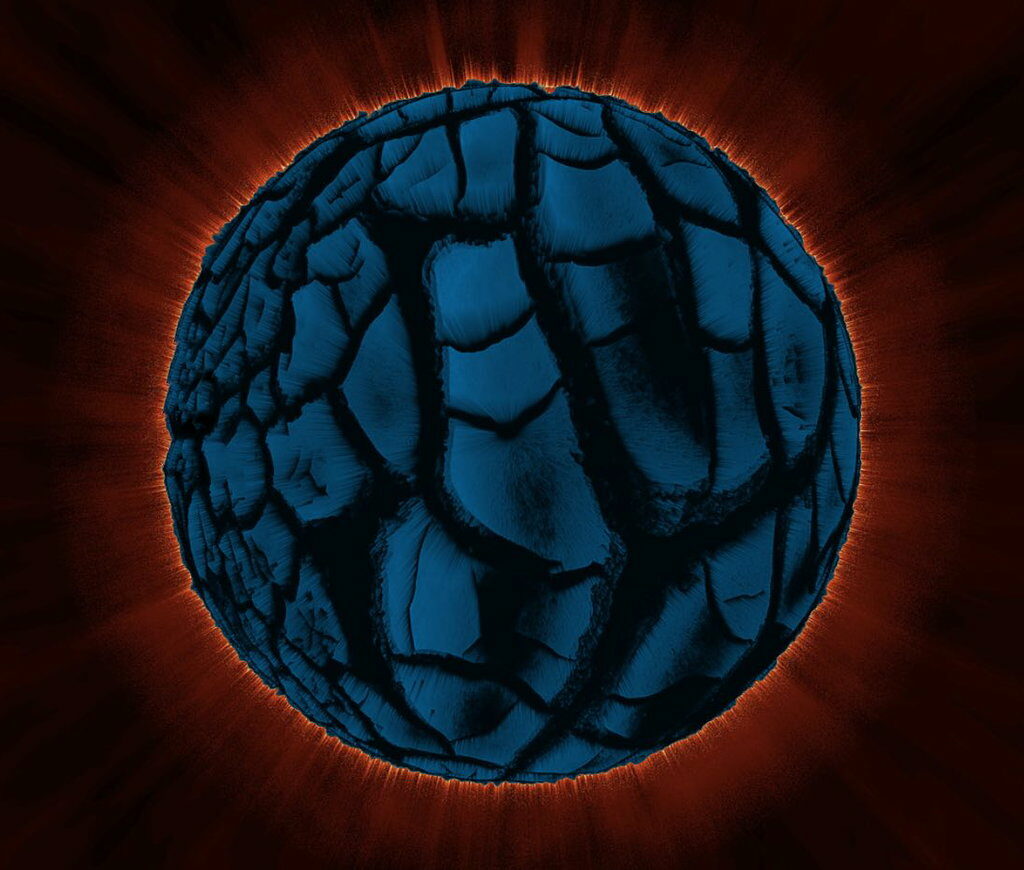
The “Dark Big Bang” hypothesis proposes a secondary cosmological event distinct from the well-established Big Bang, suggesting a hidden genesis that gave rise to dark matter and possibly other unseen components of the universe. Unlike the traditional Big Bang, which involved a hot, luminous plasma forming ordinary matter and energy, this concept envisions a separate, less visible origin event occurring within the dark sector-an invisible realm that does not interact with light but influences the cosmos through gravity.
Understanding Dark Matter and Its Role
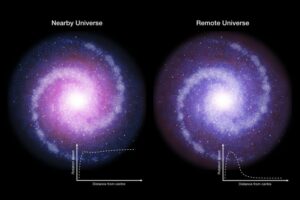
Dark matter constitutes approximately 27% of the universe’s total mass-energy content and acts as the invisible framework supporting the visible cosmos. It neither emits nor absorbs electromagnetic radiation, making it undetectable by conventional telescopes. Its presence is inferred from gravitational effects, such as the rotation curves of galaxies and the large-scale structure of the universe. While the Big Bang theory explains the emergence of ordinary matter, it does not clarify the origin or nature of dark matter, leaving room for alternative explanations like the Dark Big Bang.
Conceptual Framework of the Dark Big Bang
This theory suggests that dark matter originated from a separate cosmological event, possibly staggered in time relative to the traditional Big Bang. This “dark genesis” would have unfolded without the bright, energetic phenomena associated with ordinary matter formation, hence the term “dark.” The event could have initiated a dark sector governed by its own particles and forces, which remain disconnected from electromagnetic interactions and follow unique physical laws.

Gravitational Waves as Potential Evidence
Gravitational waves-ripples in the fabric of spacetime predicted by Einstein and recently observed from astrophysical sources-may carry signatures of the Dark Big Bang. If such an event occurred, it might have produced a primordial gravitational wave background, subtle vibrations permeating the universe that current detectors have yet to observe. Future advancements in gravitational wave astronomy and cosmic microwave background measurements could reveal these faint signals, offering unprecedented insight into this hidden epoch.
Implications for Cosmic Evolution and Structure Formation
The existence of a Dark Big Bang could significantly alter our understanding of how cosmic structures formed. Traditionally, dark matter and baryonic matter are thought to have coalesced gravitationally after the Big Bang to create galaxies and larger structures. However, if dark matter emerged from a distinct event, the timing and mechanisms of structure formation might differ, potentially reshaping the narrative of galactic evolution and the architecture of the universe.
Addressing Fundamental Mysteries in Physics
The Dark Big Bang framework offers new perspectives on several unresolved issues in particle physics and cosmology, including:
- Matter-Antimatter Asymmetry:
The imbalance between matter and antimatter in the universe might be better understood by considering dual cosmological origins. - Dark Energy:
The mysterious force driving cosmic acceleration could be linked to interactions within the dark sector. - Neutrino Properties:
The elusive characteristics of neutrinos might find explanations through hidden physics associated with the dark genesis.
Theoretical Models and Mathematical Approaches
Researchers explore the Dark Big Bang hypothesis by extending the Standard Model of particle physics and employing sophisticated cosmological simulations. These models adjust parameters such as particle masses, interaction strengths, and expansion rates to simulate a phase transition or “bang” within the dark sector. Theoretical constructs often involve exotic fields, hidden symmetries, or extra-dimensional theories, creating complex frameworks that transcend conventional cosmological paradigms.
Challenges in Detecting the Dark Big Bang
One of the main obstacles in validating the Dark Big Bang theory is the lack of direct electromagnetic signals, as the dark sector does not interact with light. Consequently, scientists must rely on indirect evidence, including gravitational effects, particle physics experiments, and precise cosmological observations. Upcoming technologies, such as next-generation gravitational wave detectors and enhanced cosmic microwave background probes, are expected to improve sensitivity and may uncover subtle traces of this hidden cosmic event.
Significance and Broader Impact
The Dark Big Bang hypothesis enriches our understanding of the universe by suggesting that its origin story may be more intricate than previously thought. It challenges the notion that the luminous Big Bang is the sole genesis event, proposing instead a layered cosmic history with a “dark” counterpart. This idea not only deepens scientific inquiry into the universe’s composition and evolution but also exemplifies the interplay between imaginative theorizing and empirical investigation in advancing cosmology.
Metaphorical Perspective: Dawn, Twilight, and the Cosmic Narrative
Metaphorically, the Dark Big Bang can be likened to a cosmic twilight-a transitional phase shrouded in darkness yet crucial to the universe’s unfolding. Just as twilight bridges night and day, this hidden genesis might represent a primordial epoch that, while invisible to our eyes, profoundly influences the cosmic landscape. It serves as a reminder that unseen phenomena can hold equal importance to the observable universe, inviting humility and curiosity in our quest to comprehend the cosmos.
Future Prospects and the Quest for Discovery
As scientific instruments and observational techniques advance, the possibility of detecting evidence for a Dark Big Bang grows. This emerging frontier encourages researchers to broaden their cosmic horizons, looking beyond the bright fireworks of the known Big Bang to explore the subtle symphony of the dark sector. Unlocking this secret could revolutionize our understanding of cosmic origins and the fundamental nature of reality itself.

Leave a Reply