Do subatomic particles have solid surfaces?

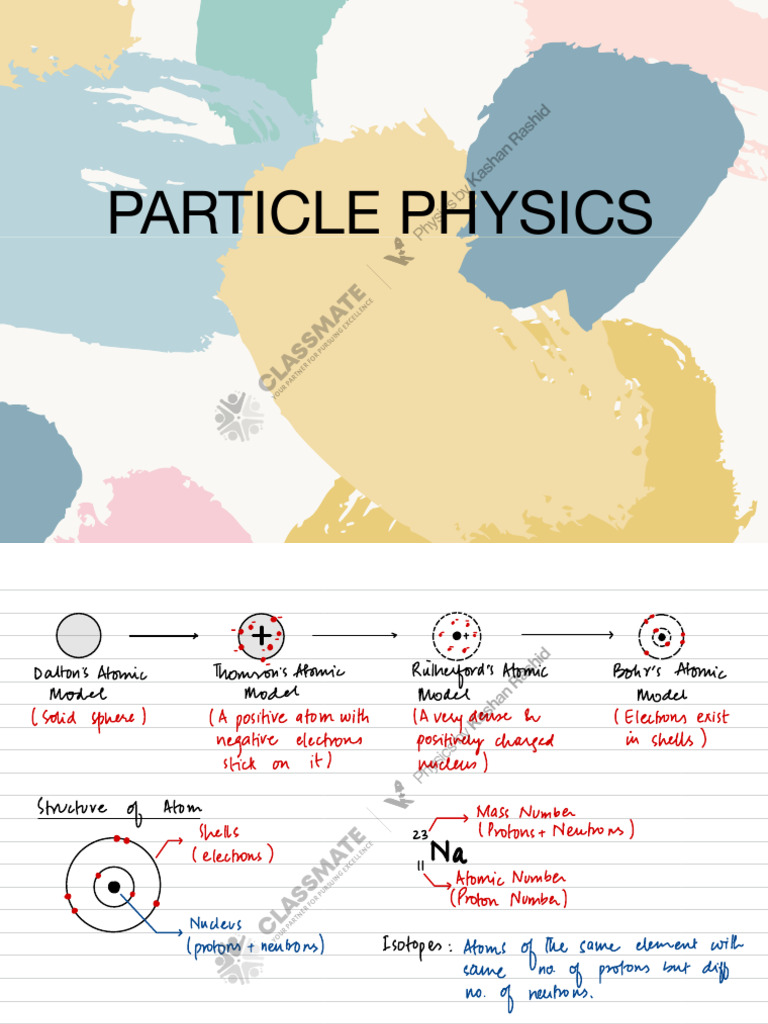
Definition of Subatomic Particles and Their Surfaces Subatomic particles are the fundamental constituents of matter, including protons, neutrons, and electrons. These particles form the building blocks of atoms, which in turn compose all physical substances. The question of whether these particles have solid, well-defined surfaces challenges traditional views of matter and delves into the core […]

Read More →

Fusion on a Collision Course: Will We Ever Reach the Core?

Definition of Nuclear Fusion Nuclear fusion is a fundamental physical process where two light atomic nuclei merge to form a heavier nucleus, releasing a tremendous amount of energy. This phenomenon is not only a cornerstone of astrophysics but also symbolizes humanity’s quest for advanced energy solutions and deeper understanding of the universe. Beyond its scientific […]

Read More →

How was nuclear power invented?

Definition of Nuclear Power Nuclear power is the generation of energy through the process of nuclear reactions, primarily nuclear fission, where the nucleus of an atom splits into smaller parts, releasing a significant amount of energy. This energy can be harnessed to produce electricity, offering an alternative to conventional fossil fuel sources. Nuclear Fission: The […]

Read More →

Where can I work if I studied Nuclear Physics?

Overview of Career Opportunities in Nuclear Physics Nuclear physics, the study of atomic nuclei and their interactions, offers a wide spectrum of career paths that extend beyond pure scientific research. Graduates in this field can apply their expertise in various sectors, each presenting distinct roles, challenges, and prospects. This article explores the diverse professional avenues […]

Read More →

Argonne’s Nuclear Quest: Tackling the Most Exotic Atoms in the Universe

Understanding Exotic Atoms Exotic atoms represent a fascinating frontier in modern physics, where the conventional understanding of atomic structure is challenged by unusual arrangements of protons and neutrons. These atoms often exhibit properties that diverge from typical nuclear stability, such as the formation of nuclear halos or hypernuclei, which require scientists to rethink established nuclear […]

Read More →

Is the hadron collider completely safe?

Definition and Purpose of the Large Hadron Collider The Large Hadron Collider (LHC) is a groundbreaking scientific instrument designed to explore the fundamental components of matter and the underlying structure of the universe. Situated beneath the border of Switzerland and France, this particle accelerator is a marvel of modern engineering and physics, enabling researchers to […]

Read More →

Can particle accelerator make someone like the FLASH?

Understanding Speed in the Context of Physics Speed is fundamentally defined as the measure of how quickly an object changes its position over time. While this concept appears straightforward, its deeper implications are governed by the principles of physics, particularly those articulated in Einstein’s theory of relativity. As an object’s velocity approaches the speed of […]

Read More →

What are quarks and have we been able to split one yet?

Definition of Quarks Quarks are fundamental particles that serve as the essential components of matter, specifically forming protons and neutrons, which constitute atomic nuclei. As elementary fermions with half-integer spin, quarks come in six distinct types, known as flavors: up, down, charm, strange, top, and bottom. Each flavor exhibits unique characteristics such as mass and […]

Read More →

Why was CERN built?

Definition and Purpose of CERN The European Organization for Nuclear Research, widely known as CERN, is a premier scientific institution dedicated to exploring the fundamental components of the universe. Founded in 1954, CERN was established with the ambitious goal of advancing our understanding of particle physics and the forces that shape reality. It serves as […]

Read More →