
Short Answer
Understanding Antimatter
Antimatter is a fundamental concept in particle physics, representing a form of matter composed of antiparticles that mirror the properties of ordinary particles but with opposite charges and quantum numbers. When a particle encounters its corresponding antiparticle, they annihilate each other, releasing energy as described by Einstein’s equation, E=mc². Studying antimatter is crucial for exploring the symmetrical laws of nature and addressing the puzzling imbalance between matter and antimatter observed in the cosmos.
Production and Characteristics of Antihydrogen
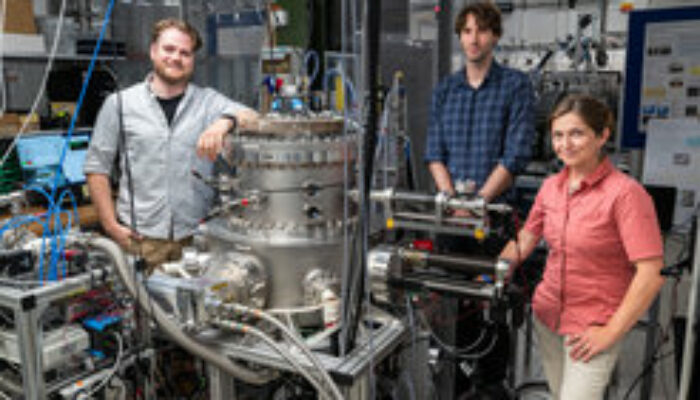
At CERN, the European Organization for Nuclear Research, the Antimatter Decelerator (AD) facility plays a pivotal role in generating and studying antihydrogen-the simplest antimatter atom. Antihydrogen consists of an antiproton, carrying a negative charge, bound to a positron, the positively charged antimatter equivalent of an electron. The creation process involves producing antiprotons through high-energy particle collisions, capturing them, and then combining them with positrons. Although initially challenging, recent technological improvements have significantly increased the efficiency of antihydrogen synthesis.
Advanced Techniques in Antihydrogen Formation
Innovations such as laser cooling and refined particle beam manipulation have been instrumental in enhancing antihydrogen production. Laser cooling slows down positrons and antiprotons, increasing their likelihood of interaction and thus the formation rate of antihydrogen atoms. Additionally, improved beam extraction methods reduce particle loss, allowing for more precise control over the synthesis environment.
Trapping and Studying Antihydrogen
Producing antihydrogen is only the initial step; capturing these atoms for detailed examination is equally critical. The ALPHA collaboration at CERN has developed sophisticated electromagnetic traps that use magnetic fields to confine antihydrogen atoms. These traps enable prolonged containment, facilitating in-depth analysis of antihydrogen’s properties.
Spectral Analysis and Fundamental Symmetries
One of the key research areas involves comparing the spectral lines of antihydrogen with those of hydrogen. This comparison tests the CPT (Charge, Parity, Time) symmetry principle, which asserts that physical laws remain unchanged when particles are replaced by their antiparticles, spatial coordinates are inverted, and time is reversed. Any deviation in spectral lines could reveal new physics beyond the current understanding.
Experimental Findings and Their Significance
Recent experiments by the ALPHA team have measured the Lyman-alpha transition in antihydrogen, finding it to be nearly identical to that of hydrogen. This result supports the Standard Model of particle physics, reinforcing the idea that matter and antimatter behave symmetrically under CPT transformations. Nonetheless, ongoing research continues to probe these boundaries, seeking potential anomalies that could revolutionize physics.
Applications of Antimatter in Technology and Medicine
Beyond theoretical physics, antimatter holds promise for various practical uses. In space exploration, antimatter propulsion systems are being investigated as a means to achieve highly efficient and powerful thrust. In medicine, positron emission tomography (PET) scans utilize positrons emitted from radioactive isotopes to generate detailed images of metabolic activity within the body. Advances in antimatter handling could further refine these diagnostic tools, enhancing their precision and effectiveness.
Challenges in Antimatter Research
- Production Limitations:
Despite progress, generating sufficient quantities of antihydrogen remains difficult and expensive due to the rarity of antimatter and its tendency to annihilate upon contact with matter. - Containment Difficulties:
Maintaining stable traps for antimatter atoms requires complex electromagnetic systems and precise control, limiting the duration and scale of experiments. - Scalability Issues:
The current methods are not yet viable for large-scale applications, posing a significant barrier to practical use in technology or industry.
Future Prospects and Scientific Importance
The ongoing research at CERN is poised to deepen our understanding of the universe’s fundamental structure and the nature of antimatter. Each breakthrough in production, trapping, and analysis not only tests the limits of existing theories but also opens avenues for innovative technologies. As scientists continue to refine their techniques and expand experimental capabilities, antimatter research remains at the forefront of both fundamental physics and potential technological revolutions.
FAQ
What is antimatter?
Antimatter is a form of matter composed of antiparticles that have opposite charges and quantum numbers to ordinary particles.
Why is antimatter research important?
Research into antimatter helps us understand fundamental symmetries in nature and could lead to new technologies.
What advancements have been made in antihydrogen production?
Recent technological improvements, including laser cooling and refined particle manipulation, have increased the efficiency of antihydrogen synthesis.






Leave a Reply