
Short Answer
Definition of Cosmic Ray Showers
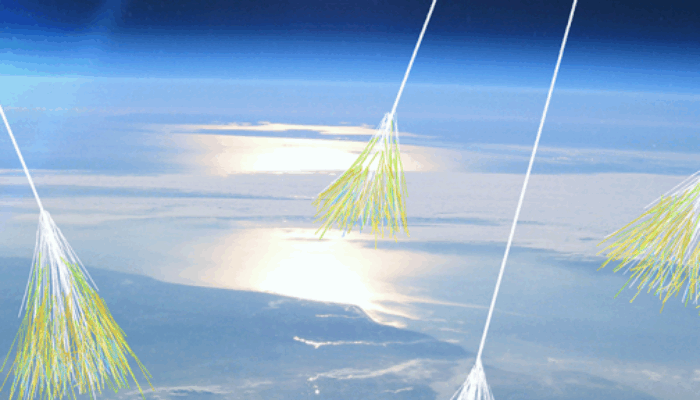
Cosmic ray showers are spectacular phenomena involving cascades of elementary particles generated when high-energy cosmic rays collide with Earth’s atmosphere. These showers represent a complex interplay of various subatomic particles, each contributing uniquely to the overall event. Understanding the composition and behavior of these showers provides insight into fundamental particle physics and cosmic processes.
Primary Components of Cosmic Rays
The majority of primary cosmic rays consist of high-energy protons, which account for roughly 90% of the particles entering Earth’s atmosphere from outer space. These protons serve as the principal agents initiating cosmic ray showers. Upon striking atmospheric nuclei, they set off a chain reaction that produces a multitude of secondary particles, transforming the atmosphere into a dynamic arena for particle interactions.
- Protons:
Dominant primary cosmic ray particles responsible for initiating particle cascades through collisions with atmospheric atoms. - Atmospheric Nuclei:
Targets for incoming cosmic protons, whose collisions trigger secondary particle production.
Secondary Particles Generated in Cosmic Ray Showers
The initial collisions between primary protons and atmospheric nuclei give rise to a diverse array of secondary particles. These include neutrons, pions, kaons, muons, and other less common particles, each playing a distinct role in the evolution of the shower.
Neutrons
Neutrons are neutral baryons produced abundantly during cosmic ray interactions. Their lack of electric charge allows them to travel through the atmosphere with minimal deflection. Neutrons have a half-life of about 14 minutes, after which they decay into protons, electrons, and antineutrinos, subtly influencing the particle cascade without disrupting its overall progression.
Pions (Pi Mesons)
Pions are unstable mesons that appear in three charge states: positive, negative, and neutral. They primarily originate from the decay of energetic protons colliding with atmospheric particles. Charged pions decay rapidly into muons and neutrinos, while neutral pions decay into gamma rays, linking various particle families within the shower.
Muons
Muons, heavier relatives of electrons, emerge from the decay of charged pions. Traveling near the speed of light, muons possess a relatively long lifetime for elementary particles, enabling them to penetrate deep into the atmosphere and even reach Earth’s surface. Their penetrating ability has practical applications, such as muon tomography, which uses muons to investigate the internal structure of large objects.
Kaons (K Mesons)
Kaons are mesons produced during high-energy collisions that exhibit a quantum property known as “flavor,” allowing them to oscillate between different types. This behavior distinguishes them from pions and muons, adding complexity to the particle interactions within cosmic ray showers. Although less common than pions, kaons highlight the intricate nature of subatomic particle physics.
Mechanism of Cosmic Ray Shower Formation
The process begins when a high-energy cosmic proton collides with an atmospheric nucleus, producing a burst of secondary particles. These secondary particles, in turn, interact and decay, generating further particles in a cascading effect. This chain reaction continues, creating an extensive shower of particles that spreads through the atmosphere, resembling a dynamic and energetic dance orchestrated by fundamental forces.
Mathematical Description and Particle Interactions
The development of cosmic ray showers can be described using particle interaction cross-sections, decay rates, and energy distributions. For example, the decay of charged pions (π±) into muons (μ±) and neutrinos (ν) follows the reaction:
π± → μ± + νμ
Similarly, neutral pions (π0) decay into gamma rays (γ) via:
π0 → 2γ
These decay processes, combined with interaction probabilities, govern the evolution and composition of the particle shower.
Practical Examples and Applications
Cosmic ray showers are not only of theoretical interest but also have practical implications. For instance, muon tomography leverages the penetrating power of muons to image the interiors of pyramids, volcanoes, and nuclear reactors, revealing hidden structures without invasive methods. Additionally, understanding cosmic ray showers aids in designing radiation shielding for spacecraft and high-altitude flights.
Common Misconceptions About Cosmic Ray Showers
Cosmic rays are primarily composed of electrons.
The majority of cosmic rays are protons, not electrons, with electrons constituting only a small fraction.
Neutrons in cosmic ray showers are stable.
Neutrons are unstable with a half-life of about 14 minutes and eventually decay into other particles.
All particles in cosmic ray showers have the same lifespan.
Particle lifetimes vary widely; for example, muons live longer than pions, affecting how far they travel through the atmosphere.
Significance of Cosmic Ray Showers
Studying cosmic ray showers is crucial for advancing our understanding of high-energy particle physics and the fundamental forces governing the universe. These showers serve as natural laboratories for observing particle interactions at energies unattainable by human-made accelerators. Moreover, insights gained from cosmic ray research have practical benefits in fields ranging from astrophysics to materials science and security technologies.
FAQ
What initiates cosmic ray showers?
High-energy protons colliding with atmospheric nuclei initiate cosmic ray showers.
What role do muons play in cosmic ray showers?
Muons are produced from the decay of charged pions and can penetrate deep into the atmosphere and reach the Earth's surface.






Leave a Reply